
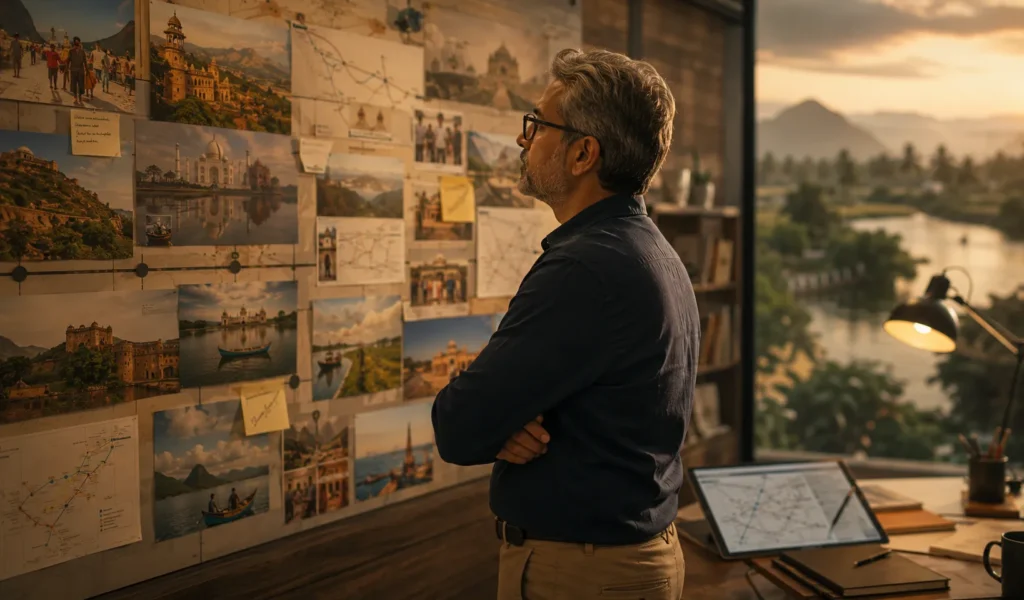
Experience Doesn’t Come From The Tours That Go Perfectly
People often ask us how we became better at planning India tours. The honest answer is simple: not every lesson came from a perfectly smooth departure.
Some came from unexpected weather. Some came from flight delays. Others came from conversations that happened weeks before a traveler boarded the aircraft.
Every tour teaches something. Sometimes it confirms that a process is working well. Sometimes it shows us there is a better way to plan the next journey.
The planning decisions that travelers appreciate most are often the ones they never notice.
Small Decisions That Shape The Entire Journey
Looking back over hundreds of departures, we realised something important about travel planning.
Changes such as adjusting hotels before construction begins, choosing a larger vehicle for luggage, adjusting sightseeing for festivals, or reordering routes to avoid backtracking rarely appear in holiday photographs.
Yet these decisions often determine whether a holiday feels relaxed or rushed.
The stories in this article are based on real operational experiences from tours across Kerala, Rajasthan and the Golden Triangle. Some details have been simplified to protect traveler privacy.
Each situation left us with a lesson that continues to influence the way White Pigeon Holidays plans journeys today.
Story 1: The Rain Wasn’t The Problem. The Timing Was.
Travel Dates: 22 July – 30 July 2024
Travelers: David and Melissa Carter
Home: Austin, Texas
Destination: Kerala
When David first contacted us, he had already planned most of the holiday: Kochi, Munnar, Thekkady and Alleppey. Everything looked reasonable.
Then we looked at the dates. Late July falls during Kerala’s monsoon season. That doesn’t automatically make travel impossible. In fact, many people enjoy Kerala during this time because the landscape becomes exceptionally green.
The challenge was the sequence. The original itinerary placed almost every outdoor activity during the first three days when heavier rainfall was expected.
Instead of changing destinations, we studied local weather patterns and worked with our regional operations team. Indoor cultural experiences moved earlier, flexible sightseeing days were created around Munnar, and outdoor activities shifted slightly later in the week.
Nothing important disappeared. The order simply changed.
“We packed rain jackets expecting the weather to control the holiday. Instead, it just became part of the scenery.”
Story 2: One Extra Night Created A Better Holiday
Travel Dates: 4 November – 16 November 2024
Travelers: John and Emily Foster
Home: Atlanta, Georgia
Destination: Golden Triangle and Rajasthan
Their original plan covered six cities in twelve days: Delhi, Agra, Jaipur, Jodhpur, Udaipur and Pushkar.
Everything technically fit into the calendar, but the daily rhythm showed something different: multiple hotel changes in a short span, long drives, and very little free time.
Instead of removing destinations immediately, we asked: “Which city are you most looking forward to?” Both answered without hesitation: “Udaipur.”
That answer shaped the final plan. We recommended two nights in Udaipur and removing Pushkar from this trip. Initially, they hesitated because Pushkar had been on their list for months.
Eventually, they agreed. After returning home, Emily wrote: “The extra evening by the lake ended up becoming our favourite memory from the whole trip.”
She attached a photo taken at sunset from a quiet café overlooking Lake Pichola — no schedule, no guide, just time.
What We Learned: Sometimes travelers remember the moments they weren’t rushing anywhere more than the monuments themselves.
Story 3: Five Hours Late, But The Holiday Started Exactly As Planned
Travel Dates: 18 January – 26 January 2025
Travelers: Michael and Karen Brooks
Home: Phoenix, Arizona
Arrival: Delhi
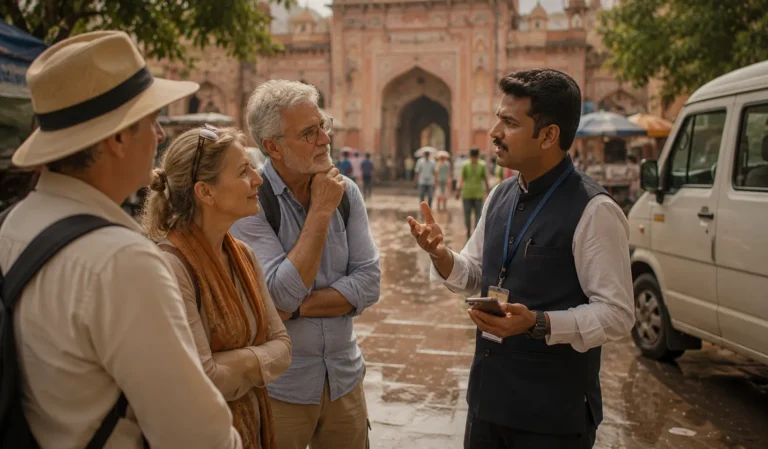
International travel rarely follows a perfect schedule. Michael and Karen experienced exactly that when a mechanical issue delayed their departure from Frankfurt by more than five hours.
As soon as the airline updated the arrival time, our operations team informed the airport representative, hotel and transport partner. The driver adjusted his schedule, the hotel delayed dinner arrangements, and the airport representative monitored the revised timing.
When Michael and Karen finally exited the terminal, someone was already waiting. There was no need to explain what had happened because everyone involved already knew.
“The delay disappeared from our minds the moment we walked out of the airport.”
Story 4: A Phone Call Three Weeks Before Departure Changed Every Meal
Travel Dates: 9 February – 18 February 2025
Traveler: Patricia Collins
Home: Minneapolis, Minnesota
Destination: Rajasthan
Three weeks before departure, Patricia called with what she described as “one small update.” Her doctor had recommended avoiding gluten while additional medical tests were being completed.
She wasn’t asking for special treatment. She simply wanted to let us know. That conversation immediately triggered several operational changes.
Hotels received updated dietary information, restaurant recommendations were reviewed, and guides were informed before the tour began. Nothing about her sightseeing changed — only the preparation did.
At the farewell dinner in Jaipur, she smiled and said, “After the first day, I stopped worrying about food completely.”
What We Learned: Small health updates before departure can significantly improve the overall travel experience when communicated early.
Story 5: A Larger Vehicle Was Never Mentioned Again
Travel Dates: 15 March – 25 March 2025
Travelers: The Wilson Family
Home: Dallas, Texas
Group Size: Six
Most transportation plans begin by counting passengers. Six travelers. One vehicle. Simple. Or so it seemed.
During the final planning call, Jennifer Wilson mentioned they would likely bring extra suitcases due to planned shopping during the trip.
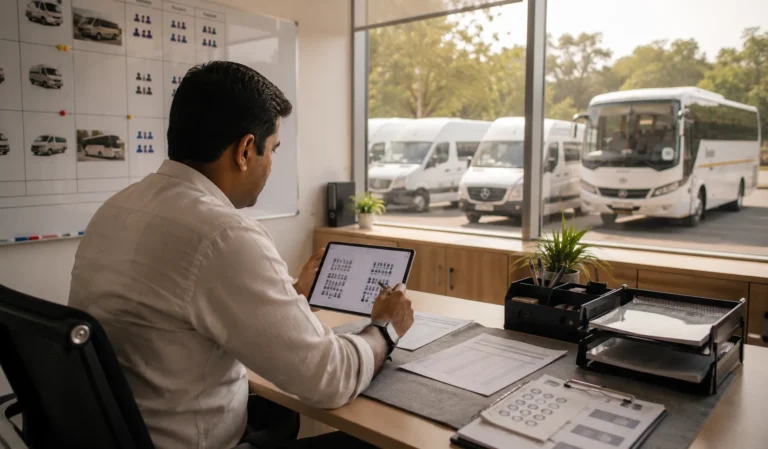
Instead of assuming the original vehicle would still work, we reviewed luggage requirements again: six large suitcases, six cabin bags, photography equipment and additional shopping expected throughout Rajasthan.
The solution was simple: upgrade the vehicle before arrival.
No luggage needed to be rearranged during the journey. Hotel arrivals stayed smooth and organised.
“I never realised how much easier travelling becomes when you don’t spend every morning rearranging luggage.”
What We Learned: Transportation planning should begin with the full journey, not just the number of seats required.
Story 6: The Hotel Was Beautiful. We Still Didn’t Use It.
Inspection Date: August 2024
Location: Jaipur
Not every planning story involves travelers. Some begin months before a booking exists.
During a hotel inspection in Jaipur, we visited a newly renovated property with modern rooms, an excellent restaurant and a professional reception team.
Everything suggested it would become one of our preferred hotels. Then we stepped outside.
Major road construction was taking place directly opposite the entrance. Large vehicles passed throughout the day and dust affected the access road, making arrivals difficult for larger tourist vehicles during peak hours.
Inside the hotel, almost nothing was wrong. Outside, the guest experience had changed completely.
Instead of adding the property to our preferred list, we decided to wait until construction was completed.
Months later, we returned for another inspection and only began recommending it after confirming improved access.
What We Learned: A hotel inspection doesn’t end at the reception desk. The journey to the hotel can shape the guest experience as much as the room itself.
Story 7: A Knee Surgery Changed The Pace, Not The Holiday
Travel Dates: 12 February – 22 February 2025
Traveler: Patricia Reynolds
Home: Columbus, Ohio
Destination: Golden Triangle and Rajasthan
About a month before departure, Patricia emailed us with an update. She had recently undergone knee replacement surgery. Her doctor had cleared her to travel but recommended avoiding long periods of walking without breaks.
Her first concern wasn’t the surgery. It was whether she would become a burden to the rest of the group.
That conversation changed how we reviewed the itinerary. We looked at every day individually: walking distances, access points, vehicle drop locations and opportunities for short breaks without affecting the group experience.
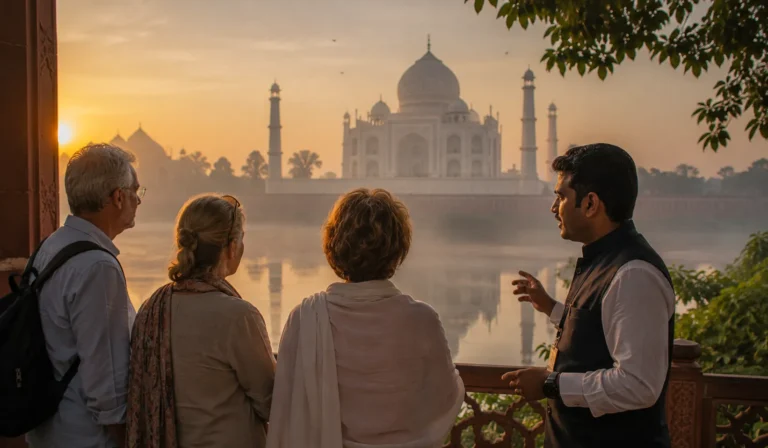
Instead of redesigning the holiday, we made small operational adjustments. At the Taj Mahal, the guide adjusted the route. At Amber Fort, the vehicle picked the group up from a closer exit. One afternoon became free time for rest before the next drive.
Nothing important disappeared. The pace simply became more comfortable.
“The most thoughtful thing wasn’t changing the tour. It was noticing the small things before I had to ask.”
What We Learned: Accessibility isn’t always about wheelchairs or elevators. Sometimes it’s about understanding how one traveler experiences the same itinerary differently.
Story 8: A Festival Changed The Order Of The Day
Travel Dates: 8 October – 16 October 2024
Travelers: Thomas and Linda Parker
Home: Portland, Oregon
Destination: Rajasthan
When the itinerary was first prepared, everything looked balanced. Then our local operations team flagged that Jaipur’s Navratri celebrations would coincide with the stay.
Rather than avoiding the festival, we adjusted the schedule around it. Amber Fort moved to early morning, lunch finished earlier, and the afternoon remained flexible.
Instead of fighting traffic, the travelers experienced the festival itself — music, traditional clothing, decorations and local gatherings.
Thomas later said, “Originally we thought the festival would interrupt our sightseeing. Looking back, it became part of the sightseeing.”
What We Learned: Good planning doesn’t always avoid local events. Sometimes it helps travelers experience them in a more meaningful way.
Story 9: The Airline Changed One Flight. We Reviewed The Entire Tour.
Travel Dates: 19 January – 30 January 2025
Travelers: Daniel and Sarah Roberts
Home: Boston, Massachusetts
Destination: Kerala and Rajasthan
About five weeks before departure, the airline changed one domestic flight by just over two hours. At first glance, the difference seemed small — but it wasn’t.
The revised arrival time meant reaching Jaipur close to sunset instead of mid-afternoon, which affected a planned walking tour through the old city.
Instead of keeping the itinerary unchanged, we reviewed the full day. The walking tour moved to the following morning, arrival evening became free time at the hotel, and dinner plans were adjusted.
The travelers never lost any sightseeing. The order simply changed.
“We assumed the airline change would reduce our holiday. It actually made the first evening much more relaxing.”
What We Learned: One schedule change rarely affects only one activity. Good operations review the entire journey, not just one booking.
Story 10: Seven Cities In Twelve Days Looked Great On Paper
Planning Date: September 2024
Travelers: Mark and Laura Jensen
Home: Seattle, Washington
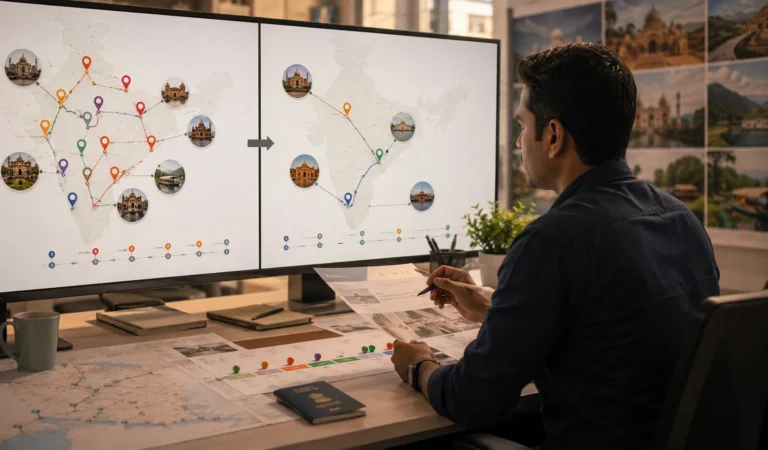
When Mark first shared his itinerary, it was impressive: Delhi, Agra, Jaipur, Jodhpur, Udaipur, Mumbai and Kochi in twelve days. Every detail had been carefully planned.
But when we calculated the actual flow of the journey, nearly four full days were spent on logistics — airports, road transfers, check-ins, packing and waiting.
Instead of rejecting the plan, we asked a simple question: “What do you most want to remember from this holiday?”
That shifted the entire conversation. Kerala became a future trip, and the revised itinerary felt more relaxed from day one.
Several months later, Laura wrote: “I’m glad someone reminded us that collecting cities isn’t the same as experiencing them.”
What We Learned: A successful holiday is measured by memories, not the number of hotel check-ins.
Story 11: The Backwater Cruise Didn’t Change. The Time Did.
Travel Dates: 28 July – 5 August 2024
Travelers: Robert and Susan Walker
Home: Charlotte, North Carolina
Destination: Kerala
Kerala’s backwaters were one of the reasons Robert and Susan chose India. The houseboat cruise had been planned months in advance.
Two days before the cruise, local weather forecasts predicted heavier afternoon rain than usual. Instead of cancelling anything, our operations team coordinated with the houseboat operator.
The departure was moved slightly earlier, lunch timing changed, and the route was adjusted to enjoy quieter canals before rainfall increased.
The travelers still experienced everything they had planned. Robert later described watching rain over coconut trees from the covered deck as one of the highlights.
“It felt peaceful rather than inconvenient.”
What We Learned: Flexibility doesn’t always mean changing the experience. Sometimes it simply means changing the timing.
Story 12: One Piece Of Feedback Changed A Future Tour
Not every lesson comes from unexpected situations during a holiday. Sometimes it comes afterwards.
Following a Rajasthan departure in November 2024, travelers praised most aspects of the journey—hotels, driver, transportation and meals.
One comment stood out. The guide was highly knowledgeable, but some travelers felt the explanations became too detailed during long afternoons.
Nothing was incorrect. It simply didn’t match the group’s pace.
Instead of ignoring the feedback, we reviewed it with our operations team. For future departures, a guide with a more conversational style was assigned for similar groups.
Several months later, traveler feedback became noticeably stronger.
What We Learned: Listening to feedback is not about finding mistakes. It is about improving an already good experience.
Story 13: The Suitcase Didn’t Arrive, But The Holiday Still Did
Travel Dates: 6 January – 15 January 2025
Travelers: Richard and Susan Miller
Home: Tampa, Florida
Arrival: Kochi International Airport
After nearly twenty-two hours of travel, Richard and Susan reached Kerala. Immigration was smooth, the driver was waiting, and the hotel had been informed.
Then the baggage carousel stopped. One suitcase never appeared. They reported it immediately, and the airline began tracing it.
Our airport representative stayed with them to complete formalities, while the operations team updated the hotel. The next morning’s sightseeing started slightly later so they could purchase essentials.
The suitcase arrived the next afternoon. The itinerary hardly changed.
“We expected to spend our first day solving a problem. Instead, we spent it enjoying Kerala.”
What We Learned: Unexpected situations become much less stressful when travelers know support is already in place.
Story 14: Breakfast Became The Most Important Part Of The Day
Travel Dates: 15 January – 22 January 2025
Traveler: Ronald Everett Wilcox
Home: Scottsdale, Arizona
Before departure, Ronald shared an important medical detail. He managed Type 2 diabetes and preferred consistent breakfast timing each morning.
That information was shared with hotels and incorporated into daily planning. The tour manager also reviewed departure timings in advance.
On one day, breakfast was arranged earlier due to sightseeing schedules. On another, the itinerary was slightly adjusted so lunch timing remained consistent.
For other travelers, these adjustments were barely noticeable. For Ronald, they made the entire journey smoother.
What We Learned: Excellent tour planning is often reflected in the conversations that don’t need to be repeated.
Story 15: The Room Looked Fine. The View Didn’t.
Travel Dates: 11 March – 20 March 2025
Travelers: Michael and Karen Brooks
Home: Phoenix, Arizona
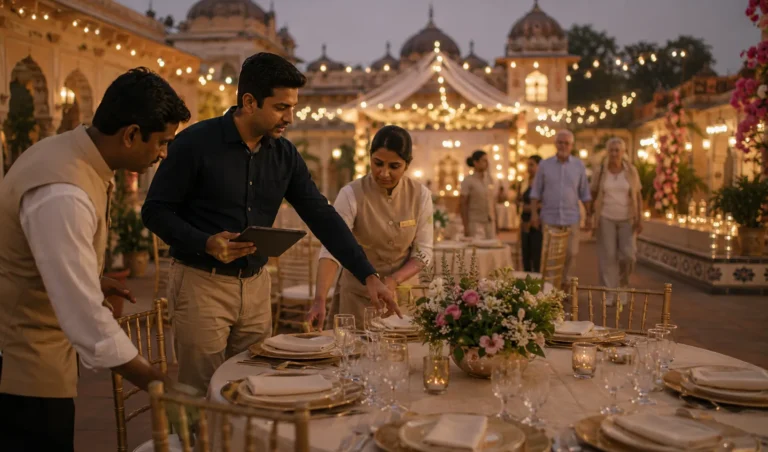
One afternoon in Udaipur, Michael mentioned while checking into the hotel: “This is our 40th wedding anniversary tomorrow.” The hotel had already been informed weeks earlier.
The room itself was excellent, but the view overlooked a parking area instead of Lake Pichola. Nothing was technically wrong, but the occasion deserved better if possible.
Reception was contacted, and a lake-facing room became available later that afternoon. The couple moved after lunch.
That evening, they watched the sunset from their balcony before dinner. No elaborate arrangements—just the right room at the right time.
“The hotel probably thought we cared about flowers. We cared about the view.”
What We Learned: Listening to why people are travelling often matters as much as knowing where they are travelling.
Story 16: The Road Closed Overnight
Travel Dates: 3 August – 10 August 2024
Travelers: Daniel and Sarah Roberts
Home: Boston, Massachusetts
The group was travelling from Thekkady to Kumarakom. Everything had been confirmed the previous evening.
Heavy overnight rain caused a temporary road closure along part of the planned route.
By breakfast, our transport coordinator had already spoken with the driver and local authorities. An alternative route was identified, adding about forty minutes to the journey.
The guide explained the change to travelers, and the drive continued smoothly.
Interestingly, the alternative route passed through small villages not part of the original plan.
Daniel later said, “It felt like we had seen another side of Kerala that most visitors probably miss.”
What We Learned: Transparency builds trust. Travelers usually accept changes when they understand the reason behind them.
Story 17: The Celebration That Almost Didn’t Happen
Travel Dates: 21 November – 30 November 2024
Travelers: David and Melissa Carter
Home: Austin, Texas
During planning, Melissa mentioned that David’s birthday would fall during their stay in Jaipur. She added that he doesn’t like big surprises.
That one detail shaped the entire approach. Instead of creating something elaborate, the hotel arranged a quiet terrace dinner with a small dessert at the end of the meal.
The guide simply wished him a happy birthday. Nothing more.
David later said, “It felt personal because nobody tried to turn it into a performance.”
What We Learned: Good planning isn’t always about doing more. Sometimes it’s about understanding what not to do.
Story 18: The Destination We Recommended Waiting For
Planning Date: December 2024
Travelers: James and Rebecca Anderson
Home: Nashville, Tennessee
James had dreamed of visiting Kashmir for years. His original plan included Kerala, Rajasthan, the Golden Triangle and Kashmir in just over two weeks.
While technically possible, the itinerary involved frequent flights, multiple hotel changes and limited time in each destination.
Instead of declining immediately, we asked what attracted him most to Kashmir. His answer was simple: landscapes, slower pace and time to just be there.
Ironically, the original plan would not have allowed enough time for exactly that experience. So Kashmir was postponed for a future journey.
The revised itinerary focused on Rajasthan and the Golden Triangle instead.
A year later, James returned with a new booking for Kashmir and wrote, “I’m glad we waited.”
What We Learned: Sometimes the right advice is to help travelers choose the right timing rather than fitting everything into one trip.
Looking Back, None Of These Stories Are Really About Problems
When people hear the phrase travel story, they often expect dramatic events — lost passports, missed flights, emergency situations. Those do happen in international travel, but they are not the moments that shaped our planning approach the most.
The stories that changed us were quieter. A traveler mentioning knee surgery during a routine call. A guide receiving feedback after a successful tour. A weather forecast reviewed before arrival. A birthday that needed simplicity rather than celebration. A hotel reviewed differently because of road construction. A larger vehicle assigned after a casual comment about shopping.
Looking back, these moments show that successful tour operations are rarely built on dramatic decisions. They are built on hundreds of small observations made consistently over time.
The Lessons We Still Carry Into Every Tour
After years of planning tours for travelers from across the United States, several principles continue to guide White Pigeon Holidays today.
Preparation usually solves more problems than quick reactions. The earlier we understand a traveler’s needs, the more options we have to improve their journey.
Small details matter as much as major decisions — room location, breakfast timing, walking distance, flight connections. These often shape the experience more than people expect.
Communication prevents uncertainty. Travelers appreciate clarity. If something changes, we explain why. If conditions improve, we share updates. If we recommend adjustments, we explain the reasoning.
Every tour teaches something. The process is never finished. Each departure adds lessons that improve future planning.
Experience Isn’t About The Number Of Tours
People often ask how many tours a company has organised. A more useful question is: what did we learn from them?
Experience is not measured only by volume. It is measured by how each journey improves the next one.
Every story in this series influenced internal processes — hotel selection, transportation planning, pre-departure communication, and on-ground coordination.
At White Pigeon Holidays, these lessons continue shaping every itinerary, every recommendation, and every journey we design for travelers to India.
The destinations may stay the same. The planning continues to evolve with every tour we operate.
Frequently Asked Questions
1. Are these planning stories based on real tours?
Yes. The situations reflect real operational experiences. Some personal details have been simplified to protect traveler privacy.
2. Why do you share operational stories instead of travel tips?
They help travelers understand how planning decisions are made before and during a tour.
3. What is the biggest lesson you’ve learned from managing India tours?
Preparation and communication usually prevent small issues from becoming larger problems.
4. Do you regularly adjust itineraries after they are confirmed?
Yes, when weather, transportation, traveler needs or operational conditions make a different approach more practical.
5. How important are pre-departure conversations?
Very important. Many of the best planning decisions begin with information shared before the journey starts.
6. Do traveler comments influence future tours?
Absolutely. Feedback helps us improve hotels, guides, transportation and operational processes.
7. Why do small operational decisions matter so much?
Because they often determine how comfortable, relaxed and enjoyable the overall holiday feels.
8. Do you change plans without consulting travelers?
No. We always explain recommendations and discuss reasons before making any significant changes.
9. Can one traveler’s experience improve future tours?
Yes. Many of our planning processes evolved after learning from past traveler experiences.
10. What role does local knowledge play in planning?
It helps us respond to weather, road conditions, festivals and regional events before they affect the journey.
11. Why do some stories involve advising travelers to postpone destinations?
Because experiencing fewer places properly often creates a better journey than rushing through many destinations.
12. What do these stories ultimately show?
That successful tours are not based on luck. They come from careful planning, continuous learning, local experience and clear communication throughout the journey.

