
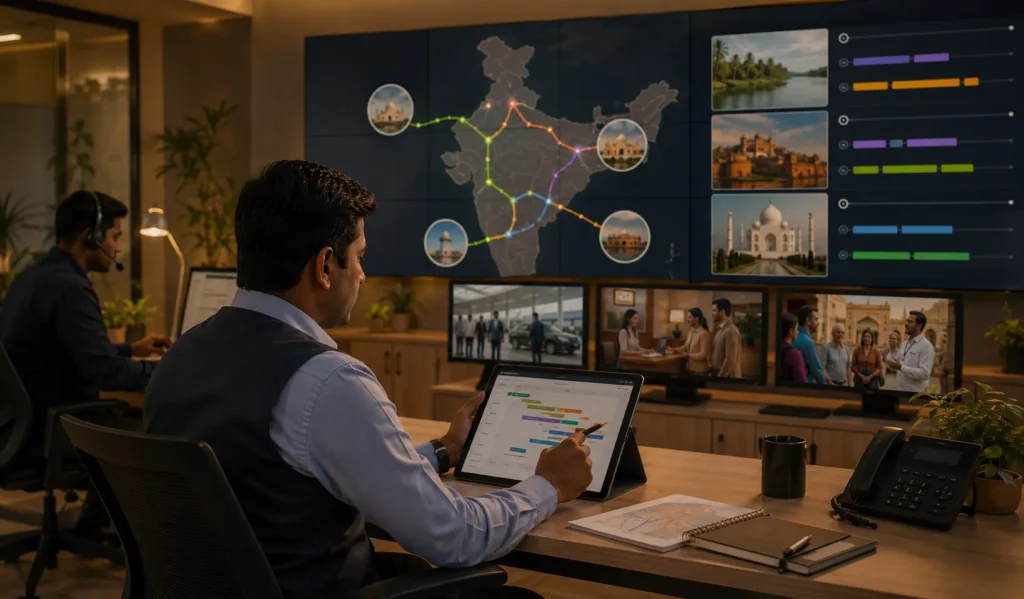
Travelers Experience One Holiday. We Coordinate Dozens Of Moving Parts.
Ask someone about their India tour after they return home and they’ll usually talk about the places they visited — the Taj Mahal sunrise, Kerala backwaters, Jaipur markets, or Kathakali performances in Kochi.
What they don’t see is everything happening behind those moments. Hotels adjusting for late arrivals, drivers adapting to delayed flights, guides being updated in real time, and dietary requirements shared before travelers even arrive.
That is exactly how it should be. A well-managed tour should feel effortless from the traveler’s point of view, even though dozens of coordinated actions are happening behind the scenes every day.
At White Pigeon Holidays, coordination is not just about bookings. It is about ensuring every supplier has the right information at the right time so travelers can focus entirely on the experience.
Multi-City Tours Are Different From Single-Destination Holidays
Planning one destination is relatively straightforward. Planning four or five destinations introduces an entirely different level of coordination.
A journey across Delhi, Agra, Jaipur, Udaipur and Kochi involves different hotels, transport partners, guides, airport processes and operational teams in each location.
To the traveler, it feels like one continuous holiday. Behind the scenes, multiple local teams are working together to make that consistency possible.
As itineraries grow longer, coordination becomes more critical. A short trip may involve one hotel and one driver. A two-week journey can involve several hotels, guides, domestic flights and multiple regional operations teams.
That is why multi-city travel is treated as one connected operation — not a collection of separate bookings.
Every Destination Has Local People Looking After It
One misconception some travelers have is that one tour manager personally controls every detail across the entire country. India is simply too large for that approach.
Instead, each destination operates with local coordination teams responsible for specific parts of the journey.
For a Rajasthan and Golden Triangle tour, this typically includes airport representatives, local coordinators, drivers, licensed guides, hotel teams, restaurant staff and transport partners — each managing one part of the experience.
Our responsibility is not to replace these roles, but to ensure they are connected through clear and continuous communication throughout the journey.
That is why coordination continues during the tour rather than ending at the time of booking confirmation.
Coordination Begins Long Before Travelers Leave Home
Operational planning begins weeks before arrival, not at the airport.
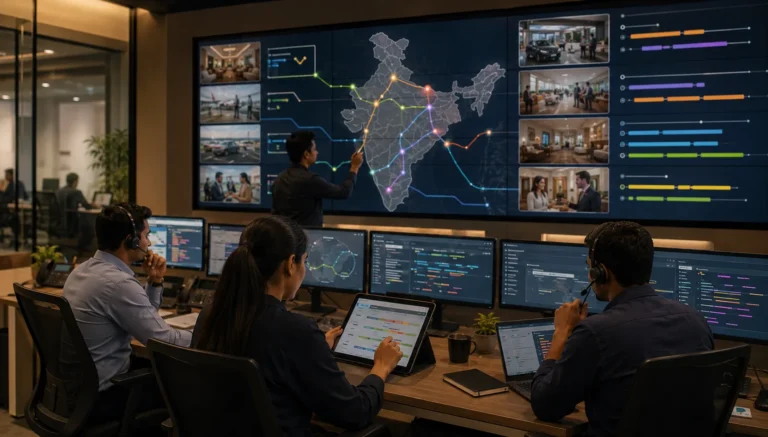
Our operations team reviews each confirmed itinerary in detail, checking hotels, transportation, guides, airport assistance, internal notes, domestic flights and emergency contacts.
Traveler preferences, dietary requirements, medical notes (if shared), and special occasions such as anniversaries are also included in planning documentation.
Nothing is left to memory alone. Every confirmed detail becomes part of a structured operational plan shared with local teams before travelers arrive.
This preparation ensures that when travelers land in India, local teams are already aligned — rather than collecting information during the journey itself.
We Confirm More Than Hotel Reservations
People naturally assume hotels simply receive a booking confirmation. Our coordination goes much further than that.
Hotels may also receive detailed information such as arrival time, room preferences, bed configuration, dietary requirements, accessibility needs, celebrations, and scheduling notes like early check-ins or late departures.
These details may seem small individually, but together they allow hotels to prepare properly before guests arrive.
The goal is simple: travelers should never need to repeat the same information multiple times during their journey.
Every Handover Between Cities Is Planned
One of the most important moments in any multi-city tour is the transition between destinations.
Check-out, luggage handling, road travel, flights, guide changes and hotel check-ins all happen within a short time window, involving multiple suppliers.
For example, during travel from Agra to Jaipur, while guests are still sightseeing at Fatehpur Sikri, several coordination tasks are already in motion.
The next hotel is updated with the revised arrival time. Dinner timing is adjusted if needed. The next day’s guide confirms the schedule in advance.
From the traveler’s perspective, they simply arrive slightly later or earlier. Behind the scenes, multiple coordinated updates ensure the transition remains smooth.
Communication Doesn’t End After The First Day
One of the biggest differences between booking individual travel services and operating a guided multi-city tour is continuous communication.
Every day brings new operational updates — longer sightseeing hours, weather changes, traffic delays, pharmacy stops, or flight schedule adjustments.
These updates matter because tomorrow’s hotels, drivers, guides, and transport partners depend on accurate, real-time information.
The goal is not constant communication for its own sake, but ensuring every supplier has what they need to support a smooth travel experience.
Case Study: A Delay That Never Reached The Hotel Reception
Travel Dates: 10 October – 20 October 2024
Travelers: Robert and Susan Walker
Home: Charlotte, North Carolina
The couple were travelling from Jaipur to Udaipur by road when a highway diversion caused an unexpected delay of nearly ninety minutes.
From their perspective, the journey remained comfortable. They took a longer lunch break and continued toward Udaipur without concern.
Behind the scenes, the driver informed the Rajasthan coordinator, the hotel received an updated arrival time, dinner service was adjusted, and reception prepared accordingly.
When Robert and Susan arrived, check-in was smooth, dinner was ready, and nothing felt out of place.
A few days later, Robert said: “I assumed someone must have called ahead because everyone already knew we were arriving late.”
What We Learned: Communication between suppliers is most valuable when travelers never realize it happened.
Every Day Ends With Tomorrow In Mind
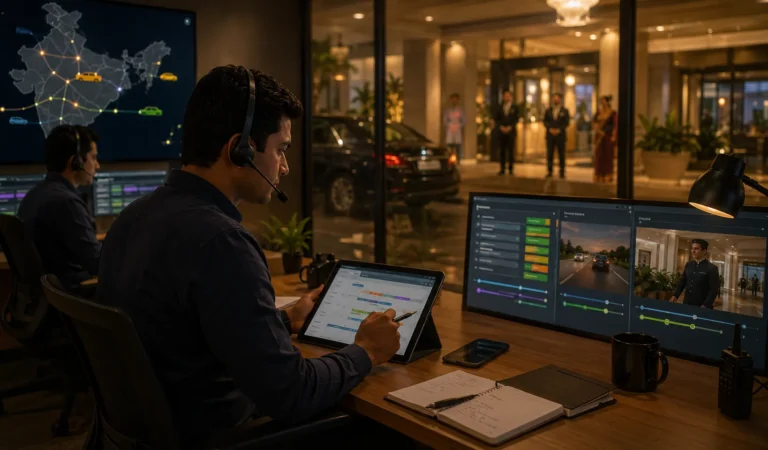
People often think operations focus only on today’s activities. In reality, today’s work also prepares tomorrow.
Before the day finishes, teams review key operational questions to ensure continuity of the journey.
Has the group arrived safely? Are tomorrow’s departure times still appropriate? Has weather changed? Are any traveler requests pending?
Have hotels confirmed breakfast? Has the next guide received updates? Are transport partners aware of traffic or road conditions?
By reviewing these questions daily, planning becomes continuous rather than a single pre-trip event, reducing unexpected disruptions during the journey.
Multi-City Coordination Is Really About Consistency
Whether a traveler is checking into a hotel in Delhi or boarding a houseboat in Kerala, the experience should feel connected.
Not because every destination is the same, but because the journey is managed in a consistent way.
Travelers should never have to wonder who will meet them, whether the hotel is ready, or if tomorrow’s arrangements are confirmed.
Those details are already handled behind the scenes through coordination between hotels, guides, transport teams, and operations staff. This is what makes multi-city travel feel seamless.
Domestic Flights Become Part Of One Continuous Journey
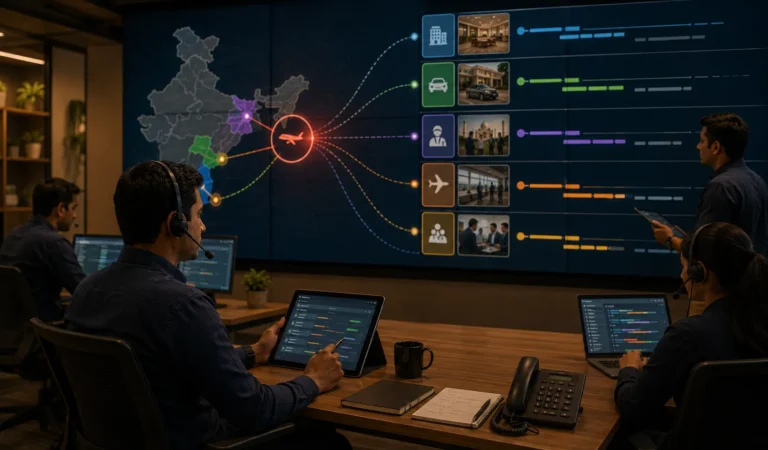
Many multi-city tours across India include domestic flights. From the traveler’s perspective, it may feel like a simple transfer. Behind the scenes, it becomes one of the most carefully coordinated parts of the entire itinerary.
Unlike road journeys, flights introduce additional variables such as airline schedule changes, airport congestion, security screening, baggage rules, terminal updates and arrival procedures.
Each of these factors influences what happens before and after the flight. That is why a domestic flight is never treated as an isolated booking.
Instead, the entire day is planned around it to ensure a smooth transition between destinations.
Airport Transfers Are Coordinated From Both Ends
Airport transfers are never treated as one-way logistics. Every movement has two coordinated sides — departure and arrival.
For example, when travelers check out of a hotel in Kochi, multiple teams are already aligned: the driver knows the departure time, the hotel adjusts breakfast, and the airport representative has updated flight details.
At the same time, the arrival destination is already preparing. The receiving driver is informed, the hotel has the estimated check-in time, and any dietary or special requirements have already been communicated.
This overlap between departure and arrival teams ensures continuity across cities, so each destination feels connected rather than separate.
Instead of treating every city as an independent booking, we connect them through real-time coordination long before the traveler arrives.
Local Guides Join The Tour At The Right Time
Many travelers assume the same guide travels with them throughout India. That is rarely how multi-city operations work.
India is a vast country, and each region has specialists who understand its history, culture, and heritage in depth.
A guide in Delhi often focuses on Mughal architecture, while a guide in Kochi may explain spice trade routes and colonial history. In Udaipur, the focus shifts to Rajasthan’s royal legacy.
Instead of using one generalist guide, we coordinate local experts for each destination so travelers receive accurate, meaningful context at every stop.
Drivers And Guides Don’t Work Independently
Another common misconception is that drivers and guides simply meet on the morning of the tour. In reality, coordination begins much earlier.
The guide knows where and when the driver will arrive, while the driver is fully briefed on the route, timing, and daily plan.
If traffic or weather requires adjustments, both remain in contact with the operations team to update the plan in real time.
This level of coordination is especially important in busy cities like Delhi and Jaipur, where timing and navigation can change quickly.
When everyone is aligned in advance, travelers spend less time waiting and more time experiencing each destination smoothly.
Every Hotel Arrival Is Monitored
One thing travelers rarely see is how much attention is given to arrival times.
Hotels do not simply receive a booking months in advance and wait in silence. Arrival updates are shared whenever required.
If the group is delayed due to extended sightseeing, weather changes, traffic, or longer lunch stops, revised timings are communicated to the hotel.
This allows hotels to prepare rooms, adjust dinner timing, and organize assistance so arrivals feel smooth and coordinated.
Weather Reviews Continue Throughout The Tour
Weather planning does not end once the itinerary is confirmed. Conditions continue to evolve throughout the journey.
In Kerala, rainfall patterns may shift during monsoon. In North India, winter fog can affect early morning travel. In Rajasthan, high temperatures may impact afternoon sightseeing comfort.
Local teams continuously monitor these changes and adjust timing when required.
Sometimes adjustments are minimal, such as leaving slightly earlier or changing the order of activities. Other times, timing shifts improve comfort significantly.
Most travelers experience these refinements simply as a well-paced and comfortable day.
Road Conditions Are Reviewed Even After Departure
India’s road network continues improving every year. At the same time, road conditions can change unexpectedly due to maintenance work, festival processions, local events, diversions, or heavy rainfall.
Rather than relying only on maps created months earlier, drivers and local coordinators continue sharing updates throughout the journey.
For example, in August 2024, a route from Thekkady to Kumarakom required adjustment due to overnight road maintenance.
A new route was selected, adding about thirty minutes to the drive but improving overall travel conditions for the group.
Case Study: One Flight Delay Created Five Operational Updates
Travel Dates: 19 January – 30 January 2025
Travelers: Daniel and Sarah Roberts
Home: Boston, Massachusetts
The couple were flying from Kochi to Jaipur via Bengaluru when a delay affected the connecting flight.
While the delay itself was manageable, it triggered a coordinated response across multiple teams.
The airport representative stayed updated, the arrival driver adjusted timing, the hotel revised check-in expectations, dinner service was delayed, and the next day’s guide shifted the schedule slightly.
From the traveler’s perspective, everything still felt seamless.
As Daniel later said, “Everyone already seemed to know what had happened with the flight.” That is the purpose of continuous coordination — travelers should never need to repeat updates across suppliers.
Behind Every Smooth Tour Is Constant Communication
When people imagine tour operations, they often picture one office making occasional phone calls. The reality is much more continuous and connected.
Drivers stay in touch with operations teams, hotels confirm arrivals, guides update sightseeing progress, airport teams track flight movements, and transport partners share road conditions.
Operations act as the coordination layer, ensuring information flows between all parties involved in the journey.
Most of these conversations are brief. Their value comes from timing — sharing the right information before it becomes urgent.
Coordination Means Looking Ahead Instead Of Catching Up
Experience has shown that logistics become smoother when the next destination is already prepared before travelers leave the current one.
Hotels are informed in advance of arrival times, guides understand group preferences, transportation is confirmed, and breakfast schedules are adjusted when early departures are planned.
This forward-looking coordination allows the tour to flow naturally from one destination to the next.
From the traveler’s perspective, the journey simply continues. Behind the scenes, today’s coordination becomes tomorrow’s preparation.
Every Operational Plan Includes A Contingency Plan
One question we occasionally hear is, “What happens if something doesn’t go according to plan?”
The honest answer is that unexpected situations are part of travel — flights get delayed, roads close, weather changes, and hotel or health situations can shift plans suddenly.
The difference is not whether these situations happen, but how quickly and effectively everyone responds.
That is why every itinerary is supported by contingency thinking long before the journey begins.
Daily Operational Reviews Continue Until The Tour Ends
Planning does not end when the tour begins. Each evening acts as a reset point for the following day.
The operations team reviews whether the day ran smoothly, whether any delays occurred, and whether travelers requested adjustments.
They also check tomorrow’s weather forecast, transport readiness, hotel confirmations, and whether guides need additional instructions.
These are not formal meetings — they are practical checks that allow small adjustments to be made before they become larger disruptions. Over time, this habit becomes one of the most important parts of operational planning.
Medical Situations Require Calm Coordination
Most tours proceed without any significant medical concerns. Occasionally, travelers may need assistance with minor health-related situations during the journey.
This can include locating a pharmacy, visiting a nearby clinic, adjusting sightseeing schedules, or helping replace essential medication.
The role of operations is not to provide medical advice, but to ensure travelers are supported and never left to manage unfamiliar situations alone.
Flexibility in planning allows the journey to continue comfortably even when unexpected health needs arise.
Communication Matters Most During Unexpected Situations
Experience shows that travelers are rarely upset by changes themselves. They are affected more by uncertainty and lack of communication.
During delays or disruptions, clear communication becomes essential — explaining what has changed, why it has changed, and what happens next.
Whether it is traffic, weather, or flight delays, travelers are kept informed while hotels, drivers, and guides are already updated in the background.
Transparency reduces stress. When travelers understand the situation, even unexpected changes feel manageable and controlled.
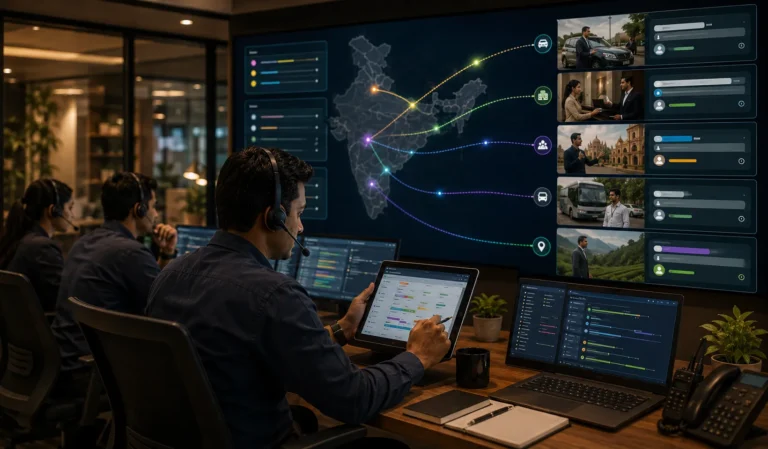
Suppliers Work As One Team, Even Though They Are In Different Cities
One of the most interesting aspects of multi-city operations is that many of the people involved never actually meet each other.
A hotel manager in Kochi may never meet a guide in Jaipur. An airport representative in Delhi may never meet a driver in Udaipur. Yet all of them contribute to the same journey.
This only works when information flows consistently across the entire operation instead of remaining isolated within each city.
Arrival times, traveler preferences, special requests, transport schedules and dietary requirements move seamlessly through the system as the travelers move through India.
Case Study: One Morning, Four Different Cities
Date: 18 January 2025
That morning demonstrated how interconnected a multi-city operation can be.
While one group was checking out of a hotel in Delhi, another was arriving in Kochi from the United States. At the same time, multiple operations were happening across the country.
A driver in Jaipur was collecting travelers for an excursion. A guide in Agra had confirmed monument timings. A transport coordinator in Udaipur was monitoring road conditions after overnight rain. Hotel teams in multiple cities were preparing for arrivals.
To travelers, these appeared as separate holidays. Inside operations, they were part of one continuously coordinated system.
That day reinforced a key principle: operational scale is not about managing one large tour, but about managing multiple individual journeys without letting them interfere with each other.
We Learn From Every Tour We Coordinate
One reason our coordination process continues improving is that every completed tour becomes another source of learning.
Sometimes the lesson is operational — such as improving hotel arrival communication or adjusting departure timing for smoother travel flow.
Other times, traveler feedback highlights small but meaningful improvements that were not previously considered.
Continuous improvement rarely comes from major changes. It is usually built from small observations repeated over time.
Technology Helps Us Coordinate Faster. People Still Make The Difference.
Modern operations rely heavily on technology — flight alerts, digital itineraries, navigation systems, messaging platforms and hotel confirmations all improve speed and accuracy.
However, technology alone cannot replace local judgement and on-ground experience.
A driver understands traffic patterns during festivals, a guide interprets how weather changes sightseeing flow, and hotel managers anticipate guest needs after delays.
Technology provides information. People decide how to act on it.
The strongest travel operations combine both systems — digital efficiency and human understanding working together.
The Goal Is Simple Even If The Operation Is Complex
Behind every multi-city tour, there are dozens of people involved in different parts of the journey.
Drivers, guides, hotel teams, airport representatives, operations coordinators, transport partners, and restaurant staff all contribute in their own way.
Each person sees only one part of the operation. The traveler experiences all of it as one continuous journey.
That alignment is what makes a complex system feel simple from the outside.
Looking Back, Coordination Is Really About Reducing Uncertainty
When travelers book a multi-city tour in India, they think about destinations — Kerala, Jaipur, Udaipur, and others.
But behind those questions sits a deeper concern: whether all parts of the journey will connect smoothly.
That is what operational coordination is designed to ensure.
Hotels are informed of arrivals in advance, guides are aligned with schedules, drivers know exact meeting points, and restaurants are briefed on dietary requirements.
When this system works well, travelers do not think about logistics. They focus on the experience — the places they visited, the people they met, and the memories they created.
That outcome is the clearest sign that coordination has done its job.
Frequently Asked Questions
1. How does White Pigeon Holidays coordinate tours across multiple cities?
We coordinate hotels, transportation providers, guides, airport representatives and local operations teams so every destination connects smoothly with the next.
2. Does each city have its own local team?
Yes. Local coordinators, drivers and guides manage destination-specific operations while remaining connected with the overall itinerary.
3. How are hotel arrivals coordinated?
Hotels receive booking details, estimated arrival times and relevant traveler information before guests reach the property.
4. What happens if a domestic flight is delayed?
Our operations team communicates updated arrival information with drivers, hotels, guides and other suppliers so adjustments can be made where necessary.
5. How do you coordinate guides in different cities?
Each guide receives the itinerary, sightseeing schedule and relevant traveler details before meeting the group.
6. Do you review tours while they are in progress?
Yes. Daily operational reviews help monitor schedules, weather, transport and traveler requests throughout the journey.
7. What happens if road conditions change unexpectedly?
Local transport teams evaluate alternative routes and update arrival times with hotels and suppliers when needed.
8. How do you manage medical situations during a tour?
We help travelers access local assistance, coordinate practical arrangements and adjust the itinerary when necessary.
9. Does communication continue after the tour begins?
Yes. Communication between operations teams and suppliers continues throughout the journey.
10. How do you improve coordination over time?
Traveler feedback, operational reviews and past tour experience help refine systems continuously.
11. Is technology enough to manage a multi-city tour?
Technology supports coordination, but local knowledge and experienced teams are essential for real-time decisions.
12. What is the biggest objective of multi-city tour coordination?
To ensure travelers experience one seamless holiday while operational complexity remains invisible behind the scenes.

