
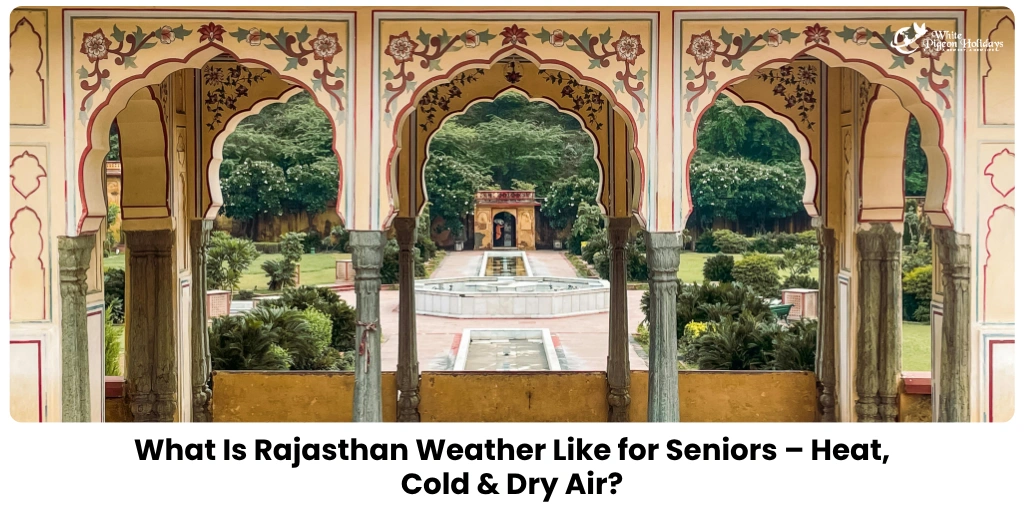
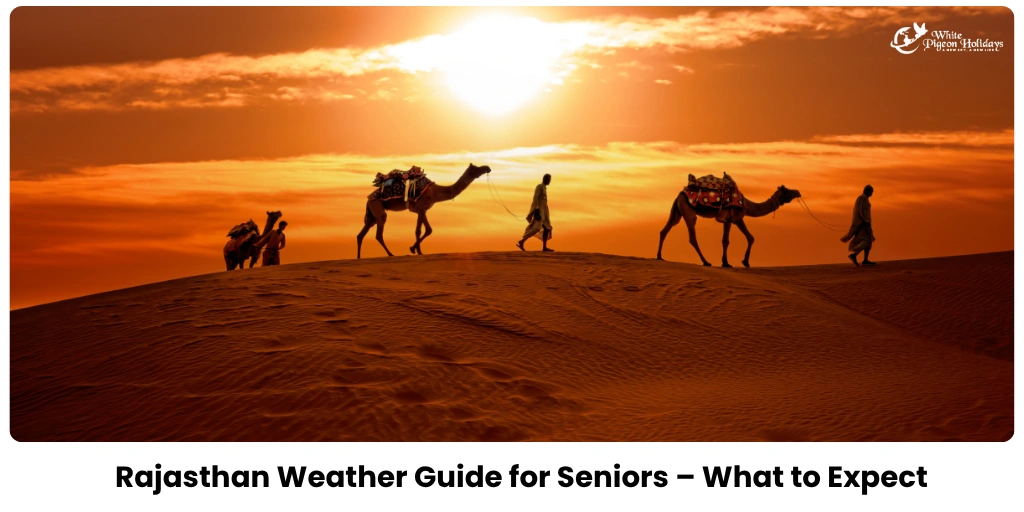
When people think about Rajasthan, three things usually come to mind — heat, desert, and extreme weather.
And if you’re a senior traveler from the USA planning your India tour, this is probably one of your biggest concerns:
“Will I be able to handle the climate?”
That’s a valid question.
Rajasthan’s weather is not mild or predictable like many parts of the US. It has strong seasonal shifts — hot days, cool nights, and very dry air.
But here’s the good news:
Thousands of senior travelers visit Rajasthan every year comfortably — because they plan it right.
In this guide, I’ll walk you through exactly what to expect, how Rajasthan climate for seniors really feels, and how you can prepare without stress.
Overview of Rajasthan’s Unique Climate Zones
Rajasthan is not just one uniform desert. It has different climate patterns depending on region and season.
What makes Rajasthan weather unique?
- Desert regions (Jaisalmer, Bikaner): Very dry, hot days, cooler nights
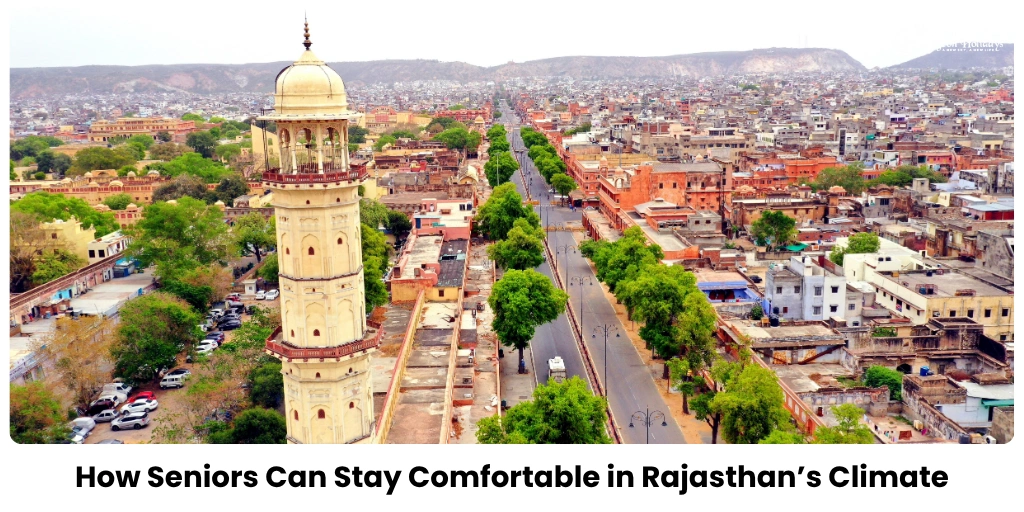
- City zones (Jaipur, Jodhpur): Urban heat but manageable with facilities
- Lake regions (Udaipur): Slightly milder, more comfortable
Seasonal Breakdown
Summer (April – June)
- Very hot (often 38°C–45°C / 100°F–113°F)
- Dry heat, strong sunlight
Monsoon (July – September)
- Light to moderate rain
- Slight drop in temperature
Pleasant Season (October – March)
- Best travel period
- Comfortable days, cool nights
Night Temperature Factor
Even when days are warm, desert areas cool down quickly at night, especially in winter.
This is why understanding Rajasthan temperatures by month is important for seniors.
Download Your Climate Buddy Guide
A simple, printable guide with:
- Month-by-month weather
- What to wear
- Health tips for each season
This makes planning much easier.
How Heat Affects Senior Travelers
Let’s talk honestly — heat is the biggest challenge in Rajasthan.
But the impact depends on how you manage it.
What heat actually does to seniors
- Faster dehydration
- Reduced stamina
- Increased fatigue during sightseeing
- Higher sensitivity to sun exposure
Heat Impact on Seniors
| Location Type | Medical Quality | What to Expect |
|---|---|---|
| Jaipur / Udaipur | High | Multi-specialty hospitals |
| Jodhpur | Good | Emergency & trauma care |
| Pushkar / Small Towns | Basic | Clinics + transfer to city |
| Tourist Areas | Reliable | Pharmacies & first aid |
What “heat tolerance” really means
It doesn’t mean you have to tolerate extreme heat.
It means:
- Planning outdoor activities in morning/evening
- Using AC transport
- Taking frequent breaks
This is how experienced travelers manage heat tolerance for senior travelers in India.
Cold & Night Time Temperature Swings — What to Expect
Here’s something many travelers don’t expect:
Rajasthan can get surprisingly cold at night.
Especially during winter months.
What happens at night
- Desert regions lose heat quickly
- Temperatures drop significantly after sunset
- Early mornings can feel chilly
Examples
- Jaipur (winter nights): Around 8–10°C (46–50°F)
- Udaipur: Slightly milder but still cool
- Desert camps: Can feel colder due to open surroundings
What this means for seniors
- Joint stiffness may increase
- Cold sensitivity can affect sleep
- Early morning outings may feel uncomfortable
Simple solution
- Carry light jackets or layers
- Dress in layers — easy to adjust
- Avoid very early outdoor plans in winter
Dry Air & Dehydration — A Hidden Concern
This is one of the most overlooked parts of Rajasthan weather.
The air here is extremely dry, especially in desert regions.
How dry air affects seniors
- Dry skin and lips
- Throat irritation
- Mild breathing discomfort
- Faster dehydration (even without sweating much)
What helps
- Drink water regularly (don’t wait for thirst)
- Use moisturizer and lip balm
- Keep saline spray or basic nasal hydration if needed
- Avoid sitting too long in strong AC airflow
Hotel tip
Most good hotels:
- Provide comfortable AC control
- Can arrange humidifiers on request (in premium properties)
This is important when dealing with dry weather Rajasthan effects on elderly travelers.
Best Time of Year for Seniors to Visit Rajasthan
If you ask me directly, I’ll say this clearly:
Timing makes all the difference.
Ideal travel months
October to March
- Comfortable temperatures
- Balanced weather
- Best for sightseeing
Months to be cautious
April to June
- Very hot
- Travel possible only with careful planning
Monsoon (July–September)
- Not heavy rainfall like South India
- Slightly cooler
- Fewer crowds
Quick summary
| Month Range | Travel Suitability |
|---|---|
| Oct – Mar | Best for seniors |
| Apr – Jun | Hot, requires planning |
| Jul – Sep | Moderate, less crowded |
Practical Tips to Handle Rajasthan Weather Comfortably
Let’s make this practical.
These are things experienced travelers actually follow:
Daily travel habits
Hydration routine
- Drink water every 30–45 minutes
- Always carry a bottle
Clothing
- Light cotton during day
- Layers for evening
Sun protection
- Hat or cap
- Sunglasses
- Sunscreen
Smart sightseeing timing
- Morning: 7 AM – 11 AM
- Evening: After 4 PM
- Avoid mid-day outdoor tours
Energy management
- Take rest breaks
- Don’t rush multiple attractions
- Use private car instead of long walks
Food & comfort
- Eat freshly cooked meals
- Avoid overexertion
- Stay in well-rated hotels
Get Your Packing Checklist
A ready checklist including:
- Weather-based clothing
- Health essentials
- Travel comfort items
This makes packing simple and stress-free.
How Guides & Tour Operators Help You Handle the Climate
This is where planning really pays off.
A well-designed tour makes Rajasthan feel easy — not exhausting.
What good tour operators do
- Plan sightseeing during cooler hours
- Include AC transport throughout
- Add rest breaks and shaded stops
- Adjust itinerary based on weather
Why this matters
Instead of struggling with weather, you:
- Stay comfortable
- Enjoy more
- Avoid unnecessary stress
This is why senior travel weather planning Rajasthan is not just about weather — it’s about how your trip is structured.
Get My Weather-Ready Tour Quote
If you want:
- Climate-friendly itinerary
- Comfortable pacing
- Medical and travel support
You can request a personalized Rajasthan plan built specifically for seniors.
FAQs Seniors Often Search About Rajasthan Weather
Yes, but only with proper planning — early morning activities, AC transport, and hydration. Otherwise, it can feel exhausting.
Yes, especially in desert areas. Nights can feel quite cool, so layering is important.
The air is dry but manageable. Staying hydrated and using basic skincare helps avoid discomfort.
Peak summer (May–June) is best avoided unless travel is carefully planned.
Higher-end hotels can arrange humidifiers on request and offer controlled AC environments.
Rajasthan’s climate sounds intense when you read about it — heat, cold nights, dry air.
But when you understand it properly, it becomes predictable and manageable.
And that’s the key.
You don’t need to “handle extreme weather.”
You just need to plan around it smartly.
That’s how senior travelers don’t just visit Rajasthan —
they enjoy it fully, comfortably, and confidently.
