
When people from the USA or UK start reading about India, they usually come across very strong words — busy, colorful, intense, overwhelming.
But when Kerala comes up, the language changes.
People describe Kerala as:
- Calm
- Green
- Slow
- Peaceful
- Nature-focused
This contrast creates curiosity. Travelers begin to wonder:
Is Kerala really that different?
And more importantly, what is Kerala known for as a holiday?
This blog helps you understand the type of holiday Kerala offers — without selling, exaggerating, or pushing any decision.
Kerala Is Not a Sightseeing-Heavy Destination — And That’s the Point
Experience Over Attractions
Kerala does not work like a checklist destination.
You don’t visit Kerala to tick off monuments every hour. Instead, the focus is on how the days feel, not how many places you cover.
The Kerala travel experience is shaped by:
- Long stretches of greenery
- Waterways instead of highways
- Daily life happening slowly around you
- Staying in one place longer rather than moving constantly
In Kerala, it’s normal to spend half a day doing “nothing” — sitting near water, walking through a village, watching rain, or just resting. That’s not wasted time here. That is the experience.
What Kind of Holiday Is Kerala Best Known For?
A Slow-Paced, Nature-Oriented Holiday
The most accurate way to describe Kerala is this:
It’s a nature-first destination.
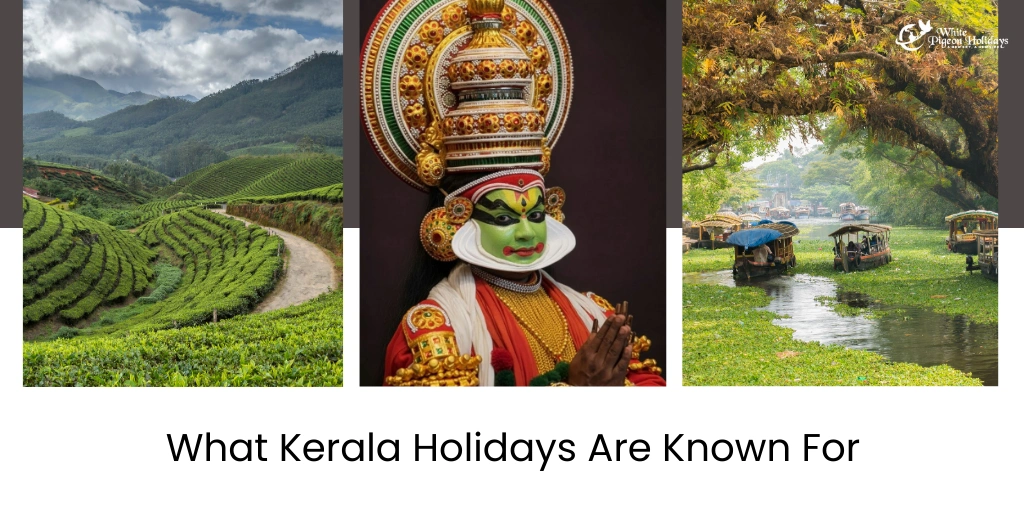
The Kerala holiday type is shaped by its landscapes:
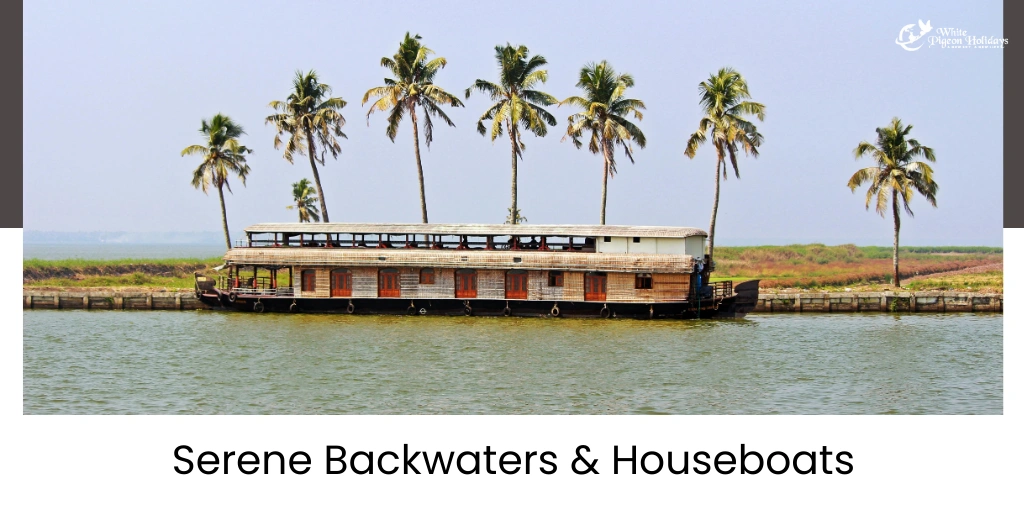
- Backwaters with narrow canals and palm trees
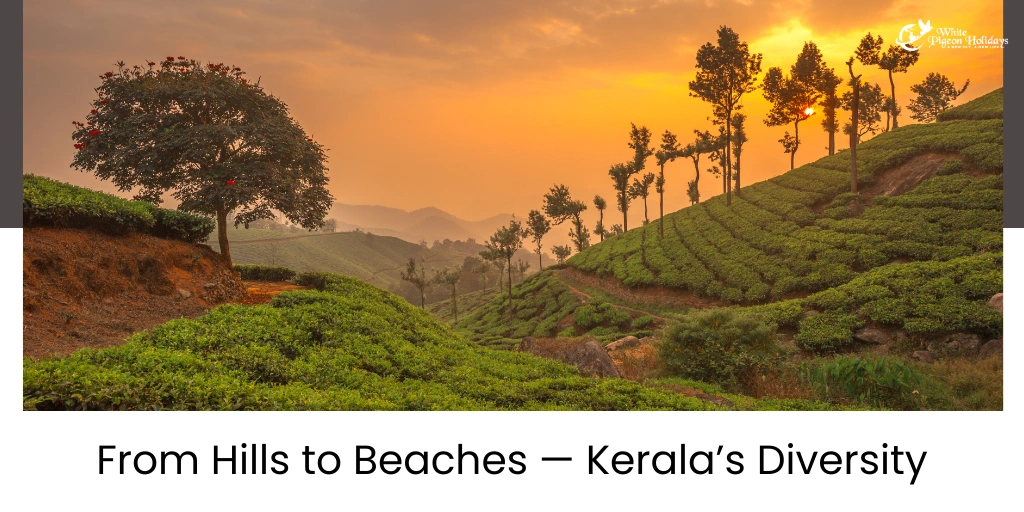
- Hill areas with tea and spice plantations
- Quiet beaches with fewer crowds
- Small towns surrounded by green fields
These surroundings automatically slow your pace. There’s no pressure to rush. Travel days are shorter, stays are longer, and evenings are quiet.
If you’re asking what kind of trip is Kerala, the answer is simple:
A trip where nature sets the rhythm.
A Wellness and Rejuvenation-Oriented Break
Kerala is often linked with wellness, but not in a loud or flashy way.
The Kerala tourism experience supports rest naturally through:
- Early mornings
- Fresh, simple food
- Clean air and open spaces
- Predictable daily routines
Themes that define this side of Kerala:
- Rest without guilt
- Balance between activity and pause
- Feeling settled rather than rushed
Even travelers who don’t come “for wellness” often leave feeling rested — without realizing why.
A Cultural Experience That Feels Calm and Observational
Culture in Kerala is not performed for attention. It lived quietly.
You notice it in:
- Local meals served on banana leaves
- Village roads where daily life moves slowly
- Traditional homes still used by families
- Conversations that feel unhurried
This makes Kerala different from regions where culture feels dramatic or high-energy.
For travelers wondering what kind of trip is Kerala, it’s a place where you observe culture gently rather than chase it.
How the Kerala Travel Experience Feels for First-Time India Travelers
Less Sensory Overload, More Comfort
Many first-time visitors worry about sensory overload in India — noise, crowds, constant movement.
Kerala often feels easier.
Here’s why is Kerala good for first time India travelers is such a common question — and often answered positively:
- Less honking and traffic chaos
- Smaller towns instead of mega cities
- Nature acting as a buffer
- Polite, reserved communication style
This does not mean Kerala is isolated or empty. It simply means the intensity level is lower.
Easy Transitions Between Nature, Stay, and Daily Activities
In many parts of India, travel days can feel long and tiring.
In Kerala, transitions are smoother.
The Kerala travel experience usually looks like this:
- Short drives between stays
- One main activity per day
- Afternoons left open
- Evenings that end early
This balanced flow helps travelers feel settled quickly, especially those visiting India for the first time.
Kerala Compared to Other Indian Holiday Styles
To understand Kerala better, it helps to see it alongside other popular regions. This gives context to Kerala vs rest of India travel.
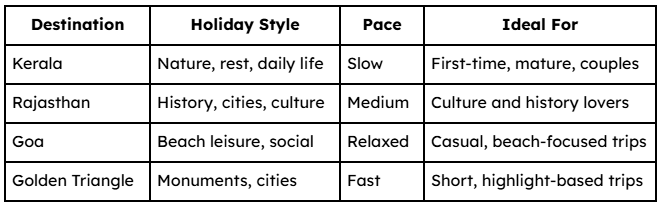
Kerala is not better or worse. It simply serves a different travel mood.
Who Usually Enjoys Kerala the Most?
Kerala does not try to appeal to everyone. That’s one of its strengths.
The Kerala holiday type suits travelers who value:
- Calm over constant movement
- Nature over monuments
- Comfort over intensity
- Depth over speed
It connects especially well with:
- Couples looking for quiet time
- Mature travelers
- Nature-focused explorers
- First-time India visitors wanting a softer entry
If these points feel familiar, Kerala often feels like a natural fit.
What Kerala Is Not Known For
Setting expectations clearly matters.
Here’s what Kerala is known for — and what it is not.
Kerala is not:
- Monument-heavy like North India
- Focused on nightlife or late evenings
- Designed for fast-paced city hopping
- A destination where you rush every day
Knowing this upfront avoids disappointment and builds the right mindset.
Final Thought: Kerala Is a Feeling-Based Holiday, Not a Fast One
Kerala is not defined by how many places you visit.
It’s defined by how you feel while you’re there.
The Kerala travel experience is about:
- Pace
- Environment
- Comfort
- Space to breathe
If you value how a place feels more than how much you cover, Kerala makes sense — especially for first-time visitors to India.
Want a Simple Overview Before Going Deeper?
📘 Kerala Snapshot Guide (PDF)
This guide includes:
- Regions of Kerala and what each offers
- Type of holiday each area suits
- How Kerala differs from other India destinations
FAQs
What kind of holiday is Kerala best known for?
A slow-paced, nature-oriented, comfort-focused holiday.
Is Kerala suitable for first-time India travelers from the USA and UK?
Yes. Many find it calmer and easier to adjust to.
Is Kerala more relaxing than other parts of India?
In general, yes — due to nature, pacing, and environment.
What do tourists usually do during a Kerala trip?
Enjoy nature, daily life, short activities, and relaxed routines.
How is Kerala different from Rajasthan or North India?
Kerala focuses on nature and calm, while North India focuses more on history and cities.
