Is Kerala Food Safe for Western Travelers?
Yes — If You Know What to Choose.
The risk is not the cuisine itself.
It is making uninformed choices about where you eat and what you drink.
Kerala is one of the safest states in India for western travelers when it comes to food.
Most dishes are made fresh, cooked at high heat, and served immediately.
If you eat in the right places and follow a few simple rules, you can eat well here without worry.
Scroll down for the full food safety guide.
Including a dish-by-dish safety table and where to eat with confidence in Kerala.
Five Simple Habits That Help Me Eat with Confidence in Kerala
1. Be Careful with Drinking Water
If there is one food safety rule I never ignore in Kerala, it is this one.
I do not drink tap water, even in good hotels. I always choose sealed bottled water and check that the seal has not been broken before opening it.
I also avoid ice unless I am dining at a reputable hotel or restaurant where I know it is made from purified water.
Even when brushing my teeth, I prefer using bottled water. It is a simple habit that gives me extra peace of mind throughout the trip.
In my experience, following this one rule prevents most of the food and water concerns that first-time travelers worry about. It takes very little effort and can make a big difference to your overall travel experience.
2. Choose Freshly Cooked, Hot Meals
One of the easiest ways to enjoy Kerala’s food with confidence is to order dishes that are freshly prepared and served hot.
Most traditional Kerala meals, especially curries, grilled seafood, and breakfast dishes, are cooked thoroughly and brought to the table straight from the kitchen.
I do, however, avoid foods that have been sitting out for a long time, such as:
- Uncovered food at roadside stalls.
- Buffet dishes that have been sitting for hours.
- Sauces or condiments that do not appear freshly prepared.
My rule is simple: if the meal arrives hot and freshly cooked, I am usually happy to order it.
It is an easy habit to follow and one that has served me well on every trip to Kerala.
Traditional Kerala Food for Western Travelers
Kerala’s cuisine is fresh, flavorful, and surprisingly approachable for first-time visitors. While some dishes are spicy, many are mild, comforting, and easy to enjoy, making Kerala one of the best places in India to experience local food.
What Makes Kerala Cuisine Unique?
- Fresh coconut is used in curries, chutneys, and desserts.
- Seafood is widely available along Kerala’s coastline.
- Rice is the staple food instead of wheat.
- Many traditional dishes are naturally gluten-free.
- Meals are prepared with fresh herbs, spices, and locally grown vegetables.
Good to Know Before You Order
- Most hotels can prepare dishes with less spice if you ask.
- Breakfast options are usually mild and easy to digest.
- Freshly cooked meals are generally the best choice.
- Vegetarian options are available almost everywhere.
- Seafood is often caught locally and served fresh.
Beginner-Friendly Traditional Dishes
Appam with Vegetable Stew
Soft rice pancakes served with a mild coconut-based vegetable stew.
Kerala Fish Curry
A flavorful curry prepared with fresh local fish and traditional spices.
Puttu with Kadala Curry
Steamed rice cakes served with a gently spiced black chickpea curry.
Malabar Parotta
A flaky flatbread that pairs perfectly with mild curries.
Kerala-Style Grilled Fish
Fresh fish marinated with local spices and grilled to order.
Our recommendation: If this is your first visit to Kerala, begin with these dishes. They provide a wonderful introduction to Kerala’s food culture without overwhelming unfamiliar tastes, and they are commonly available at good restaurants and hotels.
3. If I Cannot Peel It, I Usually Skip It
Fresh fruit is one of the best parts of traveling in Kerala, but I follow one simple rule.
If I can peel it myself, I am happy to eat it.
Fruits such as bananas, oranges, and other fruits with a natural protective skin are generally a safe choice because you remove the outer layer yourself before eating.
On the other hand, I usually avoid:
- Raw salads from roadside stalls.
- Pre-cut fruit that has been sitting out.
- Fruit that has already been peeled or prepared by unknown vendors.
This is not because these foods are always unsafe. It is simply an easy habit that reduces unnecessary risk and lets me enjoy local produce with greater confidence throughout the trip.
4. Busy Restaurants Are Usually a Better Choice
This surprises many first-time visitors, but a busy restaurant is often a very good sign.
When local people are eating there and tables are turning over quickly, the food is usually prepared fresh throughout the day.
That is often a better indicator of quality than choosing a place simply because it looks attractive or quiet.
When deciding where to eat, I usually look for:
- Restaurants that are popular with local families.
- Places where food is cooked and served continuously.
- Busy kitchens with a steady flow of customers.
If I am ever unsure, I ask someone who knows the area well.
My favorite question is:
“Where would you eat if you were dining with your family?”
Whether it is the hotel staff or my driver, that recommendation has consistently led me to some of the best and most reliable meals in Kerala.
5. Mild Options Are Easy to Find
Kerala cuisine is not designed to overwhelm you with heat. It is built on balanced flavors like coconut, curry leaves, black pepper, and ginger.
If you prefer gentle flavors, just say:
“Less spicy, please.”
Most restaurants are very familiar with this request and will adjust the dish without any issue.
What I Personally Eat in Kerala (and Recommend to First-Time Visitors)
This is the point where concern usually turns into curiosity.
Kerala cuisine is diverse, fresh, and very approachable once you know what to choose. Most first-time travelers end up enjoying it more than they expect.
Here are some safe, popular, and easy-to-enjoy dishes I often suggest when someone is visiting for the first time.
Mornings are the easiest win
What Should You Eat for Breakfast in Kerala?
If you are trying Kerala food for the first time, breakfast is the easiest place to start.
Most traditional breakfasts are light, freshly prepared, and much milder than many travelers expect.
Appam with Stew
Soft rice pancakes served with a creamy coconut-based vegetable stew.
If you ask me where to start, this would be my first recommendation because it is light, comforting, and easy for most Western travelers to enjoy.
Idiyappam with Fish Moilee
Steamed rice noodles served with a mild coconut fish curry.
You get authentic Kerala flavors without overwhelming spices, making it a great choice for your first few days.
Dosa with Sambar
Crispy dosa is one of the easiest dishes to enjoy if you are trying South Indian food for the first time.
Most hotels prepare it fresh every morning, and you can always ask for a milder sambar if you prefer.
A Simple Tip Before You Order
Most good hotels across Kerala serve these breakfasts every morning.
If you are unsure what to order on your first day, start with one of these dishes before trying stronger regional flavors later in your trip.
Lunch and Dinner: Don’t Overthink It
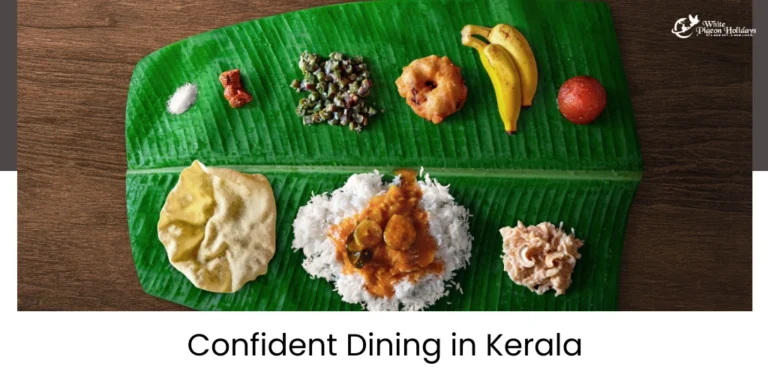
Kerala curries may look rich, but most dishes are balanced, coconut-based, and surprisingly mild for first-time visitors.
Street Food: Yes, But Do It Wisely
I do eat street food in Kerala, but I’m selective. The key is choosing fresh, hot, and high-turnover places.
• Food that looks pre-handled or reheated too many times
• Anything not served hot and fresh
5 Famous Foods of Kerala You Should Try
If you have only a few days in Kerala, these dishes give you a real taste of the region’s everyday flavors and traditions.
1. Appam and Stew
Soft, lacy rice pancakes served with a mild coconut-based vegetable or chicken stew. Light, comforting, and perfect for breakfast or dinner.
2. Kerala Fish Curry
Fresh catch cooked in a tangy, spiced coconut gravy. It is usually served with rice and reflects Kerala’s coastal cooking style.
3. Puttu and Kadala Curry
Steamed rice cakes layered with coconut, paired with a rich black chickpea curry. A popular breakfast that feels both filling and simple.
4. Malabar Parotta
Flaky, layered flatbread best enjoyed with spicy curries or grilled meat dishes. Common across Kerala’s local eateries.
5. Kerala Sadya
A traditional vegetarian feast served on a banana leaf with multiple small dishes. It is more than a meal, it is a cultural experience often enjoyed during festivals and special occasions.
Where I Feel Comfortable Eating (Ranked Honestly)
| Place | How safe it feels | My advice |
|---|---|---|
| Hotels & resorts | Very high | Perfect for your first few meals |
| Local meals restaurants | High | Best place for authentic food |
| Street stalls | Depends | Follow the crowd rule |
| Homestays | High | Some of the best food I’ve had |
If you’re staying at a homestay, eat what the family eats. That’s usually the safest food of the trip.
A Cultural Things That Help
A Few Food Tips You Should Know Before Visiting Kerala
These are small things, but they can make your dining experience much more comfortable from the very first day.
Local Dining Tips
- Eating with your hands is completely normal in Kerala. If you decide to eat the traditional way, use your right hand.
- Do not be surprised if you see beef on restaurant menus. It is commonly served in many parts of Kerala.
- You do not have to worry about ordering chai or filter coffee. Both are prepared with boiled water and are usually a safe choice.
- Tipping is appreciated, but you do not have to leave a large tip. Rounding up the bill is perfectly acceptable in many places.
Things I Always Carry
- Hand sanitizer
- Probiotics
- Basic stomach medicine
One Personal Tip
I have rarely needed to use any of them.
Still, I always keep them in my day bag because they give me peace of mind while traveling.
Best Kerala Foods You Can Try Easily
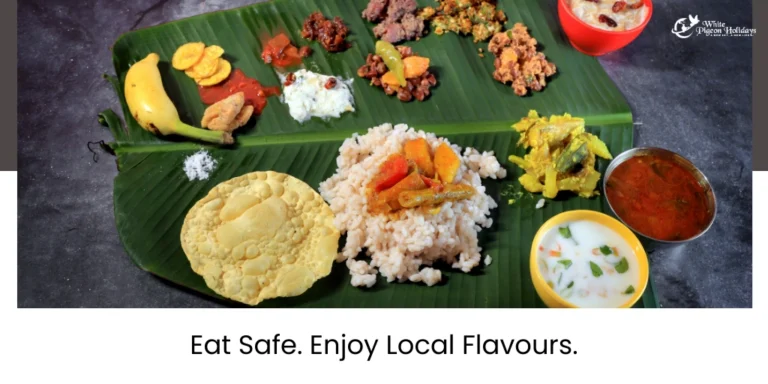
Not every dish in Kerala is spicy or hard to try. These are simple foods most travelers enjoy from day one.
- Appam with coconut stew – soft, mild, and easy to eat
- Grilled fish – simple seasoning, not heavy spice
- Vegetable biryani – flavored rice, not too hot
- Banana chips – crunchy snack, very safe choice
- Fresh fruits – mango, pineapple, papaya, and more
- Kerala fish curry – tangy and spicy, but very local
- Prawn roast – rich flavor with coastal spices
- Beef fry – dry spicy dish (common in Kerala)
- Chicken curry – served in different spice levels
The Honest Reality After Actually Traveling to Kerala
Being cautious about food is smart.
Letting that caution turn into fear is what usually holds travelers back.
Kerala’s food often becomes one of the most memorable parts of the trip—simple, fresh, and deeply tied to local life.
Once you follow a few basic rules, trust your judgment, and choose busy, freshly cooked meals, eating here becomes easy and enjoyable.
If you want a quick reference before your trip, you can download the Kerala Food & Dining Guide. It works well alongside our Kerala Tour Packages, especially if you care about eating comfortably while traveling.
Kerala Food for Western Travelers
Simple answers to help you eat safely, confidently, and enjoy Kerala’s food without worry.