
If you are over 60 and thinking about your first India trip, this is probably the first question on your mind.
Not temples.
Not palaces.
Not photos.
You want to know whether your body will cooperate.
That is a sensible question.
And it deserves a straight answer, not reassurance without facts.
This guide is written for seniors who want clarity before commitment.
Not pressure.
Not optimism.
Which Golden Triangle Monuments Are Actually Accessible — And Which Have Stairs You Can’t Avoid
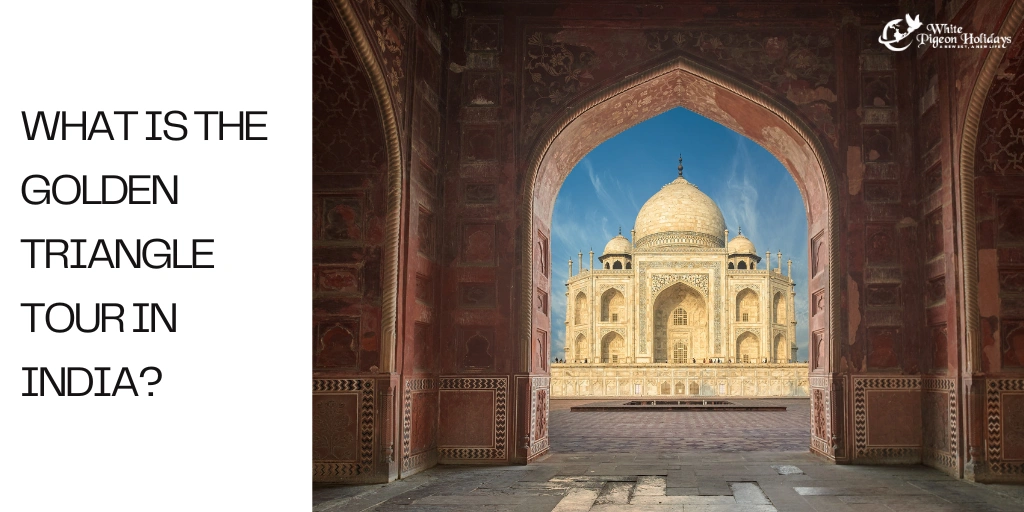
The Taj Mahal grounds are wheelchair-friendly with ramps and free wheelchairs at the gate.
But the mausoleum (the main building you go inside) has stairs — and there’s no ramp alternative.
Here’s the real breakdown by monument:

Written by
Nitin Batra
Founder & Travel Expert · White Pigeon Holidays
With 25+ years in the tourism industry — from Airport Concierge to Vice President — Nitin founded White Pigeon Holidays in 2021 to help international travellers explore India with confidence. His hands-on experience across Asia, Europe, the Middle East, and the West shapes every journey he crafts.
| Monument | Accessible? | What You Can Do | What You Can't Do |
|---|---|---|---|
| Taj Mahal Grounds | ✅ Yes | Full access using ramps, with free wheelchairs available at the entrance. | The main marble mausoleum is accessible only by stairs. |
| Agra Fort | 🟡 Mostly Yes | Most courtyards and pathways are paved and easy to navigate. | The first 10 minutes include uneven cobblestones near the entrance. |
| Baby Taj (Itmad-ud-Daulah) | 🟡 Mostly Yes | Most areas have ramps and smooth pathways throughout the complex. | The tomb chamber itself requires stepping up into the building. |
| Fatehpur Sikri | 🟢 Best Accessibility | Ramps reach almost every major section with very little uneven ground. | Only a few small historic areas have limited access. |
| Amber Fort | 🟠 Partial | Main viewpoints and some public areas can be reached. | Many palace interiors require stairs, with limited ramp access. |
| City Palace, Jaipur | ✅ Yes | Most courtyards, museums, and walkways are flat and wheelchair-friendly. | Only a few heritage rooms have restricted access. |
Battery-powered vehicles are available at the Taj Mahal, Agra Fort, and Fatehpur Sikri — so if walking the distances is the issue, those can be arranged on arrival.
One thing most people don’t know: India’s Archaeological Survey allows one companion to enter free with a visitor who has a physical disability at most of these sites.
If seeing the inside of the Taj mausoleum is a priority for you, this is something to think about before booking — because there’s no way around those stairs.
Why Seniors Ask About Physical Difficulty Before Anything Else
At this stage of life, stamina matters more than ticking boxes.
Long days, crowds, and constant movement can make or break a trip.
India’s reputation sometimes creates unnecessary fear.
The Golden Triangle, in particular, sounds intense if you have never been there.
Asking about physical difficulty early is not hesitation.
It is smart planning.
This is exactly why searches around golden triangle tour for elderly travelers are so common.
What “Physically Easy Travel” Means for Travelers Over 60
For senior travelers, difficulty is not just about walking.
It is about how the day feels as a whole.
Here is what usually matters most:
- Walking distance versus how long you are standing.
- Steps, slopes, and uneven surfaces at monuments.
- Hours spent in a car or train between cities.
- Crowd levels and sensory overload.
When people ask is Golden Triangle suitable for seniors, these are the real concerns behind the question.
How Much Walking Is Really Involved in the Golden Triangle?
Walking at Major Sights (Reality Check)
The Golden Triangle is generally manageable for most travelers over 60, but some attractions require moderate walking.
Places With More Walking
- Taj Mahal
- Amber Fort
- Old Delhi sightseeing areas
Places With Less Walking
- City drives
- Guided panoramic tours
- Cultural performances
- Local market visits
Most tours can be adjusted to match your comfort level.
Daily Tour Pace – Is the Golden Triangle Rushed or Manageable?
This depends entirely on how the tour is designed.
The route itself is structured.
It is not chaotic by default.
A senior-friendly day usually looks like this:
- Morning sightseeing after breakfast.
- A long midday break at the hotel.
- Light activity or rest in the evening.
Problems arise with rushed group tours.
Early starts every day create fatigue quickly.
That is why golden triangle tour pace for seniors matters more than the list of places visited.
Lorem ipsum dolor sit amet, consectetur adipiscing elit. Ut elit tellus, luctus nec ullamcorper mattis, pulvinar dapibus leo.
What to Do at the Taj Mahal If You Have a Bad Knee or Can’t Do StairsYou can still have a full Taj Mahal experience without climbing a single step.
The grounds, gardens, reflection pool, and exterior views are all on flat, ramp-accessible paths.
Here’s what people with knee problems or mobility issues typically do instead:
- Arrive at sunrise (gates open around 6am).
The light is better and the crowds are much smaller — less standing, less waiting. - Take a battery vehicle from the drop-off point to the main gate.
Saves about 10–15 minutes of walking on uneven ground. - Use the free wheelchair available at the East or West gate.
Even if you can walk, using it for the long stretches between the gate and the Taj saves your knees for the rest of the day. - Spend time at Mehtab Bagh across the river.
This garden gives you a straight-on view of the Taj from behind, with no crowds, flat ground, and no entry line.
Entry is around ₹300 (~$3.50). - Skip Fatehpur Sikri if energy is limited.
It’s 25 miles from Agra and adds 1.5–2 hours of travel.
The Taj grounds + Baby Taj is already a full half-day at a comfortable pace.
The honest truth: most people with bad knees say the Taj Mahal is one of the more manageable sites they visited in India.
The hard part is the travel between cities — sitting in a car for 3–5 hours — not the walking once you’re there.

Travel Time Between Delhi, Agra & Jaipur – What Seniors Should Expect
Travel days are often where energy is lost.
So expectations need to be realistic.
Delhi to Agra is around three to four hours by road or train.
Agra to Jaipur usually takes four to five hours with breaks.
Trains offer seated comfort and less road vibration.
Private cars allow door-to-door convenience and stops.
Breaking journeys with rest stops makes a noticeable difference.
This is why the route is rarely considered physically demanding when planned well.
Crowds, Standing Time & Sensory Fatigue
Crowds are part of popular monuments.
That cannot be avoided entirely.
What can be managed is timing.
Early entry and guided access reduce standing time.
Standing still often feels more tiring than walking.
Good guides move you through sites efficiently.
When seniors ask can seniors handle Golden Triangle tour, this is often what they are really worried about.
Hotels & Comfort – A Big Advantage for Senior Travelers
This is where the Golden Triangle works in your favor.
Hotels in these cities are consistent and predictable.
Elevators are standard.
Staff assistance is readily available.
Staying close to major sights reduces daily travel strain.
Reliable breakfast and room service help recovery.
This is why many consider the route India Golden Triangle senior friendly when comfort is prioritised.

When the Golden Triangle May Be Challenging for Some Seniors
It is important to be honest here.
The route may feel challenging if:
- There are severe mobility issues without assistance.
- Heat sensitivity is extreme and travel is planned in peak summer.
- Crowds cause significant anxiety.
This does not rule the trip out.
It simply means planning must be even more careful.
What to Ask Your Tour Operator Before You Book If You Have Mobility ConcernsMost tour operators in India are not trained in accessibility — so you need to ask specific questions, not general ones.
“Is it suitable for seniors?” will get you “yes.” What you actually need to know is different.
Here are the specific questions that get you real answers:
About the vehicle:
- Is the vehicle a standard SUV or a higher step-entry van?
- Can we stop whenever needed during long drives for stretching?
- Is there a foldable wheelchair or walking stick I can borrow if I don’t bring one?
About the monuments:
- Will we skip Amber Fort interior if I can’t do ramps and uneven ground?
- Can we arrange the battery vehicle at the Taj Mahal and Agra Fort in advance?
- Are we building in seated rest time at each site or is it a moving tour?
About pace:
- How many hours of active sightseeing per day?
- Can we do morning visits only and rest afternoons? (Heat and fatigue hit hardest after noon in Agra and Jaipur)
- Is there a 10-day option with rest days built in instead of the standard 7-day pace?
A good operator will answer all of these without pushback.
If they hedge or say “it’s fine, don’t worry,” that’s a sign they haven’t thought it through.
Specialized accessible tour operators for India include companies like Enable Travel — they arrange modified vehicles, ramp information in advance, and pre-vetted accessible hotel rooms (roll-in showers, grab bars, beds that allow transfer).
Is a 7-Day or 10-Day Tour Better for Seniors?
7-Day Tour
✔ Covers major attractions
✔ Suitable for active travelers
10-Day Tour
✔ More relaxed pace
✔ Additional rest time
✔ Less sightseeing fatigue
Many travelers over 60 prefer 10-day itineraries for greater comfort.
Simple Ways to Make the Trip Easier
Helpful Tips
- Choose private transportation.
- Start sightseeing early in the day.
- Schedule regular rest breaks.
- Wear supportive walking shoes.
A well-planned itinerary is often more important than age when it comes to enjoying the Golden Triangle.
So, Is the Golden Triangle Physically Easy for Travelers Over 60?
Here is the balanced answer.
Yes, it can be physically manageable for seniors.
Difficulty is moderate, not severe.
Comfort depends far more on planning than on age.
This is why people asking is Golden Triangle safe for seniors often feel reassured once pacing is explained properly.
Not Sure If the Golden Triangle Is Right for You?
Every senior’s stamina is different.
There is no single correct answer.
Honest guidance before booking prevents regret later.
Knowing your comfort level matters more than famous sights.
Check if the Golden Triangle fits your comfort level.
Comfortable Travel Is About Smart Planning, Not Pushing Limits
There is no pressure to book anything.
There is no need to prove anything.
Choosing the right route and pace creates better memories.
Comfort-first planning always wins over ambition.