What US Travelers Should Know Before Booking an All-Inclusive India Tour
Planning a trip to India from the US is not like booking a European vacation.
You’re dealing with a 14–20 hour flight.
A visa application. Hotel check-ins across multiple cities you’ve never been to before.
Private pickups at airports where you don’t speak the language.
Intercity transfers.
Local guides. A 9–13 hour time difference that will genuinely mess with your first couple of days.
All-inclusive India tours exist to take that entire chain of decisions off your plate.
Done well, they’re genuinely excellent value.
Done badly, they leave you in a shared coach with strangers, a rushed itinerary, and a long list of surprise charges when you try to pay.
This guide tells you exactly what “all-inclusive” means in the India travel context, what it almost never covers, how much a real package costs including flights, and how to tell the difference between an operator you can trust and one who’ll disappear after you pay.
Plan Your India Trip from the USA
Quick Facts: All-Inclusive India Tour from the USA
Everything you need to know before you book — at a glance.

What Does “All-Inclusive” Actually Mean for an India Tour?
Quick Answer: An all-inclusive India tour from the USA should cover international flights, visa assistance, all airport transfers, accommodation, a private vehicle with driver, sightseeing with local guides, and entry tickets.
What it almost never includes: meals beyond breakfast, travel insurance, tips, the visa fee itself, and optional activities.
Here’s the thing — the term “all-inclusive” gets used very loosely in India travel.
Some packages truly cover almost everything.
Others use the label while quietly excluding flights, meals, insurance, and the eVisa fee.
The price difference between these two things is enormous.
This table shows what a genuinely comprehensive package should cover:
What's Included in a Good India Tour Package
| Component | What to Expect in a Good Package |
|---|---|
| International Flights | Round-trip economy from your departure city (JFK, LAX, ORD, SFO, IAH, DFW, IAD) |
| Visa Assistance | Document guidance and application support (fee paid separately to the Indian government) |
| Airport Transfers | Private pickup and drop-off at every destination city in your itinerary |
| Accommodation | 4-star or 5-star hotels depending on package tier |
| Ground Transport | Private air-conditioned vehicle with a professional driver, full time |
| Sightseeing | Entry tickets + English-speaking local guide at each major attraction |
| Intercity Travel | Private road transfers or domestic flights between destinations |
| On-Ground Support | A dedicated India-based contact available throughout your trip |
International Flights
Visa Assistance
Airport Transfers
Accommodation
Ground Transport
Sightseeing
Intercity Travel
On-Ground Support
Get Your India Tour Package Options
What’s Almost Never Included
This is where most US travelers get surprised — often only after they’ve paid the deposit.
Standard exclusions across most India tour packages:
- Meals beyond breakfast (budget $25–$40/person/day for lunch and dinner on the ground — food in India is genuinely inexpensive)
- Travel insurance (critical — your US health insurance almost certainly doesn’t cover treatment abroad)
- Tips for drivers and guides (~$5–10/day for a driver; $5/day for a guide is appropriate and appreciated)
- The eVisa fee itself (the operator helps you apply; the ~$25–$40 goes directly to the Indian government)
- Alcoholic beverages
- Personal shopping
- Optional experiences: camel rides, cooking classes, spa treatments, hot air balloon rides in Jaipur
- Peak season surcharges if booking around Diwali, Christmas, or New Year
Always ask your operator for a written inclusions list before you pay a deposit. If they’re vague or say “everything is included” without specifics, that’s a red flag worth heeding.
Private Tour vs. Group Tour — This Decision Changes Everything
Quick Answer: Private tours give you your own vehicle, your own guide, and full flexibility over pace and itinerary.
Group tours put you on a shared coach with strangers at fixed departure times.
For most US travelers visiting India for the first time, private is significantly better — and the price difference is smaller than you’d expect.
Most US travelers assume “all-inclusive” means private. It often doesn’t.
Group tours bundle strangers together on a fixed schedule.
You move at the pace of the slowest person in the group, you can’t spend longer at the Taj Mahal if you want to, and you’re in a shared coach with 15–30 people you’ve never met.
For some travelers — solo visitors who want company, or those on a tighter budget — this works fine.
Private tours are reserved entirely for you and your group.
Your dates, your pace, your interests.
If you want to leave Agra early and have breakfast at the hotel instead of rushing to the next stop, that’s a conversation with your driver — not a group vote.
Who benefits most from private tours:
- Families traveling with young children or elderly parents
- Couples on a honeymoon or milestone trip
- Professionals with 10–14 days and no patience for waiting on strangers
- Anyone whose pace, interests, or medical needs require flexibility
A private 4-star 10-day package typically costs $500–$1,000 more per person than a comparable group tour.
For most people doing this trip once in their lives, that difference is worth it without much debate.
How Much Does an All-Inclusive India Tour Cost from the USA?
Quick Answer: A complete all-inclusive India tour including round-trip economy flights from the US costs approximately $2,800–$3,800 per person for a 10-day comfort package, $3,800–$5,500 for a 12-day premium package, and $5,500–$8,000+ for a 14-day luxury package.
These figures assume double occupancy.
Here are honest numbers:
India Tour Package Pricing (incl. Flights)
| Package Level | Duration | Estimated Cost Per Person (incl. flights) |
|---|---|---|
| Comfort (4-Star) | 10 Days | $2,800 – $3,800 |
| Premium (5-Star) | 12 Days | $3,800 – $5,500 |
| Luxury (Palace Hotels) | 14 Days | $5,500 – $8,000+ |
Comfort (4-Star)
Estimated Cost Per Person (incl. flights): $2,800 – $3,800
Premium (5-Star)
Estimated Cost Per Person (incl. flights): $3,800 – $5,500
Luxury (Palace Hotels)
Estimated Cost Per Person (incl. flights): $5,500 – $8,000+
Get a Personalized India Tour Quote
What Pushes the Price Higher
- Business class vs. economy: Adds $3,500–$7,000+ per person. American Airlines and Emirates both offer premium cabins; prices vary by departure city and season.
- 5-star vs. 4-star hotels: A meaningful difference in India — heritage palace hotels like Rambagh Palace in Jaipur or The Oberoi Amarvilas in Agra represent a different category of experience entirely.
- Add-on destinations: Kerala, Goa, or Varanasi extend both duration and cost.
- Domestic flights within India: Flying Delhi–Jaipur vs. driving adds convenience but increases cost.
- Peak season travel (December–January): Both international flights and hotel rates spike significantly.
Why India Is Genuinely Good Value
Here’s something that surprises most first-time visitors: India is one of the best-value luxury travel destinations in the world.
A 5-star hotel that would cost $450–$700/night in New York or London costs $150–$300 in Delhi or Jaipur — at a standard of hospitality that frequently exceeds its Western equivalent.
Private drivers for full-day city tours run a fraction of what a hired car costs anywhere in the US.
And eating incredibly well at a top-tier restaurant — the kind of meal you’d pay $80 a head for in New York — costs $15–$25 in India.
When you factor in the time spent searching flights, the risk of booking-error costs, local taxi uncertainty, and the quality variation of unvetted guides, booking independently frequently costs more than a properly structured all-inclusive package — in both money and stress.
Flights from the USA to India — What You’re Actually Looking At
Quick Answer: Flights from the US to India take 14–22 hours depending on your departure city and routing.
Air India operates non-stop flights from JFK and SFO to Delhi.
Economy round-trip fares range from approximately $800–$1,400 in advance; December peak season runs $1,500–$2,000+.
Non-stop options (fastest):
- Air India JFK → Delhi: ~14 hours
- Air India SFO → Delhi: ~15 hours
- United Airlines JFK → Delhi: non-stop available
One-Stop Routing for Other US Cities
| Departure City | Common Routing | Approx. Total Travel Time |
|---|---|---|
| New York (JFK/EWR) | Dubai (Emirates), Doha (Qatar Airways), Abu Dhabi (Etihad), London (BA) | 16–20 hours |
| Los Angeles (LAX) | Dubai, Singapore, Hong Kong, Tokyo | 18–22 hours |
| Chicago (ORD) | Dubai, Frankfurt, Amsterdam | 18–22 hours |
| Houston (IAH) | London, Dubai | 17–21 hours |
| San Francisco (SFO) | Tokyo, Hong Kong, Singapore | 17–21 hours |
| Dallas (DFW) | Dubai, London | 18–22 hours |
New York (JFK/EWR)
Approx. Total Travel Time: 16–20 hours
Los Angeles (LAX)
Approx. Total Travel Time: 18–22 hours
Chicago (ORD)
Approx. Total Travel Time: 18–22 hours
Houston (IAH)
Approx. Total Travel Time: 17–21 hours
San Francisco (SFO)
Approx. Total Travel Time: 17–21 hours
Dallas (DFW)
Approx. Total Travel Time: 18–22 hours

Current economy round-trip fare ranges (2026, advance booking):
- Off-peak (Feb–March, Sep–Nov): $800–$1,100 per person
- Peak season (Dec–Jan, summer school holidays): $1,400–$2,000+ per person
- Recent deal fares on routes like JFK–Delhi via Etihad have been seen as low as $674 in off-peak periods for flexible travelers
One important note on jet lag: The India–US time difference is 9.5 to 13.5 hours depending on your time zone.
India is ahead. Eastbound travel (which is what you’re doing on the way back) is harder on the body than westbound travel going out.
Build at least one day of low-key activity into Day 1 of your India itinerary — ideally arriving in the evening, checking into your hotel, and starting properly on Day 2.
Most well-designed packages already account for this.
The Visa Reality — What “Visa Assistance” Actually Means
Quick Answer: US citizens must obtain an India eVisa before travel.
There is no visa on arrival.
The eVisa costs $25 (30-day) or $40 (1-year multiple-entry) and is applied for at the official portal indianvisaonline.gov.in.
When a tour operator offers “visa assistance,” they help you apply — they cannot guarantee approval.
The standard route is the India e-Tourist Visa, applied for entirely online at indianvisaonline.gov.in.
It takes about 20 minutes to complete and most approvals arrive within 72 hours.
eVisa fees for US citizens (2026):
- 30-day e-Tourist Visa: ~$25
- 1-year multiple-entry e-Tourist Visa: ~$40
- 5-year multiple-entry e-Tourist Visa: ~$80
Apply at least 2 weeks before departure.
Most approvals come within 72 hours, but some applications require additional verification and take 4–6 business days.
If something gets flagged, you need time to fix it and reapply.
What “visa assistance” from your tour operator covers:
- Helping you fill out the form correctly
- Advising on photo specifications and document requirements
- Tracking application status
- They cannot guarantee approval — that decision rests entirely with the Government of India
One common mistake: applying for the wrong visa category.
The e-Tourist visa cannot be used for business activities, journalism, or NGO work.
If your trip includes commercial meetings, apply for the e-Business visa instead.
The New e-Arrival Card — Don’t Miss This
Since April 1, 2026, every foreign national arriving in India — including US citizens — must complete a mandatory digital e-Arrival Card before boarding their flight.
This is separate from your eVisa and completely free.
The paper disembarkation form handed out on flights for decades is permanently gone.
The digital replacement is filed at indianvisaonline.gov.in/earrival or via the Su-Swagatam mobile app, within 72 hours of your scheduled arrival.
It takes about 10 minutes.
Skipping it causes delays at Indian immigration.
If your tour operator hasn’t mentioned it, ask them about it now.
A good operator will include this in your pre-departure briefing automatically.
What a Good All-Inclusive India Itinerary Looks Like
The right itinerary depends on your priorities.
But some routes work consistently well for first-time US visitors, and the most important piece of advice most seasoned India travelers agree on is this: do fewer places properly, not more places poorly.
Ten days in three or four cities done well is a better trip than twelve days across seven cities where you’re spending half your time in vehicles.
Classic North India — 10 Days (Golden Triangle)
This is the most popular first India trip for a reason. Delhi, Agra, and Jaipur cover 5,000 years of history, some of the world’s most impressive architecture, and a range of experiences that genuinely can’t be replicated anywhere else.
10-Day Golden Triangle Itinerary: Delhi – Agra – Jaipur
| Day | Destination | Key Experiences |
|---|---|---|
| Day 1 | Arrive Delhi | Evening arrival, hotel check-in. Low-key — let yourself adjust. |
| Day 2 | Delhi | Old Delhi by rickshaw — Jama Masjid, Chandni Chowk spice markets, Qutub Minar, Humayun's Tomb. |
| Day 3 | Delhi | India Gate, Lotus Temple, Dilli Haat craft market. |
| Day 4 | Agra (drive ~3.5 hrs) | Agra Fort in the afternoon. |
| Day 5 | Agra | Sunrise at the Taj Mahal — this deserves a separate morning, not a rushed day-trip. Fatehpur Sikri. |
| Day 6 | Jaipur (drive ~4.5 hrs) | Amber Fort with elephant or jeep ride. |
| Day 7 | Jaipur | City Palace, Hawa Mahal, Jantar Mantar. Local bazaars in the evening. |
| Day 8 | Jaipur | Leisure morning, cooking class or textile workshop if interested. |
| Day 9 | Return to Delhi | Relaxed drive back. Final shopping at Connaught Place or Khan Market. |
| Day 10 | Delhi | Departure. |
Day 1 — Arrive Delhi
Day 2 — Delhi
Day 3 — Delhi
Day 4 — Agra (drive ~3.5 hrs)
Day 5 — Agra
Day 6 — Jaipur (drive ~4.5 hrs)
Day 7 — Jaipur
Day 8 — Jaipur
Day 9 — Return to Delhi
Day 10 — Delhi
North India + One Relaxing Add-On — 12–14 Days
After the Golden Triangle, most US travelers benefit from a few slower days before flying home. The options:
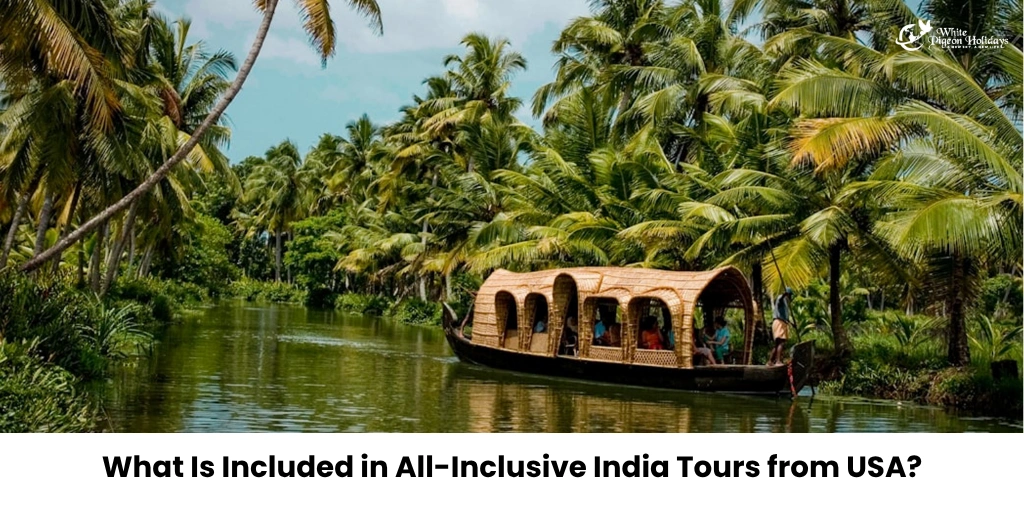
Kerala (5 days after Delhi): A complete change of pace — lush green backwaters, a houseboat night on Alleppey, Ayurvedic treatments, and the colonial heritage of Kochi.
Perfect if you want nature and calm after the intensity of North India.
Goa (3–4 days): Beach time, seafood, Portuguese architecture, and relaxed coastal energy.
Good for travelers who want to decompress before the long flight home.
Udaipur (2–3 days): The most romantic city in India — lake views, palace hotels, rooftop restaurants.
The natural next stop after Jaipur for honeymooners or anniversary travelers.
Varanasi (2 days): The most ancient living city in the world.
Not for every traveler — it’s intense, spiritual, and unlike anything in your experience.
But for those drawn to India’s spiritual depth, it’s unmissable.
A note on pacing: Most experienced India travelers suggest not exceeding four destinations on a 12-day trip.
The travel time between cities adds up, and you’re dealing with jet lag from a 10+ hour time difference.
Itineraries that look great on paper often feel exhausting in practice.
When to Visit India from the USA
| Season | Months | Conditions | Verdict for US Visitors |
|---|---|---|---|
| Peak | Dec–Jan | Cool, dry, clear. Festivals, Christmas, New Year. | Best weather but crowded and expensive. Book 4–8 months ahead. |
| Sweet Spot | Nov, Feb–Mar | Comfortable, good weather. Holi in March. | Best overall timing — weather + value. |
| Getting Warm | April–May | Temperatures rising to 104°F+ in North India. | Manageable in South India (Kerala, Tamil Nadu). Hill stations OK. |
| Monsoon | June–Sept | Heavy rain, humidity. Lush but disruptive. | Not recommended for first-timers. Kerala backwaters are lovely but logistics are complex. |
| Early Season | Oct | Monsoon ending. Weather improving. Diwali. | Good choice — watch Diwali if dates align. |
Peak — Dec–Jan
Verdict: Best weather but crowded and expensive. Book 4–8 months ahead.
Sweet Spot — Nov, Feb–Mar
Verdict: Best overall timing — weather + value.
Getting Warm — April–May
Verdict: Manageable in South India (Kerala, Tamil Nadu). Hill stations OK.
Monsoon — June–Sept
Verdict: Not recommended for first-timers. Kerala backwaters are lovely but logistics are complex.
Early Season — Oct
Verdict: Good choice — watch Diwali if dates align.
- October–March travel: Book 3–4 months ahead for flights and hotels
- December–January peak travel: Book 5–8 months ahead; popular hotels and trains sell out
- Holi festival (March) or Diwali (Oct–Nov): Book significantly earlier — these are among the most sought-after travel dates
How to Choose an India Tour Operator You Can Actually Trust
Look for operators who name their hotels upfront, have verified reviews from US or Western travelers specifically, provide a written itinerary before you pay a deposit, and have a reachable India-based phone number. Walk away from anyone who pressures you to book immediately.
India has thousands of tour operators. They look similar online. Some are excellent. Others collect deposits and become unresponsive after payment.
Signs of a Trustworthy Operator
Provides a written itinerary with named hotels before you pay a deposit
Has a reachable India phone number — not just an email or a web form
Has verified Google or TripAdvisor reviews from US or Western travelers specifically
Explains clearly what happens if something goes wrong mid-trip
Lists exclusions as clearly as inclusions
Does not pressure you to book immediately — "this price expires today" is a red flag
Responds within 24 hours and answers your specific questions directly
Walk Away If You See
Pricing 40–50% below comparable operators with no explanation
"Top hotels" or "luxury properties" without naming them
No cancellation or refund policy in writing
Response time longer than 48 hours
Resistance to sharing hotel names before payment
Generic itineraries that look copy-pasted for every country
The travel community on TripAdvisor's India forum and r/travel has repeatedly flagged that the biggest mistakes US travelers make with India aren't about the destination — they're about the operator. Spend as much time vetting who you book with as you do planning the itinerary.
What to Know Before You Arrive in India for the First Time
Good tour operators brief you on this. But as a US traveler, a few things are worth knowing independently.
Water: Never drink tap water in India. Use bottled water with the seal intact — even for brushing your teeth.
Your hotel will provide bottled water.
This isn’t fearmongering; it’s just standard practice for any international visitor.
Currency: The exchange rate as of 2026 is approximately 85–87 Indian Rupees (INR) per USD.
Card acceptance is growing rapidly in hotels, restaurants, and shops — but cash is king at street markets, local eateries, and with auto-rickshaws.
Notify your US bank before travel to avoid your card being flagged.
Tipping: India does not have the 20% tipping culture of the US. In restaurants, 10% is generous.
For your private driver, 200–300 Rupees per day ($2.50–$3.50) is appropriate and appreciated.
Your tour operator should advise on this.
Connectivity: Pick up a local SIM card at the airport on arrival (bring a passport copy — you’ll need it to register).
Data is extremely cheap in India.
Alternatively, an international eSIM (like Airalo) activated before travel works well.
Is India safe? Yes — with appropriate preparation.
India welcomes over 10 million international visitors annually and the vast majority have safe, memorable experiences.
The US State Department currently rates India at Level 2 — Exercise Increased Caution — the same rating as France and Germany.
Major tourist circuits (Delhi, Agra, Jaipur, Goa, Kerala, Rajasthan) are fully operational.
Certain border regions and politically sensitive areas warrant caution, but these are not on any standard tourist itinerary.
Jet lag: The time difference between the US and India is 9.5–13.5 hours.
India is ahead. Give yourself one light arrival day before starting your itinerary in earnest.
Most well-structured packages from the US already build this in.
Common Mistakes US Travelers Make When Booking India Packages
Booking too late. Flights from the US to India spike December–January and summer.
For comfortable autumn or winter travel, book 3–4 months out.
For peak season, 5–6 months or more.
Popular hotels — especially heritage properties in Jaipur and Udaipur — sell out well before departure.
Not confirming “private” in writing. Always confirm in writing that your tour is private — not a shared group departure.
Get it in the booking confirmation, not just a verbal assurance.
Skipping travel insurance. US health insurance almost never covers treatment abroad.
Get travel insurance that includes medical evacuation coverage.
India is largely safe, but medical infrastructure varies significantly by city and region.
Overloading the itinerary. Seven cities in twelve days sounds ambitious. In practice, it means spending half your trip in vehicles, not seeing places properly, and arriving home exhausted.
Three to four destinations, done properly, makes for a far better trip.
Not asking about meals. Most India packages include breakfast only.
Budget $25–$40 per person per day for lunch and dinner.
The good news: eating well in India is genuinely inexpensive.
Comparing total price without comparing inclusions.
A package priced $800 less might exclude flights, use 3-star hotels, or provide no on-ground support.
Compare what’s actually in the package, line by line — not just the headline number.
Forgetting the e-Arrival Card. Since April 2026, this is mandatory for all international arrivals, including Americans.
File it at indianvisaonline.gov.in/earrival or the Su-Swagatam app within 72 hours of your scheduled landing.
It’s free and takes 10 minutes.
Not doing it causes delays at Indian immigration — avoidable with five minutes of preparation.
Pre-Departure Checklist for US Travelers Flying to India
Not sure what to sort before you go? Request your complimentary India Pre-Departure Checklist covering your eVisa, e-Arrival Card, insurance, packing, currency, and arrival-day plan. Free on request.
Get Your India Trip Plan
Who Should Book an All-Inclusive Private India Tour from the USA?
Private all-inclusive tours work best for:
- First-time visitors to India who want a structured, stress-free experience without navigating a completely unfamiliar country solo
- Families with children or elderly parents who need flexibility in pace and genuine support if something goes wrong
- Couples on a honeymoon or anniversary trip where the experience quality matters more than the per-person cost
- Professionals with 10–14 days and no interest in spending it troubleshooting logistics
- Anyone who values predictable total costs over bargain-hunting
It may not suit you if:
- You’ve traveled extensively in South Asia and are comfortable navigating independently
- You’re on a backpacker budget (in which case, India is incredibly affordable on your own with the right research)
- You want to stay in one city or region for several weeks
For most US travelers visiting India for the first time — especially those traveling with family or a partner — a private all-inclusive package is the most comfortable, most cost-effective, and least stressful route.
All-Inclusive India Tour FAQs for US Travelers
Answers to the most common questions American travelers ask before booking an all-inclusive India tour — from visas and flights to budgeting, safety, and what "all-inclusive" actually means.
Does all-inclusive mean flights are always included?
Not always. Some packages cover only hotels, transport, sightseeing, and guides, with flights booked separately. Always confirm whether international round-trip airfare from your departure city is included before paying a deposit. If a package price seems unusually low, flights are often the reason.
Can I customize an all-inclusive India itinerary?
Yes — if you book a private tour. Private tours can be adjusted for destinations, hotel tier, pace, and dates before the itinerary is finalized. Group tours follow a fixed schedule with no flexibility.
What airlines fly from the US to India?
Air India operates non-stop flights from JFK and SFO to Delhi. Emirates (via Dubai), Qatar Airways (via Doha), Etihad (via Abu Dhabi), British Airways, and Lufthansa all connect from multiple US cities. Most connections involve a 2–6 hour layover.
Do US citizens need a visa for India?
Yes. US citizens cannot enter India without a visa, and there is no visa on arrival. The standard route is the India eVisa, applied for online at indianvisaonline.gov.in. Fees are approximately $25 (30-day) or $40 (1-year). Most approvals arrive within 72 hours.
What is the India e-Arrival Card and do Americans need it?
Yes — it's mandatory for all foreign nationals arriving in India since April 1, 2026. It replaces the old paper disembarkation card. File it at indianvisaonline.gov.in/earrival or the Su-Swagatam app within 72 hours of arrival. It's free and takes about 10 minutes.
When is the best time to visit India from the USA?
October through March is best for most travelers. November and February offer comfortable weather and fewer crowds than peak December–January. For wildlife safaris (particularly tiger sightings in Ranthambore), February–March is excellent.
Is 10 days enough for India?
Ten days is a good first trip if you focus on three to four cities — the Golden Triangle (Delhi, Agra, Jaipur) plus one extension such as Udaipur or Kerala works well in this timeframe. Trying to cover more cities in 10 days usually leads to an exhausting, rushed experience.
How far in advance should I book an all-inclusive India tour?
Around 3–4 months for most travel. Peak season (December–January) requires 5–6 months or more — popular hotels and the best itinerary slots book out well ahead of time.
Is India safe for American tourists?
Yes, for the main tourist circuits. The US State Department rates India at Level 2 (Exercise Increased Caution), the same level as France and Germany. Delhi, Agra, Jaipur, Goa, Kerala, and Rajasthan are fully operational for international visitors. Certain border regions warrant caution but are not on any standard India itinerary.
What should I budget for meals in India?
Most India tour packages include breakfast only. For lunch and dinner, budget approximately $25–$40 per person per day. India offers outstanding food at all price points — a full meal at a very good restaurant rarely costs more than $15–$20 per person.
How much should I tip my driver and guide in India?
For a private driver, 200–300 Rupees per day (~$2.50–$3.50 USD) is standard and genuinely appreciated. For local guides, 300–500 Rupees per day ($3.50–$6) is appropriate. Ask your tour operator for their guidance on this — good operators brief you in advance.
What if I find a much cheaper India package online?
Compare every inclusion carefully, not just the headline price. A package $800 cheaper might exclude flights, use 3-star hotels, offer group departures, or include no on-ground support. The cheapest India package is rarely the best value — and the most stressful surprises happen after you've paid.