
How Do Americans Actually Deal With Jet Lag on a Golden Triangle Trip?
India is 9.5 to 12.5 hours ahead of US time zones, depending on where you’re flying from.
That’s not a small adjustment. It hits you harder than most trips.
Here’s what actually works on the ground:
Don’t fight the first night. If you land in Delhi in the morning (most USA-to-Delhi flights do), stay awake until at least 8 PM local time. One bad night is better than three disrupted ones.
Book your Taj Mahal visit on Day 3, not Day 2. Most itineraries rush straight to Agra. That’s a mistake. You’ll be foggy, everything will feel overwhelming, and you won’t enjoy it. Give yourself one recovery day in Delhi first.
Keep Day 1 completely light. Hotel check-in, a short drive around your neighborhood, one meal at the hotel. That’s it. The monuments will still be there tomorrow.
The sunrise Taj Mahal visit means a 4 AM wake-up. If you plan to do this (and you should), make sure it falls on Day 3 or later — not while your body still thinks it’s midnight in New York.
If this is your first trip to India from the USA, choosing the Golden Triangle is already a smart decision.
It is the route that gives you clarity instead of confusion.
It shows you India without asking you to figure everything out on your own.
This blog walks you through a ready-to-book Golden Triangle itinerary for first-time USA travelers.
It is written the way I would explain it to you on a call.
Simple, practical, and based on what actually works on the ground.
Why the Golden Triangle Is the Best First India Trip for USA Travelers
The Golden Triangle connects Delhi, Agra, and Jaipur.
For first-time visitors, this combination removes a lot of uncertainty.
Travel distances are short compared to most Indian routes.
Hotels are consistent and used to international guests.
Roads, guides, and sightseeing schedules are predictable.
That is why a golden triangle tour for first time visitors continues to be the most recommended starting point.
It gives you culture, history, and comfort in the right order.

Written by
Nitin Batra
Founder & Travel Expert · White Pigeon Holidays
With 25+ years in the tourism industry — from Airport Concierge to Vice President — Nitin founded White Pigeon Holidays in 2021 to help international travellers explore India with confidence. His hands-on experience across Asia, Europe, the Middle East, and the West shapes every journey he crafts.
Why this route works so well for Americans:
- You are not changing hotels every single night.
- Travel days are manageable and not draining.
- Medical access, food options, and infrastructure are reliable.
This balance is exactly what a golden triangle itinerary for USA travelers is meant to deliver.
👉 Scroll down for a ready-to-use Golden Triangle itinerary built for USA travelers.

| Day | What Your Body Is Dealing With | What to Do |
|---|---|---|
| Day 1 | Peak fatigue, disorientation | Light exploration only |
| Day 2 | Slightly better, still rough | Delhi sightseeing at an easy pace |
| Day 3 | Starting to adjust | Agra + Taj Mahal |
| Day 4+ | Functional | Full sightseeing days |
Is 7 Days Enough for the Golden Triangle?
What You Can Cover in 7 Days
✔ Delhi’s major landmarks
✔ The Taj Mahal in Agra
✔ Jaipur’s forts and palaces
What You May Miss
- Leisure days
- Local cultural experiences
- Day trips beyond the main route
For most first-time USA travelers, 7 days provides a solid introduction to India.
Ideal Trip Length for Americans
For first-time USA travelers, 7 days is the sweet spot.
It allows time to recover from long-haul flights.
It avoids stacking too many early mornings.
It keeps sightseeing enjoyable instead of tiring.
Shorter trips look fine on paper.
In reality, they feel rushed once airport time, transfers, and rest are included.
That is why searches around how many days for Golden Triangle India usually land on one clear answer.
| Trip Length | Who It’s Best For | Verdict |
|---|---|---|
| 5 Days | Fast travelers | Too rushed |
| 6 Days | Repeat visitors | Tight |
| 7 Days | First-time USA travelers | Ideal |
| 8+ Days | Slow travel | Optional |
If you want a structure that feels calm, a Golden Triangle India 7 days itinerary is the safest choice.
Train or Private Car: What’s Actually Better for American First-Timers?
This question comes up constantly, and most travel sites give you a non-answer.
Here’s the honest version.
For Americans on a first India trip, a private car wins for most legs.
Not because trains are bad — they’re actually great. But first-timers typically underestimate what it takes to navigate Indian train stations, find the right platform, handle delays, and manage luggage in a crowded coach. That friction eats into your experience.
Where the train makes sense:
The Shatabdi Express from Delhi to Agra takes about 2 hours and is fast, clean, and comfortable. If you’re comfortable traveling independently and have no large bags, this one’s worth trying.
Where private car makes more sense:
The Agra to Jaipur leg (or vice versa) is the one where a private car is clearly better. The route passes through Fatehpur Sikri, which you’d completely miss on a train. And the train options for this stretch are slower and less convenient.
| Factor | Private Car | Train (Shatabdi) |
|---|---|---|
| Comfort | High | High on Shatabdi |
| Flexibility | Full, stop anywhere | Fixed stations only |
| Fatehpur Sikri Stop | Easy | Not possible |
| Luggage | No problem | Can be awkward |
| Best For | Full flexibility, families | Budget travelers, solo travelers, Delhi to Agra only |
The Best Golden Triangle Itinerary
This itinerary assumes you value comfort, clear pacing, and smooth logistics.
It avoids unnecessary backtracking.
It respects jet lag and long travel days.
Day-by-Day Golden Triangle Itinerary
Day 1–2: Delhi (Arrival + Adjustment)
Your first two days should be light and flexible.
Arrival support matters more than sightseeing here.
Hotels in Central or South Delhi reduce driving fatigue.
Sightseeing is kept minimal so your body can adjust.
This approach works perfectly for a Golden Triangle India itinerary from USA.
Suggested daily flow:
- Airport pickup and hotel check-in.
- Short orientation drive or nearby sights if energy allows.
Early nights to reset sleep cycles.
Day 3: Delhi to Agra (Taj Mahal Experience)
Travel to Agra works best in the morning.
Both road and train options work when timed correctly.
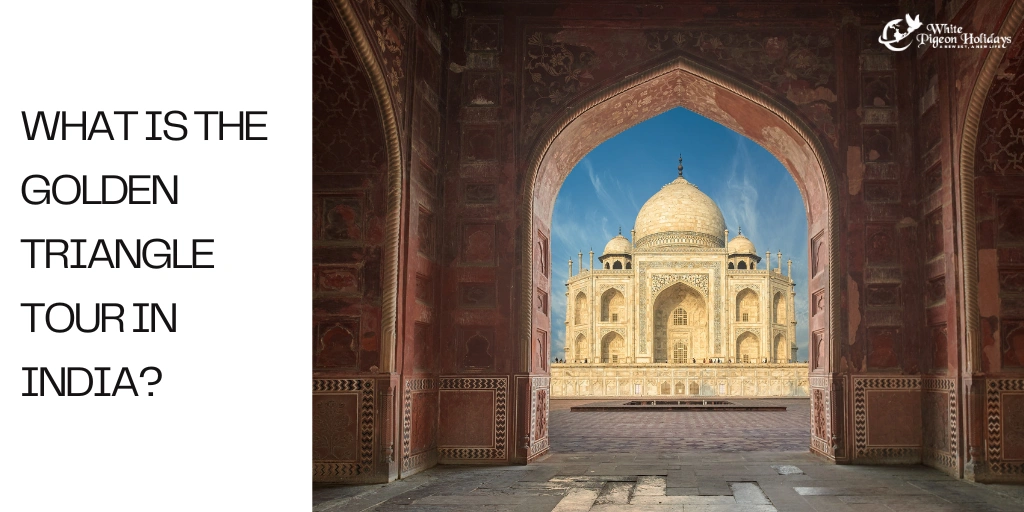
The Taj Mahal is best visited early to avoid crowds and heat.
This timing matters a lot for Americans adjusting to the time difference.
Hotel stays in Agra are short and purposeful.
You see the Taj without stretching the day.
This is a key part of the best Golden Triangle itinerary for first time India.
Day 4: Agra to Jaipur (Via Fatehpur Sikri)
Breaking the drive makes a big difference.
Fatehpur Sikri adds cultural depth without pressure.
Comfort stops are planned in advance.
The journey feels balanced rather than long.

Day 5–6: Jaipur (Heritage Without Rush)
Jaipur is where the trip settles into a comfortable rhythm.
And that is intentional.
Amber Fort, City Palace, and local markets are spread across two days.
Guided visits help Americans absorb history without feeling lost.
This is usually where travelers say they feel most relaxed.
Day 7: Jaipur to Delhi & Departure
Returning to Delhi with buffer time reduces stress.
International flights need flexibility.
A calm final day leaves a strong last impression of India.
Get This Exact Golden Triangle Itinerary (PDF)
Includes hotels, travel times, pacing, and insider tips for USA travelers.
What Does a Golden Triangle Trip Actually Cost for Americans in 2026?
No one gives a straight answer to this, so here it is.
Budget breakdown for one person (7 nights):
| Category | Budget (Per Person) | Mid-Range | Luxury |
|---|---|---|---|
| Hotels (7 nights) | $400–$600 | $900–$1,400 | $2,500+ |
| Private car + driver | $350–$500 | $500–$700 | $800+ |
| Guided tours & entry fees | $100–$150 | $200–$300 | $400+ |
| Food (local restaurants) | $80–$120 | $150–$250 | $300+ |
| Total (excl. flights) | ~$930–$1,370 | ~$1,750–$2,650 | $4,000+ |
Flights from the USA to Delhi typically run $700–$1,200 roundtrip depending on departure city and season.
A few costs Americans often don’t expect:
The Taj Mahal entry fee for foreigners is ₹1,100 (~$13).
Agra Fort, Amber Fort, and other major sites have separate foreign national fees — typically $5–$10 each.
Tipping guides and drivers is standard and expected. Budget around $5–$10 per day for your driver and the same for guides.
The sweet spot for most American couples is the mid-range bracket — roughly $3,500–$5,300 total for two people excluding flights. This gets you comfortable 4-star hotels, a private car with a good driver, and guided visits at each city.
What Is the Best Month to Visit the Golden Triangle?
Best Time
- October to March
- Pleasant temperatures
- Comfortable sightseeing conditions
Months to Avoid
- May and June can be very hot.
- July and August bring monsoon showers.
Most international travelers prefer winter travel for maximum comfort.
How Much Time Should You Spend in Each City?
Recommended Breakdown
| City | Ideal Stay |
|---|---|
| Delhi | 2–3 Nights |
| Agra | 1 Night |
| Jaipur | 2–3 Nights |
Hotels, Transport & Comfort — What USA Travelers Should Expect
Comfort on this route is about predictability.
Not just luxury.
Hotels That Work Best for Americans
4★ hotels often offer the best balance of comfort and efficiency.
5★ hotels work well when centrally located.
What matters most:
- Western-style bathrooms.
- Quiet rooms for proper rest.
Reliable breakfast and room standards.
These details shape your daily energy more than brand names.
Private Driver vs Group Tours
| Factor | Private Tour | Group Tour |
|---|---|---|
| Pace | Flexible | Fixed |
| Comfort | High | Moderate |
| Stops | On demand | Limited |
| Ideal For | First-timers | Budget travel |
Should You Add More Destinations to the Golden Triangle?
Many first-time visitors wonder whether three cities are enough.
Add These If You Have Extra Time
- Ranthambore for wildlife
- Udaipur for lakes and palaces
- Varanasi for spiritual experiences
- Kerala for nature and backwaters
Useful Insight
Many travelers regret adding too many destinations rather than too few. A relaxed itinerary often creates a better experience than rushing between cities.
What Do First-Time USA Travelers Usually Underestimate?
Common Surprises
- Distances between attractions
- Traffic in major cities
- The amount of walking at forts and monuments
- Early morning visits to the Taj Mahal
Helpful Tip
Leave some free time in your itinerary. The most enjoyable travel moments often happen outside the planned schedule.
Is the Golden Triangle Safe and Comfortable for USA Travelers?
This concern comes up quietly but often.
And it deserves a clear answer.
Yes, the Golden Triangle is safe when travelled with proper support.
Perception is usually scarier than reality.
Guided travel reduces friction.
Pre-booked hotels remove uncertainty.
Private transport adds control.
That is why people asking is Golden Triangle safe for American tourists usually feel reassured once they understand the structure.
Comfort reassurance checklist:
- Licensed drivers and experienced guides.
- Clean restrooms at major tourist stops.
- Food options suited for sensitive stomachs.
- Safe walking areas around main attractions.
What This Golden Triangle Itinerary Includes
✔ Airport transfers
✔ Comfortable hotels
✔ Private transport
✔ Local guides where useful
✔ Entry coordination
✔ Realistic daily pacing
Nothing extra.
Nothing rushed.
👉 Get a ready itinerary built exactly like this—no guesswork.
Who This Golden Triangle Itinerary Is Perfect For
- First-time India travelers from the USA.
- Couples, families, and solo professionals.
- Travelers who value comfort, structure, and clarity.
If you prefer knowing what comes next, this route fits you well.
Ready to Travel? Get Your Golden Triangle Itinerary
You do not need to build this from scratch.
You do not need to experiment on your first India trip.
This is a ready itinerary.
Built specifically for Americans.
Designed to remove stress, not add it.