
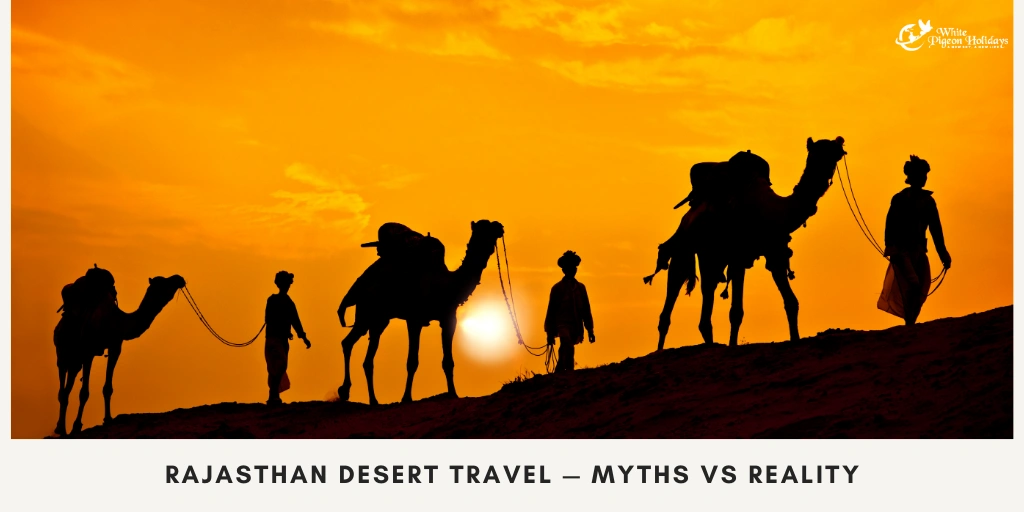
When people from the UK or USA hear the word desert, a few images usually come to mind.
Endless sand.
No people.
Extreme heat.
A place that feels risky and uncomfortable.
That picture does not describe Rajasthan’s desert.
The Thar Desert is alive.
It has villages, farms, temples, wildlife, music, food, and some of the warmest hospitality you’ll experience in India.
Locals often call it an open-air planetarium because of the night sky, and travelers remember the slow, gentle sway of camels at sunset long after they return home.
If you’re feeling unsure about desert travel, that’s normal.
This guide exists to replace worry with clarity.
Once you know what to expect, the Rajasthan desert becomes one of the most rewarding parts of an India trip.
Want the facts at your fingertips? Download our free “Desert Travel FAQ Sheet” for a quick guide covering safety, packing, and choosing the right safari for you.
The Truth About the Thar: Busting 5 Desert Myths for Travelers
Before talking about activities, let’s clear the biggest misunderstandings. Most hesitation comes from myths, not reality.
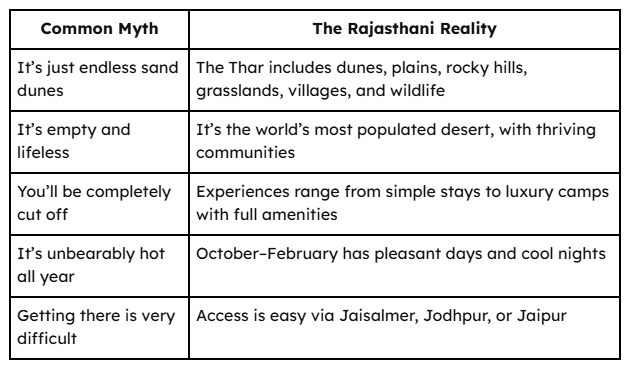
Common Myths vs Reality in the Rajasthan Desert
You are not entering a harsh wilderness.
You are visiting a living cultural region where tourism has existed for decades.
Roads are well-used, guides are experienced, and safety is well understood—especially when you travel with a reputable operator.
The desert may look dramatic, but it is not hostile when approached correctly.
Curating Your Adventure: Desert Experiences Explained
The desert experience is not one-size-fits-all.
You choose what level of adventure, comfort, and cultural exposure feels right.
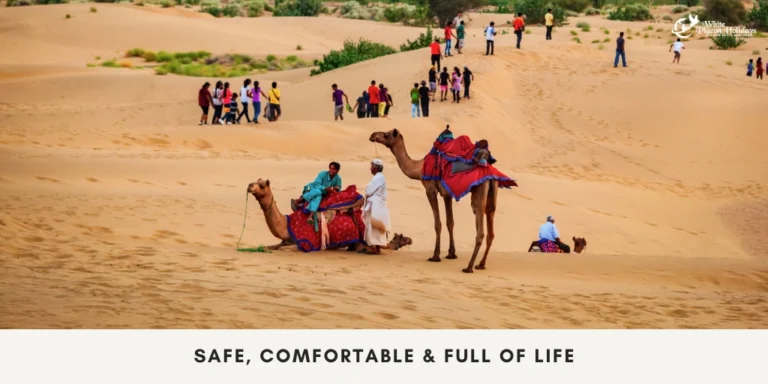
Camel Safaris: The Classic Experience
This is what most people imagine first.
- Short rides (1–2 hours) are most common
- Slow, rhythmic pace
- Ideal for photography and sunset views
- You’ll sit on padded saddles
Long multi-day camel journeys do exist, but most foreign travelers prefer shorter rides that are enjoyable without being physically demanding.
Jeep Safaris: Faster and More Dynamic
Jeep safaris cover more ground and reach remote dunes or villages quickly.
- Ideal if you have limited time
- Less physical effort than camel rides
- Some tours include gentle dune driving
This option suits travelers who want variety without long rides.
Overnight Desert Camping: Where the Magic Happens
This is often the highlight.
What people love:
- Campfires under the stars
- Traditional folk music and storytelling
- Complete silence at night
- Skies filled with stars, no city lights
Important to know:
- Nights can get cold between October and February
- Good camps provide blankets and warm bedding
Accommodation ranges from basic tents to luxury “glamping” setups with private bathrooms.
Village Visits: Real Desert Life
A visit to a desert village (called a dhani) is deeply eye-opening.
You may see:
- How families farm in dry conditions
- Traditional crafts and pottery
- Simple homes built for extreme climates
This is not staged tourism when done responsibly. It’s quiet, respectful, and often the most meaningful part of the desert experience.
Overwhelmed by choices? Learn how we design desert experiences that balance adventure with your comfort and interests.
Travel Smart: Essential Tips for Desert Comfort and Safety
Good desert travel is less about bravery and more about preparation.
Choosing Your Tour & Transport
- Always book with a responsible, well-reviewed operator
- Ensure animals are treated humanely
- Use private transport for flexibility and safety
- Avoid night driving in rural areas
Many travelers reach the desert via Jaisalmer, which acts as the main gateway. Others connect through Jodhpur or Jaipur.
Flying into Jodhpur can save long road hours for those short on time.
Health & Hygiene Basics
- Drink only bottled or filtered water
- Skip ice unless confirmed safe
- Eat freshly cooked food
- Carry stomach medicine and hand sanitizer
Many travelers choose vegetarian meals during desert stays, which reduces risk and is widely available.
Packing for the Desert (Beyond the Basics)
Sun Protection (Non-negotiable):
- Sunscreen
- Sunglasses
- Wide-brimmed hat
Layering Is Key:
- Light clothes for daytime
- Warm jacket or sweater for evenings
- Scarf or shawl for warmth and sun
Footwear & Clothing:
- Closed, comfortable shoes
- Loose-fitting clothes
- Modest attire (covers shoulders and knees)
Useful Extras:
- Flashlight or head torch
- Wet wipes and tissues
- Power bank
- Small amount of cash
These small items make a big difference.
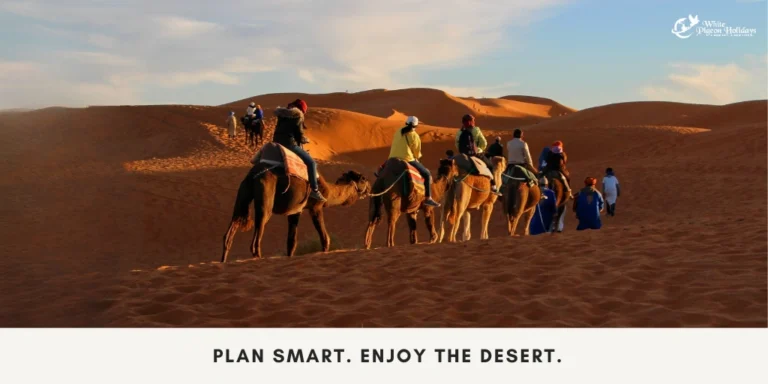
Planning Your Perfect Desert Escape
Timing matters more than people expect.
Best Time to Visit the Rajasthan Desert
The only truly comfortable window is:
- October to February
Why this works:
- Day temperatures around 20–30°C
- Cool, pleasant nights
- Better wildlife sightings
- Festivals and cultural events
Months to avoid:
- April to June (extreme heat)
July to September (humidity and monsoon conditions)
How to Fit the Desert Into Your India Trip
Ask yourself one simple question:
- Do I want a short desert taste or a deeper cultural stay?
- Short add-on: 1–2 nights from Jaisalmer
- Immersive stay: 3–5 nights with village visits and slower pace
Both work well when expectations are clear.
Conclusion: From Apprehension to Unforgettable Memory
The Rajasthan desert is not something to fear. It is something to understand.
Once myths are replaced with real knowledge, the desert becomes:
- Calm, not harsh
- Cultural, not empty
- Comfortable, not extreme
With the right season, the right operator, and realistic expectations, desert travel often becomes the most talked-about memory of an India trip.
Ready to trade desert anxiety for awe?
Explore our curated Rajasthan Desert Tours designed for thoughtful foreign travelers, or download your free Desert Travel FAQ Sheet to plan with confidence.
FAQs
Is a desert safari in Rajasthan safe for solo female travelers?
Yes, when booked with reputable operators. Group or private safaris from trusted companies are safe and well-managed.
Camel safari or jeep safari—how do I choose?
Camel safaris are slow and traditional. Jeep safaris are faster and cover more ground. Many travelers combine both.
What accommodation can I expect in the desert?
Options range from basic tents and village huts to luxury camps with proper beds and bathrooms.
Are there bathroom facilities at desert camps?
Yes. Reputable camps provide toilets. Luxury camps offer better amenities.
Do I need to be very fit for a desert safari?
No special fitness is required for short rides. Longer treks need moderate mobility. Always share health concerns in advance.
