Not every senior traveler wants the same India trip.
Some travelers want to cover the highlights efficiently, see the country's best-known landmarks, and return home feeling they made the most of every day.
Others prefer late mornings, long lunches, palace courtyards with a cup of chai, and enough downtime to truly absorb each destination instead of rushing between attractions.
Both approaches are completely valid. The Golden Triangle, covering Delhi, Agra, and Jaipur, can deliver either experience. The deciding factor is how your itinerary is planned.
This guide explores three itinerary styles: short, relaxed, and luxury. You'll learn what each one feels like, who it suits best, typical costs, and the trade-offs to consider so you can make a confident decision rather than choosing based only on appearances.
For most senior travelers, a 7–9 day relaxed Golden Triangle itinerary offers the best balance of sightseeing and comfort. It covers Delhi, Agra, and Jaipur without rushing, includes recovery time between travel days, and leaves room to genuinely enjoy each destination. If comfort and peace of mind are your highest priorities, an 8–10 day luxury itinerary is well worth the additional investment.
Comparing the Three Options at a Glance
| Tour Style | Duration | Best For | Pace | Comfort Level |
|---|---|---|---|---|
| Short Highlights Tour | 5–6 days | Active travelers, first timers with limited time | Moderate-fast | Moderate |
| Relaxed Golden Triangle | 7–9 days | Comfort-focused seniors, travelers over 65 | Slow-balanced | High |
| Luxury Golden Triangle | 8–10 days | Premium comfort seekers, milestone travelers, mobility concerns | Very slow | Very High |
No style is universally the best. The right one depends entirely on your energy level, your comfort expectations, and honestly, how you feel after a full day of sightseeing.
Short Highlights Tour
Best For: Active travelers, first timers with limited time
Pace: Moderate-fast
Comfort Level: Moderate
Relaxed Golden Triangle
Best For: Comfort-focused seniors, travelers over 65
Pace: Slow-balanced
Comfort Level: High
Luxury Golden Triangle
Best For: Premium comfort seekers, milestone travelers, mobility concerns
Pace: Very slow
Comfort Level: Very High
How to Know Which Style Is Right for You
Before we break down each option, ask yourself these questions.
Your answers will make the right choice obvious.
- Do you enjoy slower mornings, or are you happiest when you’re up and out by 8am?
- After a long day of sightseeing, do you need an hour to rest before dinner?
- Is hotel quality important to you — not just for sleeping, but for genuinely recovering?
- Would you rather explore one place deeply or cover more ground efficiently?
- Do you have any mobility limitations, knee pain, or conditions that affect how much walking is comfortable?
- Does heat affect you strongly? (India can be intense even in winter.)
If your answers lean toward comfort and recovery, you’re a relaxed or luxury traveler.
If you tick mostly active and efficient boxes, a shorter itinerary might work.
Option 1: The Short Golden Triangle Tour (5–6 Days)
Who Is This For?
Short tours — typically 5–6 days covering Delhi, Agra, and Jaipur — work well for seniors who are still fairly active, have limited vacation time, or are combining India with another country trip.
If you’re a retired couple who walks regularly and is comfortable with moderate activity levels, you might genuinely enjoy this pace.
Travelers who usually enjoy this style include people in their early to mid-60s who travel internationally often, people combining the Golden Triangle with, say, a trip to Sri Lanka or Nepal, or first-timers who just want a highlights introduction to India before deciding whether to return for a longer trip.
What a Short Tour Actually Feels Like
Here’s the honest reality: short Golden Triangle tours move fast.
You’ll typically spend one to two nights in each city, which means less downtime at hotels and more time in the car or on-site.
Sightseeing days tend to be longer.
Departures are often early — 7:00am–8:00am — to beat the heat and the crowds.
You’ll see the major sites at each destination but won’t have much time for wandering, spontaneous discoveries, or just sitting in a haveli courtyard for an hour.
For the right person, this feels exciting and efficient.
For someone who needs recovery time or doesn’t love rushing, it can feel draining by Day 3.
Arrive, check in, then explore Old Delhi including Jama Masjid, Chandni Chowk by rickshaw, and the Red Fort exterior.
Morning drive (3.5–4 hours via the Yamuna Expressway), afternoon at the Taj Mahal and Agra Fort, overnight in Agra.
Optional stop at Fatehpur Sikri, afternoon arrival in Jaipur, and an evening visit to Hawa Mahal.
Visit Amber Fort (jeep ride), City Palace, Jantar Mantar, and Johri Bazaar.
Relaxed morning followed by a drive or train back to Delhi for departure.
Cost Range (Short Tour)
- Budget: ₹10,500–₹22,500 per person (3-star hotels, shared transport).
- Mid-range: ₹27,000–₹40,000 per person (4-star hotels with a private AC car).
Travel Tip
Monument entry fees are rarely included in packages. Carry around ₹5,000–₹8,000 in cash or an equivalent payment method for entry tickets and small travel expenses.
Which Golden Triangle Tour Style Is Right for You?
Option 2: The Relaxed Golden Triangle Itinerary (7–9 Days)
Quick Answer: This is the most popular Golden Triangle option for travelers over 60.
It slows the trip down intentionally — fewer cities per day, later starts, more time at hotels — and most seniors who try both styles say the relaxed version is significantly more enjoyable.
Why This Works So Well After 60
Here’s something that many travelers only realize once they’re on the trip: the energy drain isn’t just from walking.
It’s from logistics.
Early hotel checkouts, rushing between sites, eating lunch in a hurry, and arriving in a new city without time to settle — these things add up.
The relaxed itinerary solves most of that.
When you have 2–3 nights in each city instead of 1–2, the pace changes completely.
You’re not constantly packing and unpacking.
You can skip a second temple and sit by the pool instead, without feeling like you’ve wasted the day.
A lot of senior travelers later say the slow moments — a glass of lassi in a Jaipur café, watching the evening light change over the Taj Mahal gardens, a quiet morning in a Delhi haveli courtyard — became their favourite memories of India.
Those moments only happen when the schedule has room for them.
Suggested Relaxed Golden Triangle Structure
Option A — 7 nights:
- 2 nights Delhi
- 2 nights Agra
- 3 nights Jaipur
Option B — 9 nights (ideal for comfort-first travelers):
- 3 nights Delhi
- 2 nights Agra
- 4 nights Jaipur (includes a half-day in Pushkar or Ranthambore as optional add-on)
The extra nights in Jaipur make a real difference.
Jaipur has the most to offer in terms of cultural experiences — block printing workshops, palace cooking classes, textile markets, and the countryside around it.
Three to four nights here never feels like too much.
Arrive, rest, then enjoy an evening orientation walk in Lodhi Garden or around your hotel.
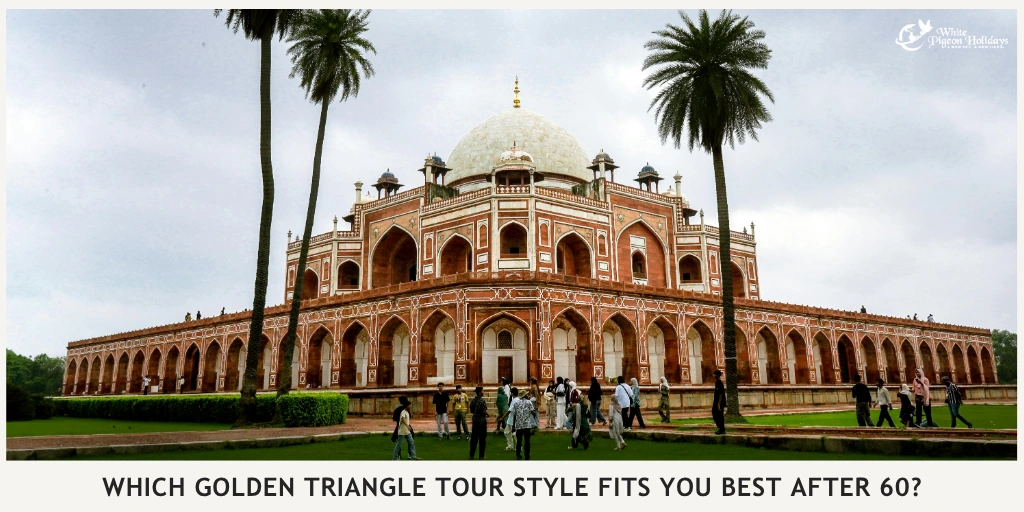
Old Delhi in the morning including Jama Masjid, Red Fort and Chandni Chowk. Afternoon rest followed by Humayun's Tomb at golden hour.
Visit Qutub Minar, Lotus Temple or India Gate. Enjoy a free afternoon and a relaxed dinner.
Morning drive, hotel lunch, then visit the Taj Mahal between 3:00 PM and 5:30 PM.
Sunrise Taj Mahal, late breakfast, Agra Fort, Mehtab Bagh at sunset, relaxed evening.
Drive to Jaipur with an optional stop at Fatehpur Sikri. Free evening on arrival.
Amber Fort by jeep, City Palace, Jantar Mantar and Johri Bazaar at your own pace.
Hawa Mahal, Nahargarh viewpoint, block printing or textile experience, relaxed final evening.
Transfer to Delhi Airport (3–4 hours) or depart directly from Jaipur Airport.
What Seniors Say About This Pace
Senior travelers consistently report that spending 2–3 nights in one place improves sleep, reduces fatigue, and makes sightseeing far more enjoyable. Many also appreciate having the freedom to skip an afternoon outing and simply relax at a heritage hotel.
Cost Range (Relaxed Tour)
- Mid-range: ₹40,000–₹70,000 per person (4-star hotels, private AC car + driver).
- Premium: ₹80,000–₹1,20,000 per person (5-star hotels, private guide + driver).
- International reference: Approximately USD $700–$1,200 per person for a standard 7-day package with hotels and ground transport.
Sample Relaxed Golden Triangle Itinerary
Want a printable day-by-day senior-friendly itinerary with timing, hotel suggestions, and monument notes? Download our Sample Relaxed Golden Triangle Itinerary and see exactly how a comfortable, well-paced trip looks before you decide.
Get Your Relaxed Golden Triangle Itinerary
Option 3: The Luxury Golden Triangle Tour (8–10 Days)
What “Luxury” Actually Means for Senior Travelers
For most senior travelers, luxury on the Golden Triangle isn’t about extravagance for its own sake.
It’s about removing friction.
It’s about not having to worry whether the car will be on time, whether your hotel room has a working lift, whether someone will help you navigate the language barrier at a pharmacy if you need it.
When those logistics disappear, the travel energy you save goes into enjoying the actual experience.
Luxury tours typically include heritage palace hotels (think: Rambagh Palace Jaipur, Oberoi Amarvilas Agra, Taj Palace New Delhi), private dedicated guides at every monument, completely flexible daily schedules, and a tour manager who handles everything from restaurant reservations to airport transfers.
Quick Answer: Luxury Golden Triangle tours are worth it for seniors when comfort and low-stress logistics are the priority.
Most travelers who upgrade from mid-range say the biggest difference isn’t the hotel rooms — it’s having a dedicated guide and completely private arrangements that eliminate waiting, rushing, and uncertainty.
The Landmark Luxury Hotels on This Circuit
Delhi:
- The Taj Palace New Delhi — magnificent interiors, 9-hole golf course, multiple fine dining options, great central location
- The Oberoi New Delhi — gothic-style architecture near Humayun’s Tomb, superb butler service
Agra:
- The Oberoi Amarvilas — the non-negotiable luxury choice if budget allows. Less than 1 km from the Taj Mahal, every room has a direct view of the monument. Private balcony dinners with the Taj Mahal as your backdrop are genuinely unforgettable. The Oberoi Amarvilas has 24-hour butler service and a temperature-controlled pool.
Jaipur:
- Rambagh Palace (Taj Hotels) — once a real maharaja’s home, built in 1835. Marble corridors, royal courtyards, manicured gardens. Service here is highly personalized. Afternoons on the lawns feel genuinely regal.
- The Oberoi Rajvilas — named best hotel in the world by Travel + Leisure in 2024. A 32-acre estate with peacocks wandering freely. Luxury tents with claw-foot bathtubs. Concierge offering leopard safaris and hot-air balloon rides. Perfect for travelers who want to feel they’re staying somewhere extraordinary, not just comfortable.
What a Luxury Day Looks Like
On a luxury tour, mornings start when you’re ready.
Guides arrive at the hotel, not the other way around.
You decide at breakfast how much you feel like doing today.
If the Taj Mahal sunrise visit is the plan, your guide is outside at 5:30am, the car is running with the AC already on, and a packed hotel breakfast waits for your return.
If you’re tired the afternoon after, nothing gets rescheduled with a fee — the guide simply suggests a late afternoon stroll instead.
Luxury tours also often include experiences that budget and mid-range tours don’t: a private cooking class with a palace chef, an evening of classical Rajasthani folk music in a heritage courtyard, a sunrise hot air balloon over Jaipur’s forts, or an expert-guided Mughal history walk with an archaeologist.
Luxury Train Add-On
Some senior travelers add a segment on the Maharajas’ Express or the Palace on Wheels — India’s luxury heritage trains that connect parts of the Golden Triangle circuit.
These are not budget decisions (starting around ₹2,50,000 per person for a 5-day journey), but for a milestone birthday or anniversary trip, they’re genuinely memorable.
Cost Range (Luxury Tour)
- High-end (5-star heritage hotels, private guide + driver + tour manager): ₹1,20,000–₹2,00,000 per person for 8–10 days
- International pricing: $1,200–$3,000 USD per person
- Ultra-luxury (with Maharajas’ Express or Palace on Wheels segments): ₹3,00,000+ per person
Best Time to Visit: Month-by-Month for Seniors
| Month | Temperature | What to Expect | Senior Suitability |
|---|---|---|---|
| October | 20–30°C | Festival season (Diwali), warm days, pleasant evenings | ✅ Excellent |
| November | 15–25°C | Peak comfort, Diwali vibrancy, fewer crowds than Dec | ✅ Excellent |
| December | 10–20°C | Peak season, beautiful weather, holiday crowds. Morning fog can delay Taj Mahal sunrise | ✅ Very good |
| January | 8–18°C | Cool to cold, early morning fog at Agra, busy season | ✅ Good (dress warm) |
| February | 12–22°C | Balance of comfort and manageable crowds | ✅ Excellent |
| March | 18–28°C | Holi festival, warming up but still comfortable. Shoulder season | ✅ Very good |
| April | 26–38°C | Getting hot. Manageable with AC, but tiring outdoors | ⚠️ Caution |
| May–June | 35–45°C | Very hot. Not recommended for most senior travelers | ❌ Not recommended |
| July–Sept | 28–35°C + humidity | Monsoon season, occasional flooding, humid | ❌ Not recommended |
October
What to Expect: Festival season (Diwali), warm days, pleasant evenings
Senior Suitability: ✅ Excellent
November
What to Expect: Peak comfort, Diwali vibrancy, fewer crowds than Dec
Senior Suitability: ✅ Excellent
December
What to Expect: Peak season, beautiful weather, holiday crowds. Morning fog can delay Taj Mahal sunrise
Senior Suitability: ✅ Very good
January
What to Expect: Cool to cold, early morning fog at Agra, busy season
Senior Suitability: ✅ Good (dress warm)
February
What to Expect: Balance of comfort and manageable crowds
Senior Suitability: ✅ Excellent
March
What to Expect: Holi festival, warming up but still comfortable. Shoulder season
Senior Suitability: ✅ Very good
April
What to Expect: Getting hot. Manageable with AC, but tiring outdoors
Senior Suitability: ⚠️ Caution
May–June
What to Expect: Very hot. Not recommended for most senior travelers
Senior Suitability: ❌ Not recommended
July–September
What to Expect: Monsoon season, occasional flooding, humid
Senior Suitability: ❌ Not recommended
Senior India Packing Checklist
Download our Senior India Packing Checklist — medications, clothing, documents, and comfort items specific to the Golden Triangle climate.
Get Your Free Golden Triangle Senior Packing Checklist
Senior Travel Practicalities: What to Know Before You Go
Getting Around Between Cities
The three cities are roughly 230 km apart. Here are your options:
By road (private car): Most comfortable for seniors.
The Yamuna Expressway (Delhi–Agra) is well-maintained with clean rest stops and food courts.
Delhi–Agra takes about 3.5 hours, Agra–Jaipur about 4–5 hours.
Private AC cars with a dedicated driver give you complete flexibility.
You can stop whenever you need, adjust the schedule mid-route, and travel at your pace.
By train: The Gatimaan Express between Delhi and Agra is fast (1 hour 40 minutes), comfortable, and popular.
But for seniors with luggage or mobility concerns, train travel in India can involve stairs, crowded platforms, and less flexibility if plans change.
Best suited for active seniors who don’t mind the logistics.
Private vs group transport: If you’re traveling in a group of three or more, a private vehicle is almost always more comfortable and often not much more expensive per person.
Group minibuses involve waiting for everyone and fixed stop times — not ideal when someone needs a rest or bathroom break.
Accessibility at Monuments
- Taj Mahal: Ramps available, battery-operated vehicles to the main gate, wheelchairs available on request. The marble platform around the mausoleum requires some walking, but mobility aids are permitted.
- Amber Fort, Jaipur: Jeep rides replace elephant rides as the standard ascent to the fort. This is the most practical option for seniors — avoids 100+ steps.
- City Palace, Jaipur: Mostly flat, good accessibility.
- Red Fort, Delhi: Paved paths but uneven surfaces in some areas. Wheelchair assistance available.
- Agra Fort: Some steep sections but manageable with a guide and time.
Always inform your tour operator about any mobility requirements in advance.
Good operators will plan the route through each monument to minimize steps and difficult terrain.
Health and Medical Precautions
- Carry all prescription medications in original packaging with a doctor’s note. Pack more than you think you need.
- Drink only bottled or filtered water — always. Even at 5-star hotels, use bottled water for brushing teeth.
- Carry a basic first-aid kit: antacids, anti-diarrhoeal medication, antihistamines, and any personal prescription items.
- Travel insurance with medical evacuation cover is essential, not optional. India has excellent private hospitals in all three cities (Max Hospitals, Fortis, Medanta), but costs for foreigners without insurance are significant.
- Most 5-star hotels have a doctor on call or can arrange one within the hour.
- Carry a summary of your medical history in English.
Lead Magnet: Download our Senior India Packing Checklist — medications, clothing, documents, and comfort items specific to the Golden Triangle climate. [Get the checklist →]
Food and Dietary Needs
Indian cuisine is genuinely accommodating. All luxury and most mid-range hotels manage dietary restrictions easily — vegetarian, gluten-free, low-spice, diabetic-friendly. Tell your operator in advance and confirm with each hotel at check-in.
If you have food sensitivities, stick to hotel restaurants for most meals in the first few days while your stomach adjusts.
North Indian cuisine is rich and flavourful, but starting with lighter options (dal, rice, simple breads, vegetable dishes) is wise for the first 2–3 days.
Avoid salads, unpeeled fruit, and street food if you have a sensitive stomach.
It’s not about India being unsafe — it’s about giving your system time to adjust to a different environment.
Common Mistakes Senior Travelers Make on the Golden Triangle
Choosing too short a trip to save money. A 4-day Golden Triangle tour is technically possible.
But for most seniors, the cost savings get eaten up by exhaustion and the feeling that you never really settled into any of the cities.
7 days is the realistic minimum.
Booking group tours instead of private. Group tours mean waiting for other travelers, fixed stops, and no flexibility to linger somewhere you love or skip something you’re not feeling.
For senior travelers especially, private arrangements are worth it.
Underestimating December morning fog. December and January fog in the Delhi–Agra belt can mean your 5:30am sunrise Taj Mahal visit turns into a grey mist experience.
Build in a backup — plan a late afternoon visit too.
The Taj Mahal is beautiful at sunset as well.
Skipping rest days. India is intense — visually, auditorially, sensory-wise.
Even experienced international travelers find India more stimulating than most destinations.
Build a free afternoon into every 2 days.
It makes the whole trip feel better.
Not arranging medical prep beforehand. Speak to your GP 4–6 weeks before departure.
Discuss relevant vaccinations (Hepatitis A, Typhoid are typically recommended), any medication adjustments for travel, and get a medical summary letter.
This is easy to skip and genuinely important.
Booking peak December–January without advance notice. Luxury hotels and good mid-range properties fill up fast for December and January.
The Oberoi Amarvilas, Rambagh Palace, and Oberoi Rajvilas can be booked 4–6 months ahead for peak season.
Don’t leave this to the last minute.
Final Word
The Golden Triangle is one of the most rewarding travel experiences you can have, whatever your age.
But how it feels when you’re there — whether it energizes or exhausts you — comes down almost entirely to how the itinerary is put together.
If you’re an active traveler who doesn’t mind moving fast, a 5–6 day short tour can be genuinely exciting.
If comfort and pace are important, 7–9 days in relaxed mode is where most seniors find their sweet spot.
And if you want the trip to feel truly seamless — with palace hotels, dedicated guides, and nothing to organize yourself — luxury is worth every extra rupee.
The one thing we’d say after planning these tours for years: don’t underestimate how much downtime matters.
The best moments in India usually happen when you’re not rushing to the next monument.
Budget Overview: What Does a Senior Golden Triangle Tour Actually Cost?
| Category | Budget Range (per person, twin sharing) | What's Included |
|---|---|---|
| Budget Tour (5–8 days) | ₹10,500–₹22,500 | 3-star hotels, shared/private basic transport, breakfast |
| Mid-range Tour (7–8 days) | ₹40,000–₹70,000 | 4-star hotels, private AC car + driver, breakfast |
| Premium Tour (7–9 days) | ₹80,000–₹1,20,000 | 5-star hotels, private guide + driver, most meals |
| Luxury Tour (8–10 days) | ₹1,20,000–₹2,00,000+ | Heritage palace hotels, private tour manager, all logistics |
Budget Tour (5–8 days)
What's Included: 3-star hotels, shared/private basic transport, breakfast
Mid-range Tour (7–8 days)
What's Included: 4-star hotels, private AC car + driver, breakfast
Premium Tour (7–9 days)
What's Included: 5-star hotels, private guide + driver, most meals
Luxury Tour (8–10 days)
What's Included: Heritage palace hotels, private tour manager, all logistics
Golden Triangle Senior Budget Calculator
Use our Golden Triangle Senior Budget Calculator to estimate your total trip cost across all three tiers, including flights, hotels, and daily expenses.
Want to Know Your Golden Triangle Trip Cost?
FAQs: Golden Triangle Tour for Senior Travelers
Practical answers for older travelers planning a Delhi–Agra–Jaipur trip — covering pacing, accessibility, safety, hotel choices, and everything in between.
What is the best Golden Triangle itinerary for seniors?
For most seniors, a 7–9 day relaxed itinerary with 2–3 nights in each city is the most comfortable and enjoyable option. It allows for balanced sightseeing without exhaustion, builds in recovery time, and gives you space to genuinely experience each destination rather than just pass through it.
How many days is enough for the Golden Triangle?
The practical minimum for a comfortable senior experience is 7 days. Eight to nine days is ideal if you want relaxed pacing. Five to six days is possible for very active travelers, but most seniors find it tiring.
Is the Golden Triangle safe for elderly travelers?
Yes. The Golden Triangle is India's most established tourist circuit with excellent infrastructure — good expressways, well-reviewed hotels, and experienced local guides. As with any international travel, travel insurance, medical preparation, and booking through a reputable operator are essential.
Are the major monuments accessible for seniors with limited mobility?
Most major monuments offer adapted access. The Taj Mahal has ramp access and battery vehicles. Amber Fort offers jeep rides to the entrance. City Palace Jaipur is largely flat. Always inform your operator about mobility requirements in advance.
What's the best month to visit the Golden Triangle for seniors?
November and February are the best months — cool enough to be comfortable at outdoor monuments, not overcrowded, and with excellent light for photography. October and March are also good. Avoid May through September entirely.
Is a private driver necessary?
Strongly recommended, yes. A private driver gives you flexibility, eliminates waiting time, ensures comfort on long intercity drives, and provides peace of mind — especially important on a long road transfer between cities.
What type of hotels are best for senior travelers?
4-star and above, with lifts, en-suite bathrooms (not shared), good in-room AC, and either an on-call doctor or proximity to a hospital. Heritage hotels offer character but can sometimes have uneven floors and stairs — check accessibility before booking.
Can seniors enjoy the Golden Triangle with a group tour?
It depends on the group. Group tours specifically designed for senior travelers (slower pace, smaller groups) can work well. Generic group tours with mixed ages and faster itineraries are usually not ideal.
Is the Golden Triangle suitable for someone in their 70s or 80s?
Absolutely — many travelers in their 70s and 80s make this trip and call it a highlight of their travel lives. The key is realistic pacing, a private vehicle, the right hotels, and no guilt about skipping something if you're tired. Senior travelers with the Taj Mahal on their bucket list often say it was worth every effort.
Do I need travel insurance for India?
Yes. Comprehensive travel insurance with medical coverage and evacuation is essential. India has excellent private hospitals, but costs for international travelers without coverage are high.
What's the difference between a relaxed and a luxury Golden Triangle tour?
Both pace the trip comfortably. The difference is in hotel quality (mid-range vs palace-level), the presence of a dedicated tour manager, meal inclusions, and the level of personalization. Luxury tours include private guides at every monument, flexible scheduling, and experiences like heritage dinners and cultural performances.
How far is Delhi from Agra? And Agra from Jaipur?
Delhi to Agra is approximately 230 km — about 3.5 hours by car on the Yamuna Expressway. Agra to Jaipur is approximately 240 km — about 4.5–5 hours by road, with an optional stop at Fatehpur Sikri. Jaipur to Delhi is about 270 km — 4–5 hours.