Most travel sites will tell you the Golden Triangle is "perfect for seniors." That is not quite true, and it is not quite false either. The honest answer depends on your health, your pace, and how realistic you are willing to be about both.
This is the guide you need before you book anything. Not a sales pitch. Not a brochure. A practical, city-by-city breakdown covering walking distances, weather, road journeys, accessibility at major monuments, expected costs, and how to structure your itinerary so you return home remembering the experience rather than the exhaustion.
The Golden Triangle is one of the best India routes for senior travelers, but only when it is planned carefully. The right season, enough nights in each city, a private car, and a relaxed pace can turn it into a genuinely memorable journey. Without those elements, the trip can become tiring for travelers of any age.
What the Golden Triangle Actually Involves (And What It Demands From You)
The Golden Triangle connects Delhi, Agra, and Jaipur in a roughly 720 km loop through northern India.
Delhi is the capital — big, layered, intense.
Agra is a smaller city whose entire identity is built around the Taj Mahal.
Jaipur is the Pink City, Rajasthan’s most famous destination, full of palaces, forts, and bazaars.
On a map, it looks manageable. In practice, it means:
- Inter-city drives of 3.5 to 5 hours between each destination
- Monuments built centuries ago, mostly without accessibility in mind
- Walking — not hiking, but genuine slow walking across large stone complexes
- Heat that ranges from pleasant in November to genuinely dangerous in May
Here is a city-by-city physical reality check:
| City | Key Sites | Physical Demand | Senior Notes |
|---|---|---|---|
| Delhi | Red Fort, Humayun's Tomb, Qutub Minar | Moderate | Large open complexes; walking pace is easy to adjust; plenty of shaded areas at Humayun's Tomb |
| Agra | Taj Mahal, Agra Fort | Low to Moderate | Battery vehicles available at Taj Mahal; wheelchair access via East Gate; best visited before 9 AM |
| Jaipur | Amber Fort, City Palace, Hawa Mahal | Moderate to High | Jeep access at Amber Fort reduces climbing; City Palace is mostly flat; Hawa Mahal is mainly admired from outside |
Delhi
Physical Demand: Moderate
Senior Notes: Large open complexes; walking pace is easy to adjust; plenty of shaded areas at Humayun's Tomb
Agra
Physical Demand: Low to Moderate
Senior Notes: Battery vehicles available at Taj Mahal; wheelchair access via East Gate; best visited before 9 AM
Jaipur
Physical Demand: Moderate to High
Senior Notes: Jeep access at Amber Fort reduces climbing; City Palace is mostly flat; Hawa Mahal is mainly admired from outside
Who Genuinely Enjoys This Trip After 60
Through years of organizing Golden Triangle tours for senior travelers, certain patterns become very clear about who comes back satisfied.
History and architecture lovers. If you enjoy understanding what you are looking at — Mughal design, Rajput palaces, the story of Shah Jahan and Mumtaz Mahal — a knowledgeable guide makes this feel less like a tourist circuit and more like a living history lesson.
The Taj Mahal is extraordinary for everyone.
But if you know the story behind it, it moves you in a completely different way.
Travelers who choose private setups. This is not a trip for group buses and fixed schedules. Senior travelers who book a private car, a dedicated guide, and a custom itinerary consistently report far better experiences than those on rushed group tours.
You need the flexibility to slow down, add a rest stop, skip an attraction if you are tired, or spend longer at a place that genuinely moves you.
Travelers with moderate fitness. You do not need to be athletic.
But if you can walk for 60 to 90 minutes across a full day with breaks, manage a short flight of stairs at your own pace, and sit comfortably in a well-cushioned car for 4 to 5 hours, you will manage this route well.
That is the honest baseline.
People who are willing to slow down. The best Golden Triangle itineraries for seniors build in afternoon rest time, buffer days between cities, and complete flexibility to skip anything that feels too demanding.
If you want to “see everything,” India will wear you out.
If you are willing to see less — but see it deeply — this trip can be genuinely wonderful.
Who May Struggle (Being Honest Here Matters More Than Being Polite)
Some travelers will find parts of this route genuinely difficult, and it is worth knowing that before you buy a plane ticket.
Travelers with significant mobility limitations will find certain sites challenging even with the jeep and golf cart options.
Amber Fort in Jaipur still involves uneven cobblestone pathways once you reach the upper courtyards.
Parts of Agra Fort have irregular stone surfaces.
Neither is fully wheelchair-accessible throughout.
Anyone sensitive to heat needs to choose their month carefully.
Delhi and Agra reach 44–46°C in May and June.
Heat exhaustion is a genuine risk, not just discomfort.
Even October can feel warm during midday hours.
Early starts and afternoon rest are non-negotiable in shoulder months.
Travelers who are not used to sensory density. Delhi is busy, loud, layered, and intense.
The Taj Mahal at peak hours has real crowds.
Jaipur’s markets are alive with noise and energy.
None of this is negative — it is part of what makes India extraordinary — but it does require mental flexibility.
People who need quiet and predictability may find it overwhelming without a structured private setup.
Anyone with uncontrolled heart or respiratory conditions should consult their doctor before planning.
The combination of heat, physical activity, and the occasional air quality variation in Delhi requires a medical green light before booking.
Monument Accessibility: Exactly What to Expect at Each Site
Quick Answer: Most major Golden Triangle monuments have some accessibility support, but none are fully wheelchair-accessible throughout.
The Taj Mahal and City Palace Jaipur are the most senior-friendly.
Amber Fort is the most physically demanding.
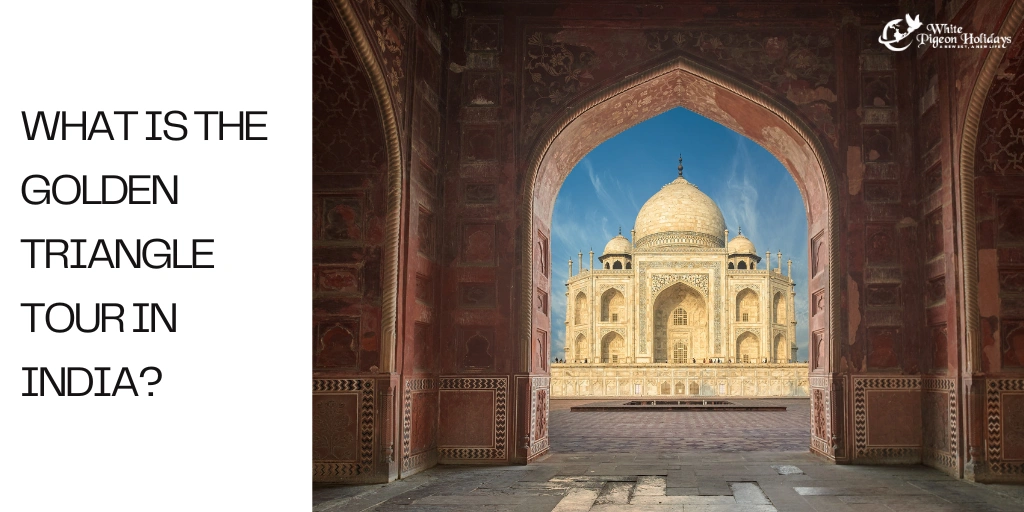
Taj Mahal, Agra
The Taj Mahal is significantly more accessible than most first-time visitors expect.
Battery-operated vehicles transport visitors from the parking area to the main entrance, eliminating a long walk before you even begin.
Complimentary wheelchairs are available at the entry gate.
Ramps provide access through much of the complex, and the gardens themselves are on largely level ground.
The one limitation: the mausoleum interior (the chamber where the tombs are located) has steps and is not wheelchair accessible.
Most of the profound beauty of the Taj is visible from outside the mausoleum itself, so this does not significantly diminish the experience.
Senior tip: Enter through the East Gate.
It has the easiest ramp access and lighter crowds than the South Gate. Aim for 7:00–9:00 AM.
Amber Fort, Jaipur
Amber Fort is the most physically demanding attraction on the standard Golden Triangle route.
It sits on a hill and the historic complex involves uneven stone surfaces and multiple staircases.
The good news: jeep service takes you up to the main courtyard, and electric golf carts are available from the base.
This eliminates the hardest part of the physical demand.
The lower courtyards — Jaleb Chowk and Ganesh Pol — contain some of the fort’s most impressive architectural features and are accessible without heavy climbing.
If mobility is limited, focus on the lower sections.
You will still experience the architecture that made Amber Fort famous.
The upper ramparts are stunning, but they are an optional extra, not a requirement.
City Palace, Jaipur
City Palace is one of the most comfortable heritage attractions on the entire route for senior travelers.
Most visitor areas are on level ground with well-maintained pathways and spacious courtyards.
The museum galleries are easily accessible.
The pace here is naturally slower and more relaxed than at Amber Fort.
This is often one of seniors’ favorite stops on the circuit — genuinely impressive architecture, excellent museum collections, and none of the physical stress of the fort.
Delhi Heritage Sites
Delhi’s major monuments are relatively manageable for senior travelers:
- Red Fort has broad pathways and mostly level walking
- Qutub Minar is set in open landscaped grounds with gentle routes between monuments
- Humayun’s Tomb is often the easiest Delhi heritage experience — wide garden paths, fewer crowds than the Taj, and plenty of shaded areas
Humayun’s Tomb is frequently cited by senior travelers as a personal highlight.
It is quieter, less crowded, and the architecture is stunning without requiring significant physical effort to appreciate.
Not sure which itinerary suits your fitness level?
Tell us your mobility level, health considerations, and travel dates. We'll build a day-by-day Golden Triangle itinerary designed around your pace — with suitable hotels, comfortable sightseeing, and no unnecessary walking.
Want to Know If the Golden Triangle Is Right for You?
The One Factor That Separates a Great Trip From a Miserable One: Timing
If there is one decision that matters most for senior travelers on the Golden Triangle, this is it.
| Month | Temperature | Crowds | Senior Verdict |
|---|---|---|---|
| October | 28–33°C | Medium | Good — pleasant mornings, comfortable sightseeing |
| November | 20–28°C | High | Excellent — one of the best months overall |
| December | 15–25°C | Very High | Excellent — book hotels 3–4 months ahead |
| January | 10–22°C | High | Very Good — pack a light jacket for mornings |
| February | 15–25°C | Medium to High | Excellent — best balance of weather and crowds |
| March | 22–32°C | Medium | Good — comfortable early March; warm by end of month |
| April–June | 35–48°C | Low | Avoid — extreme heat is dangerous for most seniors |
| July–September | 28–38°C (humid) | Very Low | Avoid — monsoon disrupts outdoor sightseeing |
If your schedule only allows December travel, that works — just book hotels and Taj Mahal entry tickets well in advance. The Archaeological Survey of India has introduced timed entry slots for the Taj Mahal, and the sunrise slot in peak season fills up weeks ahead.
October
Crowds: Medium
Senior Verdict: Good — pleasant mornings, comfortable sightseeing
November
Crowds: High
Senior Verdict: Excellent — one of the best months overall
December
Crowds: Very High
Senior Verdict: Excellent — book hotels 3–4 months ahead
January
Crowds: High
Senior Verdict: Very Good — pack a light jacket for mornings
February
Crowds: Medium to High
Senior Verdict: Excellent — best balance of weather and crowds
March
Crowds: Medium
Senior Verdict: Good — comfortable early March; warm by end of month
April–June
Crowds: Low
Senior Verdict: Avoid — extreme heat is dangerous for most seniors
July–September
Crowds: Very Low
Senior Verdict: Avoid — monsoon disrupts outdoor sightseeing
Want a More Comfortable Golden Triangle Tour? Let’s Plan It Around You
The standard Golden Triangle tour is often sold as a 5 to 6 night itinerary. For most senior travelers, that pace is simply too fast.
For most senior travelers, 8 to 10 nights is the recommended duration. It allows time for rest between cities, flexibility to skip activities without feeling rushed, and afternoon breaks without missing the highlights.
A 6-night itinerary turns every day into a race. An 8 to 10-night itinerary turns every day into an experience.
Arrive in Delhi
Recover from your flight. Enjoy a relaxed dinner or a gentle walk near your hotel. Avoid sightseeing on arrival day.
Delhi Sightseeing
Visit Humayun's Tomb and Qutub Minar. Finish by early afternoon and enjoy a restful evening.
Drive to Agra
Travel via the Yamuna Expressway (about 3.5 hours). Check in and keep the afternoon completely free.
Taj Mahal Day
Visit the Taj Mahal at sunrise. Return for breakfast. Explore Agra Fort later only if you still have the energy.
Drive to Jaipur
Allow 4.5 to 5 hours. If comfortable, stop at Fatehpur Sikri for about an hour before continuing.
Amber Fort & City Palace
Use the jeep service at Amber Fort, then enjoy a relaxed visit to City Palace before resting in the evening.
Relaxed Jaipur Day
Browse textile markets, enjoy a long lunch, and visit Jantar Mantar if it interests you.
Return Journey
Drive back to Delhi or take a direct flight from Jaipur International Airport to your onward destination.
The Three Itinerary Options (Depending on Your Fitness Level)
Not everyone needs to do the full circuit. Here is how to match the itinerary to your situation:
| Option | Duration | Destinations | Best For |
|---|---|---|---|
| Delhi + Agra only | 4–5 nights | Delhi, Agra, Taj Mahal | Travelers with mild mobility concerns, shorter windows |
| Delhi + Jaipur only | 5–8 nights | Delhi, Jaipur, Amber Fort, City Palace | Those more interested in palaces than the Taj Mahal specifically |
| Full circuit with rest days | 8–10 nights | All three cities | Active seniors who want to see everything at a comfortable pace |
Delhi + Agra only
Destinations: Delhi, Agra, Taj Mahal
Best For: Travelers with mild mobility concerns, shorter windows
Delhi + Jaipur only
Destinations: Delhi, Jaipur, Amber Fort, City Palace
Best For: Those more interested in palaces than the Taj Mahal specifically
Full circuit with rest days
Destinations: All three cities
Best For: Active seniors who want to see everything at a comfortable pace
Which itinerary is right for you?
Our Month-by-Month Golden Triangle Planner for Seniors matches your travel dates, fitness level, and interests to the right pace, duration, and hotel combination.
Want a More Comfortable Golden Triangle Tour? Let’s Plan It Around You
What the Golden Triangle Actually Costs for Senior Travelers
Budget is worth discussing honestly, because senior travelers typically want comfort — which does cost more than a backpacker trip, but less than most people fear.
Hotel Costs Per Night (What to Expect)
| Category | Delhi | Agra | Jaipur |
|---|---|---|---|
| 4-Star | $86–$165 | $77–$187 | $86–$176 |
| 5-Star / Heritage | $220–$550+ | $330–$880+ | $220–$860+ |
That said, if budget allows, consider one splurge: Jaipur has heritage palace hotels — former royal residences converted into hotels — that offer an experience you genuinely cannot find anywhere else in the world. The Rambagh Palace and Samode Palace are the most celebrated. Even a single night there becomes a story you will tell for years.
4-Star
Agra: $77–$187
Jaipur: $86–$176
5-Star / Heritage
Agra: $330–$880+
Jaipur: $220–$860+
Get Your Senior-Friendly Golden Triangle Budget Cost
Transport Costs
| Vehicle | Per Day (USD) |
|---|---|
| Standard sedan (Swift Dzire) | $44–$66 |
| SUV — Toyota Innova Crysta | $66–$99 |
| Luxury SUV — Fortuner, Innova HyCross | $110–$165 |
Standard sedan (Swift Dzire)
SUV — Toyota Innova Crysta
Luxury SUV — Fortuner, Innova HyCross
Monument Entry Fees (Foreign Tourists, 2026)
| Monument | Fee (INR) | Approx. USD |
|---|---|---|
| Taj Mahal | INR 1,300 | ~$16 |
| Taj Mahal mausoleum interior | INR 200 | ~$2.50 |
| Agra Fort | INR 650 | ~$8 |
| Red Fort, Delhi | INR 600 | ~$7.50 |
| Humayun's Tomb | INR 600 | ~$7.50 |
| Qutub Minar | INR 600 | ~$7.50 |
| Amber Fort, Jaipur | INR 550 | ~$7 |
| City Palace, Jaipur | INR 700 | ~$8.50 |
| Fatehpur Sikri | INR 610 | ~$7.50 |
Taj Mahal
Approx. USD: ~$16
Taj Mahal mausoleum interior
Approx. USD: ~$2.50
Agra Fort
Approx. USD: ~$8
Red Fort, Delhi
Approx. USD: ~$7.50
Humayun's Tomb
Approx. USD: ~$7.50
Qutub Minar
Approx. USD: ~$7.50
Amber Fort, Jaipur
Approx. USD: ~$7
City Palace, Jaipur
Approx. USD: ~$8.50
Fatehpur Sikri
Approx. USD: ~$7.50
Total Budget Summary
| Travel Style | Per Person (8 nights) |
|---|---|
| Mid-range (4-star hotels, Toyota Innova SUV) | $1,200–$2,000 |
| Comfort-luxury (mix of 4 and 5-star) | $2,000–$3,500 |
| Full luxury (5-star throughout, heritage hotels) | $3,500+ |
Mid-range
Per Person (8 nights): $1,200–$2,000
Comfort-luxury
Per Person (8 nights): $2,000–$3,500
Full luxury
Per Person (8 nights): $3,500+
The Hotels Senior Travelers Actually Use (And Why They Work)
The choice of hotel shapes your entire experience of a city.
For senior travelers, a few things matter above everything else: lift access, responsive staff, in-room dining availability, and proximity to a medical facility.
Delhi recommendations: The Imperial, The Leela, and ITC Maurya are the established 5-star choices.
For mid-range comfort, properties in South Delhi (Saket, Defence Colony) and Aerocity (near the airport) offer excellent value with good lifts, quality dining, and reliable staff.
Agra recommendations: The Oberoi Amarvilas is the most celebrated hotel on the entire circuit — its unobstructed Taj Mahal views from every room are genuinely extraordinary.
For value-for-comfort, the ITC Mughal is a strong 5-star option.
At the 4-star level, the Courtyard Marriott Agra and Radisson Blu Agra are both well-reviewed by senior travelers.
Jaipur recommendations: Rambagh Palace (Taj Hotels) is the dream for those who want a genuine palace stay.
Samode Haveli is more intimate and equally atmospheric.
For mid-range, the Jai Mahal Palace and Hilton Jaipur consistently get strong reviews for comfort and service.
Before confirming any hotel, ask your travel company to confirm: lift availability, doctor-on-call access, and the location of the nearest private hospital.
These are not luxuries — they are reasonable requests any good tour company should be able to answer.
Medical Safety on the Golden Triangle: What You Actually Need to Know
India has good private healthcare in all three cities on this circuit — significantly better than most travelers expect.
Quick Answer: Delhi, Agra, and Jaipur all have modern private hospitals with English-speaking staff.
Delhi has the best facilities overall.
Travel insurance with emergency evacuation coverage is non-negotiable for senior travelers.
Delhi: Max Healthcare, Medanta, and Fortis all operate major facilities in Delhi NCR, with international patient departments, English-speaking doctors, and facilities comparable to private hospitals in Western Europe.
Jaipur: Manipal Hospital Jaipur (Vidyadhar Nagar) is the most recommended facility for international patients, with strong emergency services.
Agra: Moolchand Medcity Agra is the city’s most internationally recognized facility — NABH compliant, with cardiology and emergency services.
Pushpanjali Hospital is another option.
Note that Agra’s hospitals are competent but more limited than Delhi.
For serious emergencies, evacuation to Delhi is the standard protocol.
The one thing that matters most here: Get comprehensive travel insurance before you leave home.
It should specifically cover pre-existing medical conditions, emergency hospitalization, and medical evacuation.
Private hospitals in India require a deposit before treatment — your insurance handles this, but without it, you are managing a financial negotiation at a very bad moment.
Want Senior-Friendly Hotels in Delhi, Agra & Jaipur?
Senior Travel Health & Comfort Assessment
Before you finalise your booking, share your fitness level, mobility considerations, and any health requirements with us. We'll recommend the right pace, the right hotels, and the right duration — honestly, based on what will actually work for you.
Get Your Free Senior India Travel Preparation Guide
Honest Trade-Offs You Should Expect
No destination is perfect, and India is more honest than most about that.
Here are the things worth knowing before you arrive:
The Taj Mahal will have crowds. Even at 7 AM, you will not be alone.
The early visit reduces it significantly — but hundreds of other people had the same idea.
Manage your expectations and you will still find it breathtaking.
The roads between cities are good, not perfect. The Delhi–Agra Expressway is smooth and fast.
Sections near Jaipur involve older roads with some bumps.
A good private driver — one who knows the roads and adjusts his speed accordingly — makes a meaningful difference.
Ask your tour company how long they have worked with their drivers.
Indian food can affect digestion initially. This is especially relevant for the first two or three days.
Stick to your hotel restaurant while you acclimatize.
Once your stomach has adjusted, street food and local dhabas are a genuine joy — rich, regional, and far more delicious than anything in a hotel buffet.
Not all monuments have clean restroom facilities. Your guide should brief you on toilet locations at each site before you enter.
A good guide does this automatically.
If yours does not, ask.
Scarf shops and gem stores. Some guides receive commission for bringing tourists to specific shops.
If you have no interest in shopping, say so clearly at the start of the tour.
A good guide will respect that.
A less scrupulous one might push.
Knowing about this in advance lets you handle it calmly rather than feeling ambushed.
Common Mistakes Senior Travelers Make (And How to Avoid Them)
Booking too few nights. A 5-night Golden Triangle is always too rushed for seniors.
The monuments, the driving, the time zone adjustment — it all takes more time than it looks on paper. Book 8–10 nights.
Traveling in April, May, or June. The heat at these times is not uncomfortable — it is dangerous. 44°C in an open stone complex without shade is a real health risk.
The saving on hotel rates is not worth it.
Choosing a group tour for the cost savings. Group tours move at the pace of the group, not your pace.
Fixed departure times, shared vehicles, and limited flexibility make them genuinely harder for senior travelers.
A private tour costs more but is worth every extra rupee.
Not asking about accessibility in advance. Tell your tour company about any mobility considerations before booking.
A good operator will route you through the accessible entrances, pre-arrange wheelchairs, and build extra time at sites where you might need it.
None of this is extra effort for them — but they can only plan for it if they know.
Skipping travel insurance. India’s private hospitals are good.
They also require deposits upfront.
Travel insurance with pre-existing conditions coverage and emergency evacuation is not optional for senior travelers — it is the single most important preparation you can make.
All prescription medications, plus a 2-week extra supply in case of delays.
Printed medical history, current medications, and allergy list in English.
Electrolyte sachets for hydration on walking days and warm weather.
SPF 50+ sunscreen, sunglasses, and a wide-brimmed hat.
Comfortable closed-toe walking shoes with cushioning and non-slip soles.
Lightweight daypack instead of a heavy shoulder bag.
Comprehensive travel insurance covering pre-existing conditions and emergency evacuation.
Name and address of the nearest hospital to each hotel in your itinerary.
Save your guide's and driver's WhatsApp contact before leaving Delhi.
One More Thing
Carry a small amount of Indian Rupees in cash for tips, monument extras, and small purchases. Most hotels, restaurants, and larger shops accept cards, but guides, drivers, and local vendors often prefer cash.
Ready to Experience the Golden Triangle at Your Own Pace?
Final Honest Assessment: Should You Go?
The Golden Triangle is not the easiest trip you will ever take.
India asks something of you — attention, flexibility, a tolerance for intensity, and a willingness to be surprised by things that are not on any itinerary.
But for the right traveler, it delivers something very few destinations can: encounters with history that feel alive, not just preserved.
The Taj Mahal at sunrise is genuinely unlike anything else you have ever seen.
Humayun’s Tomb in the late afternoon is quietly extraordinary.
Amber Fort from the jeep, approaching the gates in the early morning light, is the kind of moment that stays with you for years.
Senior travelers who plan this trip carefully — the right month, the right number of nights, a private car and guide, 4-star hotels with good support — come back saying it was one of the great experiences of their lives.
The key word in that sentence is “carefully.” Book early.
Plan for more rest than you think you need.
Travel in November, December, January, or February.
Let the itinerary breathe.
Do that, and India will absolutely reward you.
What Senior Travelers Actually Ask Before Booking
Real questions from seniors considering the Golden Triangle — answered honestly, covering mobility, health, safety, hotels, diet, and how to make the right call for your specific situation.
Is the Golden Triangle good for someone with knee pain?
Yes, with planning. Use the golf cart at Amber Fort, take the battery vehicle at the Taj Mahal, choose the East Gate for the easiest ramp access. Brief your guide about your knee at the start of each day. Most of the most beautiful parts of each monument are accessible without significant stairs.
What is the safest city for seniors on this route?
All three are safe with a private driver and guide. Jaipur is often cited as the easiest to navigate — organized layout, wide roads, and some of the warmest hospitality in India. Delhi is the most intense city and benefits most from having a knowledgeable guide to contextualize what you are seeing.
How much walking is unavoidable at the Taj Mahal?
Expect roughly 400–500 metres of flat walking from the entrance gate to the mausoleum itself. Battery vehicles reduce the distance from the parking area. The walking inside the complex is level and comfortable. The mausoleum interior has steps but is optional — you can see everything that matters from ground level.
Can I fly between cities instead of driving?
Yes. Domestic flights between Delhi, Agra, and Jaipur are available. Flight duration is 45–60 minutes per leg. Flying reduces travel fatigue for seniors with back concerns or limited car comfort. The trade-off is losing the flexibility to stop at Fatehpur Sikri or roadside villages en route. Discuss with your tour planner which combination makes most sense for your situation.
Is it safe to travel India over 70 or 80?
Yes. Travelers in their 70s and 80s visit the Golden Triangle every year. TourRadar reviews include accounts of travelers in their 80s visiting the Taj Mahal for the first time and finding it deeply moving and entirely manageable. The key variables are fitness level and planning quality — not age alone.
Are Indian hospitals accessible in an emergency?
Yes. Delhi has world-class private hospitals including Max Healthcare and Medanta that regularly treat international patients. Jaipur's Manipal Hospital and Agra's Moolchand Medcity are both reputable private facilities. The important caveat: hospitals require advance payment deposits. Travel insurance with emergency coverage handles this — without it, logistics become complicated at a very stressful moment.
What type of hotel is recommended?
Four-star and five-star properties across all three cities. Look specifically for: lift access to all floors, doctor-on-call availability, in-room dining, and proximity to a private hospital. Ask your tour company to confirm these for each hotel before booking.
Is there a risk of stomach illness?
Yes, the risk is real — especially for the first few days. Drink only bottled water, eat freshly cooked food from your hotel restaurant initially, and let your stomach acclimatize before experimenting. Once acclimatized, Indian food is one of the great joys of this trip — rich, regional, and nothing like the version you know from home.
Can the tour accommodate vegetarian or special diets?
Yes. Most 4-star and 5-star hotels can accommodate vegetarian, gluten-sensitive, diabetic-friendly, and low-spice meal requirements. Brief your tour company at the time of booking and confirm again with each hotel on arrival.
What's the best way to handle jet lag?
Arrive a day early. Keep your first full day light — gentle activity, outdoor time in natural daylight, good hydration, and no alcohol. Go to bed at local time rather than trying to sleep according to your home time zone. One quiet arrival day makes a significant difference to your energy for the first sightseeing day.
Is travel insurance essential?
Absolutely. Choose a policy that explicitly covers: pre-existing conditions, emergency medical treatment in India, hospital evacuation to Delhi or repatriation to your home country, and trip cancellation. Do not cut costs here — this is the single most important preparation for a senior international trip.
Can we do just Delhi and Agra without Jaipur?
Yes, and for many senior travelers this is actually the right call. A 4–5 night Delhi + Agra trip gives you the Taj Mahal — the defining experience of the circuit — with only 3.5 hours of driving each way and no time pressure. If the Taj Mahal is the primary reason you are coming, this partial circuit is entirely worth considering.