
Most articles about Golden Triangle guides talk about history.
The guide knows the Mughal emperors.
They can name the architect of the Taj Mahal.
They speak excellent English.
All of that’s real.
But for senior travelers specifically, it’s genuinely the least important part of what a guide does.
What actually matters — and almost nobody explains — is something harder to describe.
It’s about cognitive load.
It’s about the thousands of tiny decisions that drain your energy every hour in an unfamiliar country, and how a good guide simply absorbs all of them so you don’t have to.
This page goes deeper than most. We’ll cover exactly what a good guide does at each specific monument — not generally, but specifically, with the exact decisions being made at the Taj Mahal, Amber Fort, City Palace, and Delhi’s heritage sites.
Then we’ll get into how to evaluate guide quality before you book, what questions cut through vague answers, the common scam patterns to know about, how the driver role fits in, and what to tell your guide in the first five minutes on Day 1.
Quick Answer: A private tour guide for senior travelers on the Golden Triangle does far more than explain history.
They manage accessible routes at each monument, time visits around your energy levels, arrange transport ahead of each site, buffer you from touts and scams, and quietly reshape the day when you need to slow down — before you’ve asked.
For most senior travelers, the guide is the single biggest factor in how enjoyable India actually feels.
Why India Is Different — Even If You’ve Traveled Independently for Decades
Here’s something that catches experienced independent travelers off guard: India doesn’t tire you with one difficult thing.
It tires you with thousands of small things happening simultaneously.
Which entrance is the right one? Is this the ticket queue or the security queue?
How much should this cost?
What does that person want?
Why is this part closed?
Is there a restroom here?
Now multiply that across three cities, multiple monuments each day, and the intense sensory experience of Indian public spaces — the heat, the noise, the crowds pressing in, the vendors, the touts at every gate.
The cognitive load becomes genuinely exhausting, separate from any physical effort.
It’s a specific kind of tiredness that compounds across days.
A guide removes that load.
They carry the decisions so you can carry the experience.
This is the argument that matters for senior travelers, and it has nothing to do with age or competence.
It’s about energy conservation — keeping the good energy for the actual moments you came to have, and not depleting it on logistics.
Many senior travelers who start by planning to go independently end up saying, by Day 3, that not having a guide was the only thing they’d change.
What Quick Facts You Should Know
| Factor | Details |
|---|---|
| Guide type recommended | Private guide, city-specific (different in each city) |
| Driver arrangement | Same driver for entire circuit — essential |
| Taj Mahal accessible entrance | East Gate only (ramp access) |
| Amber Fort access for seniors | Jeep ₹500 round trip / Golf cart ₹50–100 one way / Private car to top (ask guide) |
| Taj Mahal closed | Every Friday — no exceptions |
| Battery vehicles at Taj Mahal | Free with foreign entry ticket; parking to gate |
| Guide certification | IITG licence, Ministry of Tourism, Government of India |
| Guide tip rate | ₹500–₹800/day full day; ₹1,000 for exceptional service |
| Driver tip rate | ₹400–₹600/day, paid as lump sum at end of trip |
Guide type recommended
Driver arrangement
Taj Mahal accessible entrance
Amber Fort access for seniors
Taj Mahal closed
Battery vehicles at Taj Mahal
Guide certification
Guide tip rate
Driver tip rate
What a Guide Does at Each Golden Triangle Site — Specifically
This is where most pages stop being useful.
Here’s what actually happens at each monument when a good, senior-aware guide is doing their job properly.
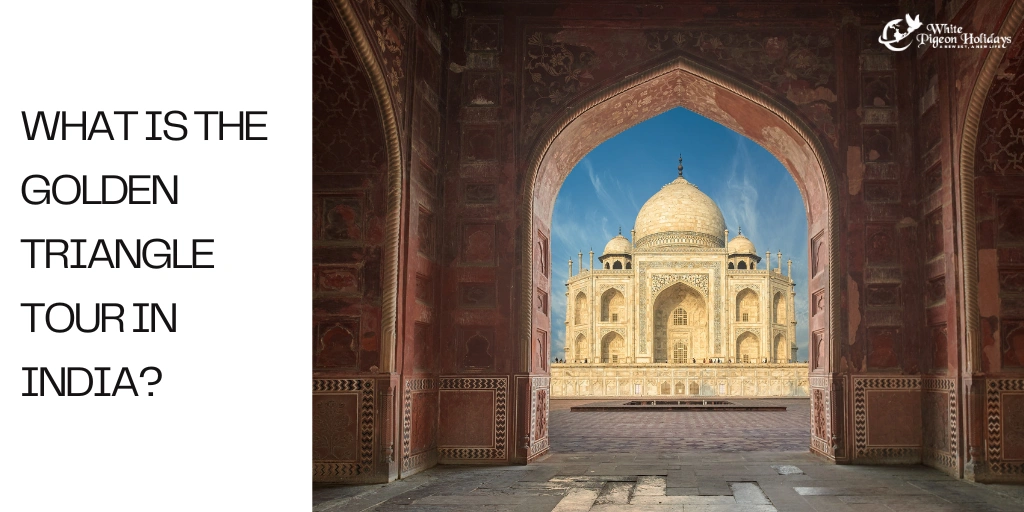
At the Taj Mahal, Agra
Quick Answer: A guide’s job at the Taj Mahal starts before you enter the complex.
They arrange the battery vehicle from parking to the gate, use the East Gate for ramp access, plan the walking route through the grounds to maximise the most impressive views while minimising total distance, identify shaded rest areas, and brief you on the mausoleum staircase before you reach it — so you decide without pressure.
The Taj Mahal has three entrances.
The East Gate is the only one with a proper ramp for visitors with mobility concerns.
The South Gate and West Gate have steps.
This is confirmed by the Archaeological Survey of India’s own Taj Mahal guidelines, which also note that battery buses and golf carts run free of charge between the parking area and the gate for visitors with foreign entry tickets.
Any guide who doesn’t know the East Gate distinction — or who defaults to a different gate without explaining why — hasn’t guided this population carefully.
Inside the complex, the grounds are mostly accessible.
Ramps have been added throughout the interior and are significantly better than they were five years ago.
The broad path leading from the main gate through the formal gardens to the marble platform is paved.
Your guide routes you through the garden so you approach the Taj Mahal along the central reflecting pool — the classic view — without unnecessary detours.
The marble platform at the base of the mausoleum is uneven in places.
Your guide will point you toward the smoother sections and toward the shaded alcoves in the garden walls when you want to sit.
The inner chamber — where the cenotaphs of Shah Jahan and Mumtaz Mahal are located — is accessed via a narrow descending staircase.
It’s a genuinely moving experience.
But it’s physically demanding and not immediately obvious as optional.
A good guide tells you about it before you reach the entrance, describes what you’ll actually see inside, and lets you make an informed decision rather than discovering you’re committed to a staircase mid-visit.
One practical thing most visitors don’t know: the Taj Mahal is closed every Friday.
This isn’t a sign posted clearly at the entrance of every tour agency.
If your itinerary lands you in Agra on a Thursday night planning a Friday morning Taj visit, you need a guide who caught this weeks ago, not at the gate.
Timing matters more here than anywhere else. Early morning visits — the first entry slot, around 7am when the gates open — offer cooler temperatures, significantly shorter queues, and the famous soft light.
A good guide arranges this proactively.
They don’t slot you into a mid-morning window because it’s more convenient for their schedule.
At Amber Fort, Jaipur
Quick Answer: Without a guide, a senior arriving at Amber Fort faces competing jeep and golf cart touts, a confusing queue system, and no one to honestly advise which sections of the fort are worth the effort versus the physical cost.
A guide arranges your transport before you step out of the vehicle and tells you honestly which parts of the fort are worth your energy.
Amber Fort (also spelled Amer Fort) is the most logistically complex site on the Golden Triangle for senior travelers.
This is where guide quality shows most clearly.
Here’s what arriving without a guide looks like: you pull up to the main parking area and are immediately surrounded by jeep drivers, golf cart operators, and touts for elephant rides, all competing loudly and quoting prices that aren’t comparable.
It’s chaotic and disorienting even for experienced travelers.
Here’s what arriving with a good guide looks like: you stay in the air-conditioned car while the guide steps out, assesses the queue and transport situation, arranges the right option for your group, and brings you directly to it.
The transport options up to the fort:
- Jeep: ₹500 round trip per vehicle (up to 5 passengers) — the most popular option for groups
- Golf cart: ₹50–₹100 per person one way, available from noon to 6pm (not available early morning)
- Private car: If you’re traveling in a private vehicle (which you should be for a senior tour), your driver can often take you directly up the back road to the top entrance, bypassing the queue system entirely. Almost no general travel pages mention this. A guide who knows this option saves you significant time and effort.
Elephant rides: ₹2,500 for two, available 8–11:30am only. Beyond the well-documented ethical concerns around the treatment of these animals, the practical case against is also strong: 45–90 minute waits in the queue, and the golf cart costs ₹50 and takes 5 minutes.
Your guide should steer you away from elephant rides without hesitation.
Inside the fort — this is where guide honesty about effort vs reward becomes essential.
The Sheesh Mahal (Palace of Mirrors) is one of the most visually spectacular spaces in all of Rajasthan.
Intricate mirror work covers every surface — when light enters, the entire room seems to fill with stars.
It’s reachable at ground level within the fort’s main courtyard.
Worth every minute.
The Ganesh Pol gateway, the central Diwan-i-Aam (Hall of Public Audience), and the Sukh Niwas (pleasure palace) are also manageable and visually extraordinary.
The upper ramparts and the connecting route to Jaigarh Fort involve significant climbing — steep stone ramps, uneven cobblestones, and sustained effort.
The views from up there are atmospheric. But for most senior travelers, the honest answer is: skipping the upper ramparts doesn’t diminish the Amber Fort experience.
The courtyard, the Sheesh Mahal, the Ganesh Pol, and the Maota Lake reflection from below are the heart of the visit.
A good guide tells you this clearly and lets you choose.
A poor guide routes you toward everything — filling time rather than conserving your energy.
At City Palace and Hawa Mahal, Jaipur
City Palace is the most accessible major site on the circuit for senior travelers — wide courtyards, mostly flat walkways, well-maintained museum sections with shade.
The physical experience is manageable for most mobility levels.
This is where a guide’s value shifts from physical support to interpretive depth.
City Palace is still a partial royal residence of the Jaipur royal family.
The artifacts, paintings, and ceremonial objects inside are extraordinary — but only if someone explains the context behind them.
Without a guide, you’re looking at beautiful things without understanding why they were remarkable.
With a knowledgeable guide, the same rooms feel completely different.
Hawa Mahal deserves an honest note: it’s primarily a facade.
It’s magnificent when photographed from the street below.
Climbing it — five floors of increasingly narrow stairs — requires significant effort for views that aren’t dramatically better than what you already have from street level.
For most senior travelers, the best approach is 20–30 minutes in the street in front of it, photographing the pink sandstone in the morning light, rather than climbing it.
A guide who routes you up the stairs to fill the morning is prioritising duration over your energy.
Ask directly: “Is it worth climbing?”
A good guide will give you an honest answer rather than the default one.
At Delhi’s Monuments — Red Fort, Humayun’s Tomb, Qutub Minar
Delhi’s heritage sites involve open grounds with generally manageable walking.
The guide’s primary roles here are timing, crowd navigation, and — critically — helping you decide where to spend your energy across a city with more monuments than any itinerary can cover.
Here’s the most consistently underused Delhi recommendation among senior travelers: Humayun’s Tomb.
Architecturally, Humayun’s Tomb is the predecessor to the Taj Mahal — same white marble, same Mughal garden design, same geometric perfection, same sense of serenity.
It was built about 100 years before the Taj.
The gardens are beautifully maintained, the paths are wide and accessible, and the footfall is a fraction of what you’d find at the Taj Mahal or Red Fort.
On a good morning, you might have whole sections of the complex almost to yourself.
A knowledgeable guide will suggest Humayun’s Tomb strongly — not as a secondary site, but as a genuine highlight.
A less experienced guide will default to what’s famous, rather than what’s best.
Red Fort is impressive from the exterior and the Lahori Gate entrance.
The main ceremonial courtyards are worth seeing.
Many of the interior museum sections, however, are underwhelming in the context of what you’ll see elsewhere on the circuit.
A good guide helps you prioritise.
Qutub Minar involves significant open ground but is mostly flat and manageable.
Best visited early before midday heat builds, particularly in winter when the low sun makes the stone look extraordinary.
Get Your Senior Packing Checklist

Private Guide vs Group Tour: The Real Difference
| Factor | Private Guide | Group Tour |
|---|---|---|
| Pace | Adapts to your energy that day | Fixed for all participants |
| Rest breaks | Whenever you need them | At scheduled stops only |
| Route | Adjusted for your mobility concerns | Designed for average fitness |
| If you feel unwell | Day reshaped immediately, no one affected | Group continues; you miss the site |
| Heat management | Sites timed around your tolerance | Timed around the group majority |
| Shopping detours | Eliminated if you request no-commission policy | More common, harder to refuse in a group |
| Driver continuity | Same driver for the entire circuit | May change between cities |
| Cost per person | Higher, but gap narrows significantly for a couple | Lower per person in large groups |
Pace
Group Tour: Fixed for all participants
Rest breaks
Group Tour: At scheduled stops only
Route
Group Tour: Designed for average fitness
If you feel unwell
Group Tour: Group continues; you miss the site
Heat management
Group Tour: Timed around the group majority
Shopping detours
Group Tour: More common, harder to refuse in a group
Driver continuity
Group Tour: May change between cities
Cost per person
Group Tour: Lower per person in large groups
Want to Know the Cost of Your Golden Triangle Trip?
Pros and cons at a glance:
Private guide — pros:
- Complete flexibility at every site and every day
- Same driver builds familiarity with your preferences from Day 1
- No one else’s schedule affects yours
- Guide focuses entirely on you
Private guide — cons:
- Higher per-person cost for solo travelers
- Requires more active operator research to find quality
Group tour — pros:
- Lower cost, particularly for solo travelers
- Social experience, built-in companions
- Less decision-making about logistics
Group tour — cons:
- Fixed pace regardless of how you feel
- Shopping detours harder to decline when a whole group is being taken
- Driver/guide changes between cities means starting fresh on comfort and trust
- Any medical or energy issue means you either push through or miss the site
How to Tell a Good Guide From an Average One
Not all guides are equivalent. India’s popular monuments attract unlicensed fixers who approach tourists at entrances and offer their services — often aggressively.
They have no official credentials, commonly provide inaccurate historical information, and run commission-based shopping detours as their primary income source.
What Government Certification Actually Means
India’s Ministry of Tourism runs the Incredible India Tourist Guide (IITG) certification programme.
To receive a licence, a guide must complete 6 months of combined theoretical and practical training, pass an assessment, and obtain a regional licence from a Government of India Tourism Office.
They must attend mandatory refresher courses every 3–5 years to renew that licence.
Licensed guides carry an identity card and a physical licence number that can be verified.
They’re accountable to the Ministry — misconduct complaints are investigated and licences can be revoked.
Unlicensed fixers outside monument gates have none of this accountability.
Hiring one isn’t just a risk to experience quality — it’s a risk to safety and accuracy.
Ask your operator directly:
“Are your guides licensed under the Ministry of Tourism’s IITG programme?”
A good operator confirms this without hesitation.
The Five Questions That Separate Good Operators From Poor Ones
Ask these before booking.
Judge by the specificity of the answers, not just whether the answer is “yes”.
- “Have you guided senior travelers before, and specifically how do you adjust for them?”
Weak answer: “Yes, of course, we accommodate all types of travelers.”
Strong answer: Describes specific adjustments — shorter walking segments between rest points, earlier monument timing to beat heat and crowds, pre-identification of accessible routes and rest seating at each site, being honest about which stairs are optional vs essential, flexible day reshaping if energy is low.
- “Which entrance do you use at the Taj Mahal for visitors with mobility concerns?”
Correct answer: the East Gate — the only entrance with a proper ramp, confirmed by the ASI’s own Taj Mahal guidelines.
Any other answer, or visible uncertainty, tells you this operator hasn’t guided this population carefully.
- “What’s your approach when a traveler wakes up tired and doesn’t feel up to the full itinerary?”
Strong answer: Plans flex. There are lower-intensity alternatives ready for every day — a garden, a quieter heritage area, a shorter version of the planned route. The schedule is a starting point, not a contract.
Weak answer: “We try to complete the planned itinerary.”
- “Can you name the specific hotels you’re booking in each city?”
A serious operator names exact properties — Oberoi Amarvilas in Agra, Rambagh Palace or ITC Rajputana in Jaipur, Taj Palace Delhi — not vague tier categories. Refusing to name specific hotels before payment means either the properties aren’t confirmed yet, or they use whatever has availability. Both are problems on a senior tour where hotel quality directly affects recovery and comfort.
- “What is your policy on shopping stops during sightseeing days?”
Strong answer: A clear no-commission policy. Guides are instructed not to route you through shops unless you specifically request shopping. This is stated explicitly to each guide before your trip begins.
Weak or evasive answer: “We visit some nice local shops as part of the experience.”
Plan Your Complete Golden Triangle Trip Budget

Best Time to Visit Golden Triangle for Seniors
Red Flags: What Bad Guides Actually Do
The shopping detour scam is the most consistently reported problem in Golden Triangle tour reviews.
The pattern is specific and recognisable: between two planned monument visits, the guide mentions stopping to see a “demonstration” of a local craft — marble inlay in Agra, gemstones or block printing in Jaipur.
The stop isn’t in the itinerary. Inside, high-pressure salespeople push overpriced or counterfeit items. The guide earns a commission.
This has been documented repeatedly in TripAdvisor forum reviews from travelers who experienced it at multiple stops across multiple cities in the same trip — and reported that the tour operator clearly knew the pattern was happening.
Other active red flags during the tour:
- Rushing through monuments without checking your energy or comfort
- Not proactively mentioning restroom locations at each site before entering
- Giving vague or inaccurate historical information when you ask specific questions
- Suggesting rest breaks only after you’ve already complained, not before
- Not knowing accessible routes or alternative options at difficult sites
- Inflexible responses when you want to change the day’s plan
- Continuous upselling of “optional extras” throughout the day
If you experience any of these, you’re fully within your rights to contact your operator immediately.
A reputable operator treats guide conduct complaints seriously and can arrange a different guide for the remaining days.
The Driver’s Role — and Why Continuity Matters
On a well-organised senior tour, you have two different people: your guide (city-specific, deep local knowledge) and your private driver (the same person for the entire circuit).
The driver matters more than most pre-trip research suggests.
Here’s what they actually do:
- Meets you at the airport and helps with luggage — your first India experience is set by this moment
- Knows which hotel entrances have step-free access and pulls up accordingly
- Keeps the vehicle at a reliable temperature — not a small thing after hours of sightseeing in Indian heat
- Handles all parking, tolls, and traffic — you never worry about this
- Is the first person to help if something goes wrong in or near the vehicle
- Acts as a buffer against aggressive touts at parking areas and monument gates
And the most important thing: continuity.
The same driver for the full Delhi–Agra–Jaipur circuit means that by Day 2, they already know your preferences — how cool you like the AC, whether you want music or quiet, when you typically want a water stop on long drives, how to communicate if something’s wrong.
A driver who changes between cities resets all of that trust and familiarity each time.
Confirm with your operator before booking:
“Does the same driver stay with us for the entire circuit?”
This is non-negotiable for a comfortable senior tour.
If the answer is anything other than yes, that’s a planning weakness to resolve.
Get Your Free Senior Safety Guide
This is one of the most practical parts of planning a Golden Triangle trip. Travelers who enjoy the smoothest experience usually spend five minutes briefing their guide before the first monument. That short conversation prevents far more problems than changing the itinerary later.
Before you start sightseeing: Spend five minutes setting expectations with your guide. It helps them adapt the route, pace, and commentary to suit you from the very beginning.
Explain Any Joint Pain
Tell your guide whether your knees, hips, or lower back cause discomfort. This helps them choose easier walking routes and avoid difficult surfaces where possible.
Share Your Walking Limit
Explain how long you can comfortably walk before needing a break. A good guide can plan regular seating stops before you become tired.
Discuss Heat Tolerance
If you become uncomfortable in warm weather, let your guide know. They can schedule earlier starts and include more shade and hydration breaks.
Be Honest About Stairs
If you would rather avoid upper levels or long staircases, mention it at the beginning. Your guide can usually adjust the route without affecting the overall experience.
Mention Important Medical Information
Share anything that could matter in an emergency, such as diabetes, heart conditions, or the need to eat at regular intervals.
Choose Your Preferred Start Time
Some travelers enjoy 7–8 AM starts while others prefer slower mornings. Let your guide know what works best for your energy levels.
Set Your Commentary Style
Tell your guide whether you prefer detailed historical explanations or quieter visits with stories only at key locations.
Get Your Senior-Friendly Golden Triangle Itinerary
7 Things to Tell Your Guide Before Day 1
We've turned this into a printable briefing card so you don't have to remember it in the moment. Share it with us before your trip begins and we'll make sure your guide is fully prepared around your needs from the very first day.
Get Your Senior-Friendly Golden Triangle Itinerary
Tipping Your Guide and Driver: 2025 Figures
This trips up almost every international traveler. Here are current, realistic figures for the Golden Triangle circuit.
City Guides
You have a different local guide in each city — this is normal and better for local expertise:
| Service type | Appropriate tip |
|---|---|
| Half-day guide (3–4 hours) | ₹300–₹500 |
| Full-day guide (6–8 hours) | ₹500–₹800 |
| Exceptional senior-aware guiding | ₹1,000+ |
Half-day guide (3–4 hours)
Full-day guide (6–8 hours)
Exceptional senior-aware guiding
Private Driver
Stays with you for the full circuit:
| Trip length | Appropriate lump sum |
|---|---|
| 5-day circuit | ₹2,000–₹2,500 |
| 7-day circuit | ₹2,500–₹3,500 |
| 8–10 day circuit | ₹3,000–₹4,500 |
| Exceptional service (luggage help, medical emergency response, consistent flexibility) | Add ₹500–₹1,000 |
Practical tip: Carry ₹50, ₹100, and ₹500 notes from Day 1. Tipping with a large note creates awkward change situations. Hand the tip personally, with eye contact and a warm thanks — it matters to the person receiving it.
5-day circuit
7-day circuit
8–10 day circuit
Exceptional service
Plan Your Complete Golden Triangle Trip Budget
Use our Senior Golden Triangle Budget Planner
Includes guide and driver tip estimates, monument fees, and hotel tier breakdowns across 7 or 9 days — so you know exactly what to expect before you book.
Plan Your Complete Golden Triangle Trip Budget
Common Mistakes Senior Travelers Make Around Guide Selection
Booking the guide as an afterthought. The guide and driver arrangement is the most important logistics decision on a senior Golden Triangle tour.
Many travelers spend hours comparing hotels and almost no time evaluating guide quality.
The guide experience shapes every day.
Spend time on this.
Accepting “we have English-speaking guides” as sufficient vetting. English fluency is the minimum.
The questions that matter are about experience with senior travelers specifically, approach to accessibility, flexibility, and shopping commission policy.
Not briefing the guide before Day 1. The five-minute conversation described above is consistently what separates great Golden Triangle senior experiences from exhausting ones.
It’s almost never done without prompting.
Assuming the same guide travels with you throughout. Most well-organised Golden Triangle tours use local city guides — a Delhi expert in Delhi, an Agra specialist in Agra, a Jaipur guide in Jaipur.
This is actually better for depth and accuracy.
The driver is your continuity.
If someone tells you “the same guide will be with you all three cities,” that’s a sign the guide will be spread thin across an area they can’t know deeply.
Not asking about the shopping stop policy upfront. The commission detour scam is extremely common.
Asking directly before booking — “What’s your policy on shopping stops?” — takes ten seconds and filters out the operators who run this pattern.
Want Senior-Friendly Hotels in Delhi, Agra & Jaipur?
Final Word
The best Golden Triangle experience for a senior traveler isn’t about covering the most monuments.
It’s about arriving at each place with enough energy to actually be present in it.
That’s what a great guide creates — not by carrying your bags (though the driver does that too), but by carrying the decisions.
The right entrance, the right timing, the right level of honesty about what’s worth your energy and what isn’t, and the flexibility to reshape the day when you need it.
Choosing the right guide isn’t a detail.
For senior travelers, it’s the decision that determines what India actually feels like.
Golden Triangle Tour Guide FAQs for Senior Travellers
Planning a guided trip through Delhi, Agra, and Jaipur? These FAQs answer the most common questions senior travellers ask about guides, accessibility, pacing, and what to expect on the Golden Triangle circuit.
Do I really need a guide for the Golden Triangle if I've always traveled independently?
India is manageable independently, but the cognitive load of constant decision-making in dense Indian public spaces is a specific, genuine form of tiredness that compounds across days — separate from physical effort. Most experienced independent travelers who try India without a guide report, by Day 3, wishing they had one.
Which entrance should the guide use at the Taj Mahal for senior travelers?
The East Gate — the only entrance with ramp access for mobility-limited visitors. The South Gate and West Gate have steps. Battery vehicles (included free with foreign entry tickets) run from parking to the gate. Wheelchairs are available from the ASI office inside the complex.
How do seniors get up to Amber Fort without a long walk?
Three options: jeep (₹500 round trip per vehicle, up to 5 passengers), golf cart (₹50–₹100 one way, available from noon), or your private driver taking you up the back car road directly to the top entrance — the least-known but easiest option for private vehicle holders. Your guide should know all three and recommend based on timing and queue conditions.
Is the guide the same person in Delhi, Agra, and Jaipur?
Usually no, and this is actually preferable. City-specific guides have deeper knowledge of their own destination. Your private driver is the consistent person for the full circuit — they're the one who knows your preferences and keeps the journey familiar across all three cities.
What is a government-certified tour guide in India?
A guide licensed under India's Ministry of Tourism IITG (Incredible India Tourist Guide) programme, which requires 6 months of training and a formal assessment. Licensed guides carry a government-issued identity card and licence. They're accountable to regional tourism offices and can lose their licence for misconduct.
How much should I tip my guide and driver?
Full-day guide: ₹500–₹800; exceptional service ₹1,000+. Driver for the full circuit: ₹400–₹600 per day, given as a lump sum at the end. For a 7-day trip, ₹2,500–₹3,500 total for the driver is appropriate and genuinely meaningful. Tip in cash, personally, at the end.
Can I request a female guide?
Yes. Most experienced operators can arrange female guides with advance notice. Make the request at inquiry stage.
What happens if I feel unwell mid-visit?
A good private guide ends the visit immediately, returns you to the vehicle, and coordinates with your hotel or a nearby medical facility if needed. Major private hospital chains — Max, Fortis, and Medanta — operate in all three Golden Triangle cities. Your guide should know the nearest appropriate facility from wherever you are.
Is Hawa Mahal worth climbing for senior travelers?
Honestly, for most senior travelers, no. Hawa Mahal is best experienced from the street below, where the pink sandstone facade is magnificent and easily photographed. Climbing involves five floors of increasingly narrow stairs for a rooftop view that doesn't significantly improve on what you already have. Spend your energy at City Palace, which is far more accessible and just as rewarding.
What's the difference between a guide and a tour manager?
A guide focuses on monument history, culture, routes, and local interpretation. A tour manager handles wider logistics — schedules, hotel coordination, problem-solving mid-trip. Premium tours sometimes include both. For most senior travelers, a good guide who communicates closely with your driver and hotel covers the essential bases.
How do I verify if a tour guide is government-licensed?
Ask your operator for the guide's IITG licence number before travel. Licensed guides are registered with regional India Tourism offices and carry a physical identity card. Operators who can't confirm this, or become vague when asked, are worth treating with caution.
What if I want to skip a site entirely on the day?
On a private tour, simply tell your guide. You can return to the hotel, rest, or swap for a lower-intensity alternative — a heritage garden, a viewpoint, a quieter lane in the old city. A good guide will have backup options ready for low-energy days without making you feel you've wasted anything.