Most Travelers Compare Hotels. Very Few Ask About Their Guide.
When planning an India tour, most travelers focus first on destinations, followed by hotels and transportation.
One of the most overlooked parts of travel planning is the person who actually brings the destination to life during the journey.
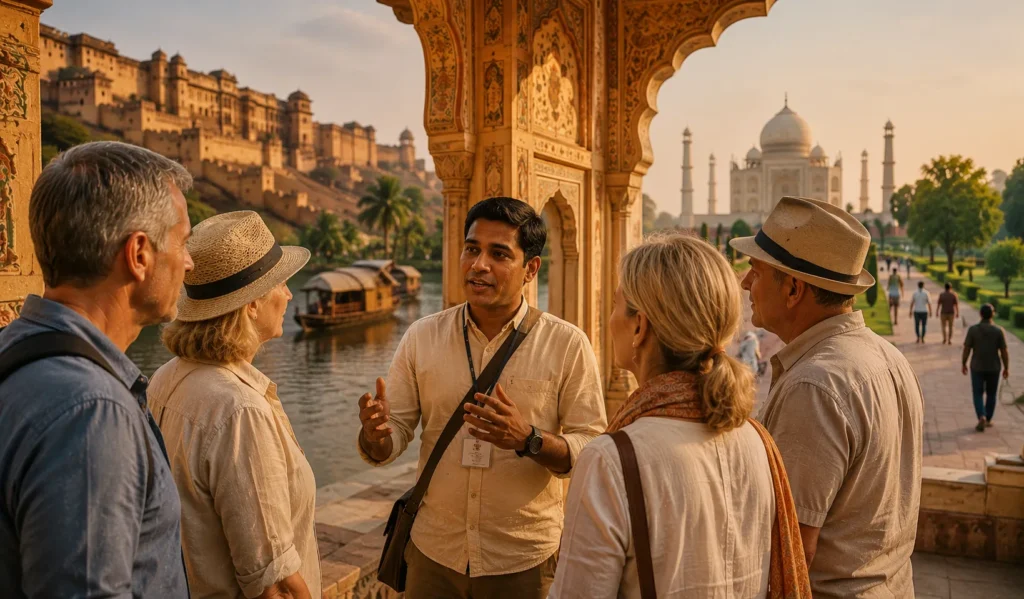
A guide is not just a service provider—they are the person who shapes how travelers experience a place.
• Assists with photography and timing at monuments
• Helps travelers navigate unfamiliar environments
• Adds context that is not found in guidebooks
The right guide can transform a visit from ordinary sightseeing into a meaningful experience.
We Never Start With One Question. We Start With Several.
Selecting a guide is not a simple availability check—it is a structured decision based on the nature of the journey.
Different travelers require different guiding styles depending on their interests, pace, and travel expectations.
• Families often require flexibility and engagement
• Senior travelers may prefer a slower, patient approach
• Photography-focused travelers need timing awareness
• Cultural or historical tours require deeper storytelling
For this reason, guide selection is based on compatibility with the itinerary, not just availability.
A well-matched guide often becomes one of the most memorable parts of the entire journey.
A Government Licence Is Expected. It Isn’t The Final Decision.
Licensing is an important baseline requirement for guides working at heritage sites and protected monuments.
However, meeting official requirements does not automatically guarantee a meaningful or engaging travel experience.
Two guides can have identical qualifications but deliver completely different experiences depending on how they interact with travelers.
• Another may adapt based on traveler curiosity and interest
• One may follow a fixed script
• Another may shift naturally into conversation
The difference lies not in knowledge, but in how that knowledge is shared.
Destination Knowledge Should Feel Natural, Not Memorised
The best travel experiences often come from conversations that feel natural rather than rehearsed explanations.
Travelers tend to engage more deeply when explanations are shaped by curiosity rather than structured presentation.
Questions during tours often arise from genuine curiosity about local life and culture.
• How do tea plantations shape local economies?
• What role do houseboats play in daily life?
• How do festivals influence local culture?
When guides respond from real experience rather than memorised scripts, conversations become more engaging and memorable.
Authentic storytelling often leaves a stronger impression than structured narration.
Every Destination Needs A Different Kind Of Guide
India is a diverse country, and each destination requires a different kind of guiding experience.
No single guide can specialise equally in every region, which is why guide selection is based on destination expertise and travel context.
Different regions require different knowledge, pace, and storytelling styles to create meaningful travel experiences.
• Kerala guides emphasise nature, culture, and local life
• Rajasthan guides often combine architecture and storytelling
• Wildlife destinations require specialized naturalist knowledge
Local expertise adds depth that cannot be replaced by general knowledge.
Speaking English Is Different From Communicating Well
While English fluency is important, effective communication during travel involves much more than language ability alone.
The ability to explain cultural context, simplify complex history, and respond to traveler curiosity is often more valuable than formal language skills.
Good communication adapts to the traveler’s interest rather than following a fixed script.
• Adjusting explanations based on traveler curiosity
• Balancing storytelling with open conversation
• Encouraging questions instead of one-way narration
Often, one meaningful conversation reveals more than a structured explanation ever could.
Communication is not about speaking more—it is about making understanding easier.
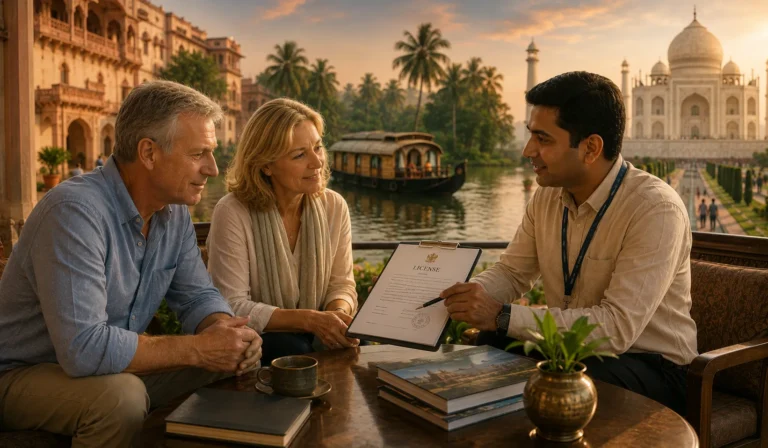
Personality Often Shapes The Experience More Than Knowledge
Two guides can have the same level of historical knowledge, but the experience they create for travelers can be completely different.
The difference often comes from personality—how a guide observes, reacts, and engages with people throughout the day.
A guide who actively notices small moments and turns them into meaningful context often creates stronger travel memories.
• Introducing travelers to artisans and local life
• Responding naturally to spontaneous questions
• Making history feel connected to real places
Knowledge informs the journey. Personality shapes how it is remembered.
Different Travelers Need Different Guide Styles
There is no single guide style that works for every traveler or every type of journey.
Matching the right guide to the right traveler is an important part of creating a comfortable and engaging experience.
Different travel groups naturally respond better to different communication styles and pacing.
• Families often need flexibility and lighter engagement
• Children respond better to interactive storytelling
• Photography travelers value timing and visual guidance
The monuments remain the same, but the way they are experienced depends on the people visiting them.
A well-matched guide ensures the journey fits the traveler—not the other way around.
Good Guides Know When To Stop Talking
One of the most underrated qualities in a great guide is the ability to understand when silence is more valuable than explanation.
Some travel moments are meant to be experienced quietly, without constant narration or interruption.
Natural landscapes and iconic monuments often leave a stronger impression when travelers are allowed to simply observe them.
• Calm backwater journeys in Kerala
• Evening views across Udaipur’s lakes
• Moments of quiet reflection during travel
Experienced guides understand that presence is sometimes more valuable than explanation.
We Expect Guides To Be Honest, Not Perfect
Travelers naturally ask a wide range of questions during tours, and not all of them have immediate or straightforward answers.
We value guides who prioritize accuracy and honesty over guessing or providing uncertain information.
It is always better to confirm details rather than provide explanations that may not be correct.
• Respecting traveler curiosity with honest responses
• Confirming uncertain details when needed
• Building trust through transparency
Trust is built not by knowing everything, but by handling uncertainty responsibly.
Credibility in travel comes from honesty, not perfection.
Time Management Is Part Of The Guide’s Responsibility
A guide’s responsibility begins long before the actual explanation of a monument or attraction starts.
Managing time effectively throughout the day is an essential part of ensuring a smooth and comfortable travel experience.
Small decisions made during the day often determine how relaxed or rushed the overall experience feels.
• Adjusting pace based on group comfort
• Considering weather and walking conditions
• Suggesting breaks when needed during the day
Good time management ensures travelers enjoy each destination without feeling rushed or delayed.
Guides Work As Part Of A Larger Team
A guide is not working in isolation during a tour—they are part of a coordinated operational system.
Smooth travel experiences are created through continuous coordination between guides, drivers, hotels, and local operations teams.
Each part of the journey is connected, and communication ensures adjustments happen without disrupting the traveler’s experience.
• Operations teams adjust plans based on weather or conditions
• Hotels are informed of changes in arrival schedules
• Lunch stops and breaks are aligned with the day’s flow
When coordination works well, travelers experience the day as seamless and uninterrupted.
Behind every smooth journey is a network of people quietly working together.
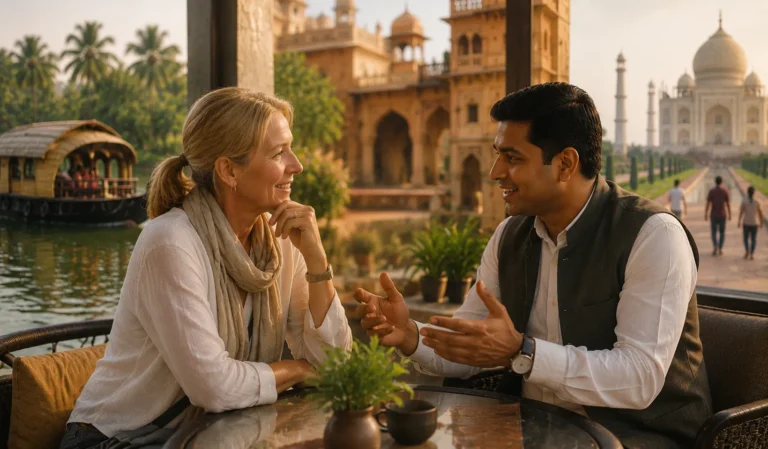
Case Study: Jaipur | February 2025
During a February 2025 departure, Richard and Susan Miller from Naples, Florida were visiting the City Palace in Jaipur.
After nearly two hours of walking, the guide noticed subtle signs of fatigue and adjusted the pace without altering the itinerary.
Instead of moving directly into another section, the group paused in a shaded courtyard while continuing the experience in a more comfortable way.
• Explanation continued in a relaxed setting
• Questions answered during the pause
• Comfort prioritized without losing content
The sightseeing was not reduced, but the rhythm of the experience was adapted to the travelers’ comfort.
Small decisions during the day often have the biggest impact on how travelers remember a destination.
Case Study: Kerala | August 2024
In August 2024, a family from Austin, Texas visited a spice plantation during their Kerala itinerary.
The guide observed that the children were highly engaged and naturally curious, so the experience was adapted in real time.
Instead of following a fixed explanation, the guide shifted toward a more interactive and exploratory approach.
• Safe plants and leaves were explained hands-on
• Questions were answered continuously during the walk
• Learning became interactive rather than formal
The experience became more engaging because the guide adapted to the travelers rather than following a rigid structure.
Great guiding is not about delivering the same experience—it is about shaping it for the people present.
Traveler Feedback Influences Future Guide Assignments
After every tour, we encourage travelers to share detailed feedback about their overall experience.
Guide performance is evaluated not only on destinations covered, but on communication, pacing, professionalism, and traveler comfort throughout the journey.
Over time, repeated feedback patterns help refine how guides are selected for future tours.
• Patience in answering traveler questions
• Comfort level of daily travel pace
• Punctuality and reliability throughout the tour
• Overall communication style and approachability
Continuous feedback ensures that guide quality improves with every journey.
Long-Term Relationships Create Better Experiences
Whenever possible, we continue working with guides we have built long-term professional relationships with.
Consistency in guide selection helps maintain a stable travel experience across different destinations and itineraries.
Over time, guides become familiar with traveler expectations, communication style, and preferred travel pace.
• Smoother coordination with drivers and hotels
• More consistent communication standards
• Improved alignment across destinations
This familiarity contributes to a more seamless and predictable travel experience.
Long-term collaboration creates consistency that benefits every future journey.
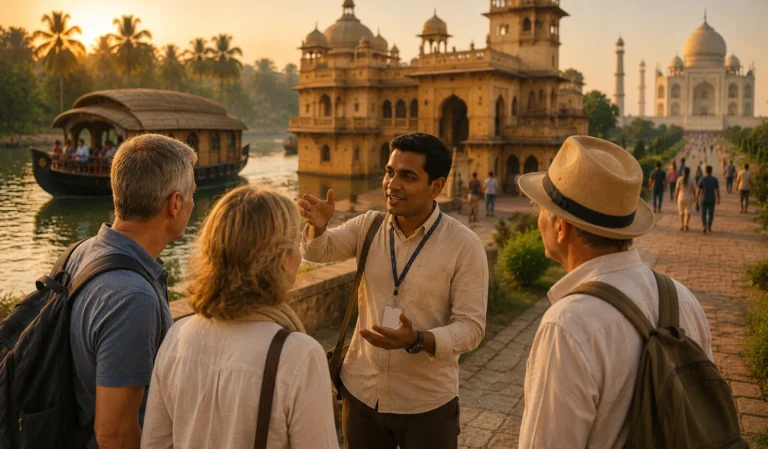
Looking Back, Travelers Rarely Quote Historical Dates
After an India tour, travelers seldom remember precise historical details such as dates, dynasties, or the number of monuments visited.
What stays with them is not the factual density of the information, but how the experience was shaped for them during the journey.
The most memorable parts of travel are often simple human interactions rather than structured explanations.
• Moments of rest suggested at the right time
• Local insights shared in a natural way
• Unplanned interactions that became highlights of the day
Travel memories are shaped more by experience than by information.
That Is Why We Focus On The People, Not Just The Plan
At White Pigeon Holidays, guide selection is not treated as an operational formality.
It is part of ensuring that travelers feel supported, understood, and comfortable throughout their journey in India.
While itineraries provide structure, it is the people within the journey who shape how it is experienced.
• Local experts who simplify complex cultural contexts
• Coordinators who ensure smooth transitions between destinations
• Teams who quietly manage adjustments behind the scenes
A well-planned tour is remembered for how it felt, not just what it included.