
Food Is One Of The First Things People Ask About Before Visiting India
People often assume the first conversation about an India tour will be about destinations. Which cities should we visit? How many days do we need? Should we include Kerala or Rajasthan?
In reality, those questions usually come later. Food is often the first real concern.
For many American travelers, food shapes confidence about the entire journey more than destinations do.
We often hear questions like:
• “My wife has a gluten allergy.”
• “I don’t eat spicy food. Will there still be enough options?”
• “I’m diabetic. How do I manage meal timings?”
• “Can restaurants understand vegan meals?”
• “I have a severe nut allergy. Is India still a safe destination?”
These are valid concerns. Meals are part of every single day of travel and cannot be treated like optional experiences.
If travelers are unsure about food for two weeks, it affects how they feel about the entire holiday.
That is why we never treat dietary requirements as a small note at the bottom of a booking form. At White Pigeon Holidays, they become part of the planning process long before arrival.
This includes coordination with hotels, communication with local teams, and ongoing adjustments whenever needed during the tour.
Good dietary planning is not about promising perfection. It is about making sure travelers never feel alone in managing it.
Every Conversation About Food Starts With One Simple Question
Instead of asking, “Are you vegetarian?”, we prefer to begin more broadly:
“Is anything important about your meals that we should know before planning your trip?”
That simple shift usually leads to much more useful and honest conversations.
• Another traveler may be gluten intolerant without a medical diagnosis
• A couple may prefer mild spice levels while still enjoying Indian food
• Someone may quietly mention a peanut allergy for safety reasons
These details help us understand not just what travelers eat, but how their comfort needs should be handled during the journey.
Not every dietary requirement needs the same approach. That is why we listen first, then plan.
There Is A Big Difference Between Preference And Medical Necessity
This is one of the first distinctions our operations team looks for when reviewing dietary information before a tour begins.
Similar words often describe very different dietary requirements, which is why clarification is always important.
For example, these two statements require different levels of planning:
• “I become seriously ill if dairy is included in my meal.”
One reflects preference. The other requires strict operational control during the journey.
That is why we always ask follow-up questions instead of making assumptions.
• Nut allergy: mild sensitivity or strict cross-contamination risk
• Spice level: comfort preference or dietary restriction requirement
These conversations are never intrusive. They ensure accurate communication with hotels, guides, and restaurants before the journey begins.
Clear information early in the process prevents repeated explanations during travel.
Our Dietary Questionnaire Is Reviewed More Than Once
Dietary information does not remain in a single form. It becomes part of multiple operational checks before departure.
The goal is to ensure that dietary requirements are consistently reflected across all relevant parts of the journey.
• Shared with hotels where meals are included
• Rechecked by operations before departure
• Communicated to guides where relevant for dining coordination
This structured flow ensures that no requirement is left isolated in a single document.
The objective is simple: travelers should never need to repeat their dietary requirements every day of the journey.
Case Study: Gluten-Free Travel Through Rajasthan
In February 2025, Jennifer Collins from Denver, Colorado, informed us during planning that she followed a strict gluten-free diet.
Her concern wasn’t hotel breakfasts. It was day-to-day meals during sightseeing and long travel days between cities.
We didn’t just note “gluten-free” in her file — we mapped how meals would work across the entire itinerary.
• Where lunch would typically be arranged during sightseeing days
• Which travel days involved long road journeys with meal breaks
• How guides would confirm suitable restaurant options in advance
Hotels received her dietary details before arrival. Local guides were briefed so lunch decisions were handled in advance, not at the last minute.
Nothing in her itinerary changed. Only the planning around meals became more precise.
“The biggest surprise wasn’t that people understood gluten-free. It was that I rarely had to explain it more than once.”
That single comment reflects the goal of good operational planning — reducing the number of decisions travelers need to manage during the journey.
We Never Assume Everyone Wants Spicy Food
A common concern we hear is, “Will everything be too spicy?”
Indian cuisine varies widely by region. Some dishes are naturally spicier, but many are mild and familiar in flavour.
Spice preference is one of the easiest things to adjust when it is communicated early.
• Many restaurants adjust spice levels on request
• Travelers can gradually explore regional flavours at their own pace
• Preferences are easier to manage when shared before arrival
The key is simple — communication before the journey always leads to more comfortable meals during the journey.
Food Safety Begins Long Before The Meal Arrives
When people hear “food safety,” they usually think about restaurants. In practice, it starts much earlier — with planning decisions.
Good food safety is not reactive. It is built into destination selection, restaurant choices, and daily travel planning.
One of the key decisions is where travelers eat during the journey.
• Locations familiar with international travelers
• Hotels with proven food handling practices
• Carefully selected local dining experiences where appropriate
This does not mean limiting experiences to hotels. It means choosing trusted environments where food quality and cleanliness are reliable.
Another key recommendation is simple: drink bottled or properly filtered water throughout the trip.
Freshly prepared food served hot is generally a safer and more comfortable choice than food kept for long periods.
These are not strict rules. They are practical habits used by experienced international travelers.
Good Dietary Planning Continues Throughout The Tour
Meal planning does not end before departure. It continues naturally throughout the journey.
Travel preferences evolve during the trip, and good planning adapts to those changes.
• Some may prefer milder meals after a few days
• Breakfast preferences may shift during travel
• Simple dietary adjustments become clearer on the ground
These changes are normal and expected during long international travel.
Dietary planning is not a one-time task — it is an ongoing part of the journey experience.
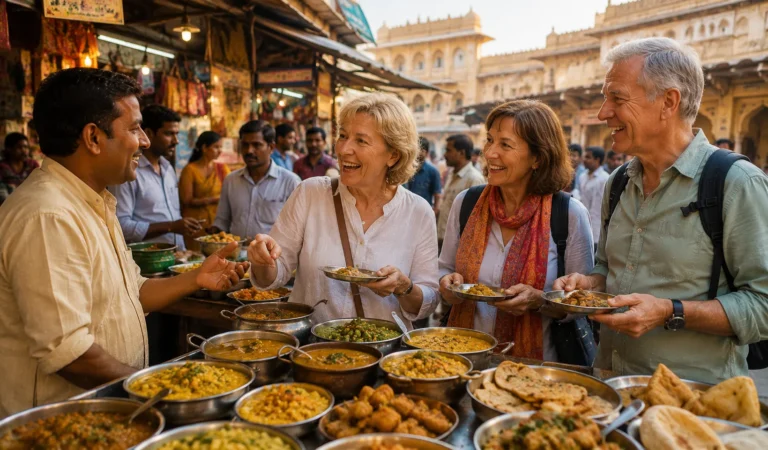
Vegetarian Travelers Often Find More Choices Than They Expected
One of the biggest surprises for many visitors is how naturally vegetarian food fits into everyday life in India.
Many travelers initially assume vegetarian meals will be limited to simple sides or basic options. The experience is usually very different.
Vegetarian food in India is not a substitute — in many regions, it is a core part of everyday cuisine.
Regional variety plays a major role in the experience.
• Rajasthan: gatte ki sabzi, dal baati, vegetable curries, fresh breads
• Delhi & Agra: extensive vegetarian menus across restaurants and hotels
• Across India: vegetarian dishes often integrated into standard menus, not separate sections
This variety often leads travelers to discover more options than they expected before arriving.
In many parts of India, vegetarian dining is not an alternative — it is part of the main culinary experience.
Vegan Travel Requires More Conversation, Not More Worry
Vegan travel has become more practical in recent years, especially in hotels and restaurants used to international guests.
Clear communication matters more than menu assumptions when handling vegan requirements.
Some dishes that appear plant-based may still include ingredients such as butter, ghee, yogurt or cream.
• Some avoid all animal products completely
• Others allow limited exceptions depending on context
• Clear communication helps avoid misunderstandings during meals
That is why dietary requirements are shared with hotels and also considered when guides suggest restaurants during sightseeing.
“My biggest worry wasn’t the food itself — it was having to explain it repeatedly during the trip.”
That feedback reflects a key principle of good planning — communication should happen before arrival, not during every meal.
When requirements are clearly understood in advance, travelers spend less time managing food and more time enjoying the journey.
Gluten-Free Travel Needs Planning Beyond Breakfast
Hotels serving international travelers usually manage gluten-free requests well during breakfast. The real complexity appears during the rest of the day.
Gluten-free planning is not about a single meal. It is about anticipating how food works across the entire travel route.
We review the full itinerary to understand where meals will actually happen.
• Sightseeing days with limited restaurant options
• Destinations with wider international food availability
• Timing of meals between transfers and excursions
Instead of addressing meals individually, we plan them as part of the travel structure.
This reduces uncertainty and helps travelers feel more confident throughout the journey.
Food Allergies Are Treated Differently From Food Preferences
Clear communication becomes essential when moving from preference to medical necessity.
The operational approach changes significantly when allergies are involved, compared to general food preferences.
• “Peanuts cause a serious allergic reaction” requires strict planning
• Severity and medical context must be clearly communicated
• Cross-contamination risks are reviewed when necessary
For serious allergies, we ensure hotels and relevant partners are informed in advance and aware of the required precautions.
We also encourage travelers to carry any prescribed medication they normally use while traveling.
Good planning does not replace caution — it supports it.
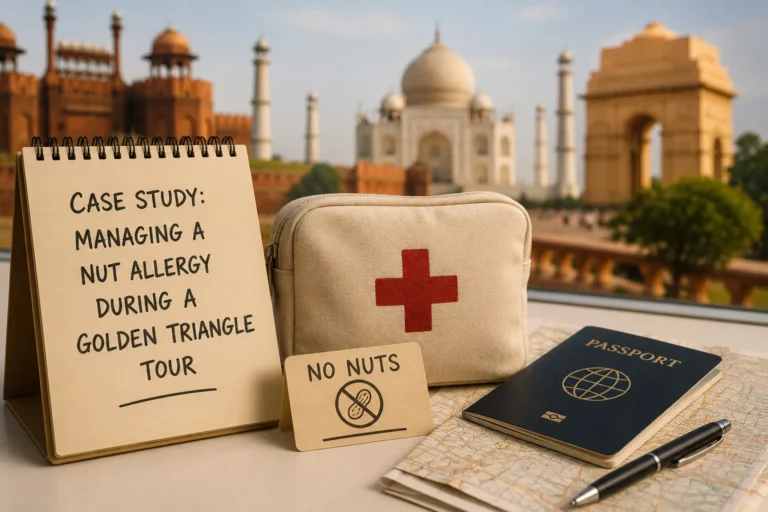
Case Study: Managing A Nut Allergy During A Golden Triangle Tour
In November 2024, Daniel Roberts from Boston informed us that he had a severe tree nut allergy and carried emergency medication as a precaution.
His primary concern was not sightseeing — it was whether restaurants would fully understand the seriousness of his allergy.
We focus on reducing uncertainty by planning dietary safety before the journey begins, not during meals.
• Guides were briefed before sightseeing days
• Restaurants were selected with ingredient awareness
• Safer alternative dishes were suggested when needed
Nothing in the itinerary was changed. Only the level of preparation around meals increased.
The goal is not to restrict travel — it is to make it feel safe and confident throughout.
Jain Meals Require Local Understanding
Jain dietary requirements are not widely known among international travelers until they begin planning a trip to India.
Jain meals follow specific dietary principles that go beyond vegetarian food and require clear communication with hotels and restaurants.
Common requirements may include avoiding root vegetables such as onion, garlic, and potato in many preparations.
• Informing guides during sightseeing planning
• Verifying meal suitability before arrival at restaurants
• Relying on local knowledge for accurate food preparation understanding
Because awareness varies by region, coordination becomes essential to ensure meals are prepared correctly throughout the journey.
Local understanding plays a key role in turning dietary requirements into a smooth travel experience.

Diabetic Travelers Usually Need More Than The Right Food
One common misconception is that diabetes management during travel is only about food choices. In practice, timing plays an equally important role.
• Road journeys require planned refreshment stops
• Early departures can affect breakfast timing
• Consistent meal intervals matter during travel
During a January 2025 Kerala departure, Richard Miller shared that consistent meal timing helped him manage his diabetes more comfortably.
Small timing adjustments often matter more than changes to the menu itself.
Lactose Intolerance Doesn’t Mean Missing Local Food
Many travelers assume lactose intolerance limits food options in India. In practice, there is often much more flexibility than expected.
Many regional Indian dishes are naturally dairy-free or can be easily adapted when dietary needs are clearly communicated.
• Naturally plant-based regional dishes
• Flexible cooking styles in hotels serving international guests
• Simple adjustments when requirements are shared early
Clear communication ensures comfort without limiting the travel experience.
Our Restaurant Recommendations Are Never Random
Travelers often ask how lunch stops are selected during sightseeing days. The answer is never based on a single factor.
We consider the route, timing, dietary requirements, hygiene standards and the overall pace of the day before suggesting any restaurant.
• Reliability of food quality and service
• Experience with international travelers
• Ability to handle dietary preferences when required
Some travelers prefer heritage restaurants. Others prefer modern cafés or simple, quiet lunch stops during long sightseeing days.
The goal is not just convenience. It is consistency in experience and comfort.
Every Region In India Has Its Own Food Culture
Many first-time travelers expect Indian food to be a single style of cuisine. In reality, it changes significantly from region to region.
We prepare travelers for regional food experiences, not a single version of “Indian cuisine.”
Kerala
Kerala’s cuisine is shaped by coconut, spices, rice and coastal influence. Breakfasts may include idli, dosa, appam, puttu and vegetable stew, alongside international options in larger hotels.
Rajasthan
Rajasthani cuisine reflects a drier climate and historical preservation methods. Lentils, breads, and vegetable-based dishes are central, with wide vegetarian variety and international alternatives in tourist areas.
Delhi, Agra And The Golden Triangle
North India offers a wide spectrum — from traditional curries and breads to street food, sweets, cafés and international restaurants. Travelers often mix multiple food experiences in a single day.
Understanding regional differences helps travelers approach food with curiosity instead of uncertainty.
Local Guides Play A Bigger Role Than Many Travelers Realise
Most travelers think of guides as the people who explain monuments. In reality, they often become an important source of practical support during meal planning as well.
• Where to find lighter lunch options after several days of rich food
• Which local dishes are worth trying without being too spicy
• Where to get good coffee during sightseeing breaks
Because guides work with international travelers daily, they develop an understanding of common preferences and consistently reliable dining locations.
One example comes from a March 2025 Golden Triangle tour. A couple from San Diego wanted a lighter lunch after several days of rich meals.
Their guide recommended a quiet café that regularly hosted international travelers and offered both Indian and continental options.
That meal was never part of the itinerary, yet it became one of their most memorable dining experiences.
Sometimes the best recommendation is not the most famous place, but the one that fits the traveler’s needs that day.
Dietary Planning Doesn’t Stop If Preferences Change
Travel habits often evolve during a journey. What travelers prefer on day one may change by the middle of the trip.
Good dietary planning allows space for preferences to change naturally during travel.
• Others shift toward milder meals after a few days
• Breakfast preferences often evolve during longer tours
• Confidence builds with exposure rather than restriction
One couple from Chicago initially preferred only continental breakfasts during the first two days of their Kerala tour.
By the fourth morning, they were asking the hotel chef for recommendations on traditional South Indian breakfast dishes.
Their comfort increased because they were given time to explore food choices at their own pace.
Introducing local food should feel like an invitation, not an expectation.
Sometimes The Right Answer Is To Say, “Let’s Check First.”
One principle we encourage across all our local teams is simple — avoid guessing when clarity is possible.
Accuracy always takes priority over speed when it comes to dietary safety and meal preparation.
If a traveler asks whether a dish contains dairy, gluten or nuts, we prefer to confirm the ingredients rather than assume.
• Guides confirm preparation details before recommending meals
• Any uncertainty is clarified before food is served
• Decisions are based on confirmation, not assumption
Two minutes of confirmation often prevents days of avoidable discomfort.
We Never Promise That Every Restaurant Can Prepare Every Meal
One of the most important parts of planning international travel is setting realistic expectations about food availability and preparation.
India offers incredible food diversity, but not every restaurant operates with the same level of dietary customization.
• Small local restaurants may have limited customization options
• Rural destinations require more careful planning
• Dietary needs are matched to suitable dining locations in advance
Instead of making unrealistic promises, we focus on designing itineraries that align food options with each travel day.
Good planning is not about guaranteeing everything everywhere — it is about choosing the right places for each situation.
Food Safety Is Built Around Consistent Habits
Travelers often ask for strict food rules when visiting India. In practice, safety is built more through simple, consistent habits than rigid lists.
Good food safety is not about restriction — it is about awareness and consistent daily practices.
• Choose freshly prepared and well-served meals
• Maintain basic hygiene practices before eating
• Introduce new dishes gradually
• Communicate allergies clearly in advance
• Ask questions when unsure about ingredients
These habits are simple, practical, and applicable in many international destinations, not just India.
Good Meal Planning Depends On Good Communication
Successful tours are rarely defined by a single restaurant or meal choice. They are defined by how well communication flows before and during the journey.
Strong dietary planning works because every part of the system understands the traveler’s needs in advance.
• Planning teams record and structure the information
• Hotels receive details before arrival
• Guides use information when suggesting meals
• Operations teams remain available for adjustments
No single step is responsible for success. The outcome depends on how consistently each step supports the next.
This is how we approach dietary planning at White Pigeon Holidays — as a connected system, not isolated actions.
Looking Back, Food Should Be Part Of The Experience, Not A Daily Worry
After planning India tours for travelers from the United States, one pattern becomes very clear. Food is often one of the biggest concerns before arrival, but rarely a problem during the journey.
What begins as uncertainty about meals usually turns into one of the most memorable parts of the entire trip.
• Comfort and exploration can coexist in daily meals
• Early communication removes most uncertainty
• Confidence builds naturally during the journey
It is not about everyone developing a taste for spicy food or becoming adventurous overnight. It is about discovering options at their own pace.
At White Pigeon Holidays, dietary planning is not treated as a checklist item. It is part of creating a travel experience where meals feel natural, not stressful.
The goal is simple — travelers should be able to enjoy every meal without wondering whether something has been overlooked.
When that happens, food stops being a concern and becomes part of the journey itself.
Frequently Asked Questions
1. Can White Pigeon Holidays accommodate vegetarian travelers?
Yes. Vegetarian meals are widely available across India, and dietary preferences are discussed before departure and communicated to relevant hotels.
2. Is vegan travel possible in India?
Yes. Many hotels and restaurants can prepare vegan meals, although clear communication before and during the tour is important.
3. How do you manage gluten-free dietary requirements?
We discuss the requirement during planning, inform hotels where meals are included and help identify suitable restaurant options during the tour.
4. Can you accommodate travelers with severe food allergies?
Yes. We encourage travelers to explain the severity of their allergy before departure so appropriate operational planning and communication can take place.
5. Do you arrange Jain meals?
Yes. Jain dietary requirements can usually be accommodated when communicated in advance.
6. How do you support diabetic travelers?
Meal timings, hotel communication and practical daily planning are reviewed to help travelers maintain their normal routine whenever possible.
7. Is Indian food always spicy?
No. Spice levels vary significantly between regions and restaurants, and many meals can be prepared mildly.
8. Do I need to explain my dietary requirements at every hotel?
Our operations team shares relevant dietary information with hotels where meals are included, although occasional reminders at the restaurant are always helpful.
9. What kind of restaurants does White Pigeon Holidays recommend?
We recommend restaurants based on hygiene standards, operational reliability, traveler preferences and the day’s itinerary rather than choosing them randomly.
10. Can dietary preferences change during the tour?
Yes. Travelers often become more comfortable trying local food as the journey progresses, and meal recommendations can be adjusted accordingly.
11. What should I do if I’m unsure whether a dish contains an ingredient I’m allergic to?
Always ask. Our guides and restaurant staff can help confirm ingredients rather than making assumptions.
12. What is the most important part of managing dietary requirements during an India tour?
Clear communication before departure, careful operational planning and ongoing coordination throughout the journey help travelers enjoy food with greater confidence and peace of mind.