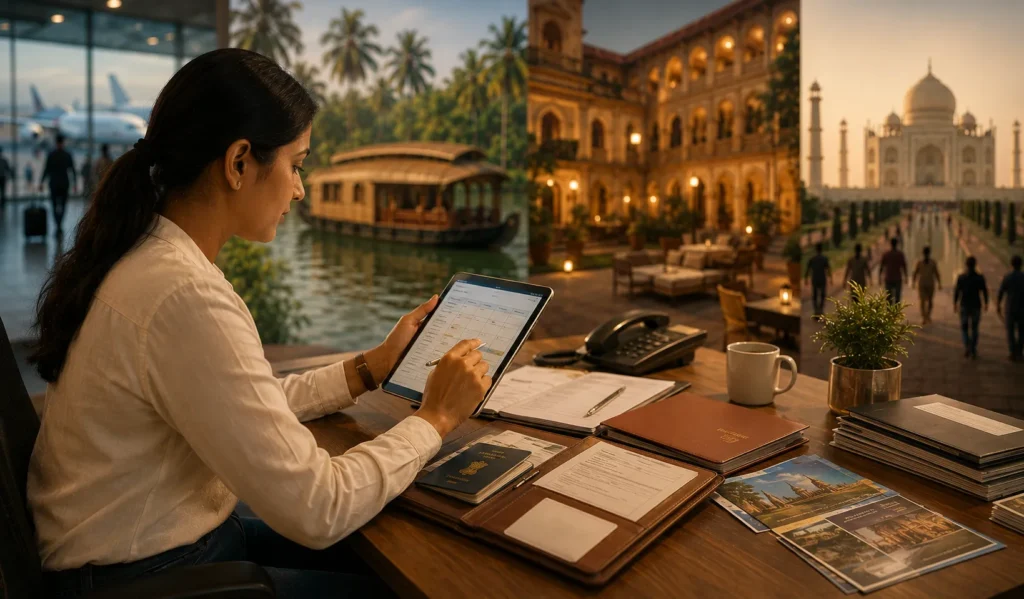

The Tour Doesn’t Begin At The Airport. It Begins Weeks Before Departure.
People often think their India tour begins when they board the aircraft. From our perspective, it starts much earlier.
Long before a traveler arrives in Delhi, Kochi or Jaipur, there are conversations, planning sessions, document reviews and practical questions that help remove uncertainty from the journey. Those early weeks shape how confident people feel before travelling.
For many guests, this is their first visit to India. They have questions about immigration, money exchange, mobile networks, clothing, medicines, adapters and cash planning. These are simple but important concerns.
At White Pigeon Holidays, pre-departure preparation is part of the journey itself. Our job is not only to arrange hotels and transport, but to help travelers arrive informed and confident.
Well-prepared travelers usually enjoy their first days more because they spend less time worrying and more time experiencing.
Every Journey Begins With A Pre-Departure Conversation
Once an itinerary is confirmed, communication becomes more practical and focused on preparation.
We ask about previous India travel experience, visa status, medication needs, camera equipment, dietary requirements and special occasions during the trip.
These conversations help us identify potential questions before they become problems during travel. Some travelers need detailed guidance, while others need very little support.
Preparation is always adjusted to the traveler, not a fixed template. That is what makes the experience more personal and reliable.
We Review Travel Documents Before Travelers Fly
A simple document check before departure helps prevent unnecessary stress during international travel.
We review passports, visas, ticket details, hotel confirmations and travel insurance information to ensure everything is ready before departure.
Small checks at home prevent complicated situations at the airport.
We Encourage Travelers To Organise Digital And Printed Copies
Important travel documents should be stored in more than one place for added reliability during international journeys.
Digital copies on phones combined with printed backups provide extra security in case of connectivity or device issues.
Preparation is not about expecting problems. It is about ensuring travelers are never dependent on a single point of access for essential information.
Packing Begins With The Itinerary, Not The Suitcase
One of the first questions we hear is, “What should we pack for India?”
Instead of immediately listing clothes, we usually ask another question. “Which part of India are you visiting, and when?”
Someone travelling through Kerala in January packs differently from someone visiting Rajasthan during December.
A traveler spending most of the holiday exploring cities needs different clothing from someone including wildlife safaris or mountain regions.
That is why our packing guidance always begins with the itinerary. Rather than encouraging travelers to prepare for every possible situation, we encourage them to pack for the journey they have actually planned. That usually leads to lighter luggage and a much more comfortable holiday.
We Recommend Packing For Comfort Rather Than “Just In Case”
Over the years, we have seen almost every packing style imaginable.
Travelers who arrive with one small suitcase for three weeks. Others who arrive with four large cases for two people.
Interestingly, the people carrying less luggage often tell us they enjoyed moving between destinations much more.
That doesn’t mean packing lightly at all costs. It means packing thoughtfully.
Comfortable walking shoes. Clothing suitable for the season. Sun protection. Prescription medicines. A lightweight rain jacket if travelling during the monsoon. A reusable day bag. Universal power adapter.
Those items usually prove far more useful than carrying several outfits “just in case.”
One couple from Seattle, Mark and Laura Jensen, travelled through Rajasthan in November 2024 with two medium-sized suitcases instead of the four they originally planned. At the farewell dinner in Delhi, Laura smiled and said, “The extra shopping space turned out to be more useful than the extra clothes.”
We Also Explain What Doesn’t Need To Be Packed
Sometimes preparation is about reassuring people rather than adding more to the list.
Many first-time visitors assume they need to bring months’ worth of toiletries, bottled water filters, extensive first-aid kits and large amounts of packaged food.
In reality, most everyday items are easily available in major Indian cities.
That doesn’t mean travelers should leave essential medications at home. Prescription medicines, along with copies of prescriptions where appropriate, should always travel with the guest.
But many ordinary travel items can be purchased locally if needed. Knowing that often helps people pack with much more confidence.
We Review International Flights As Part Of The Overall Journey
Booking the international flight is only one step.
We also encourage travelers to think about how that flight fits into the rest of the holiday.
When does the aircraft arrive? Will travelers have enough time to rest after reaching the hotel? Is there a long layover during the journey? Should the first sightseeing day remain relatively light because of jet lag?
During a planning conversation in January 2025, Michael and Karen Brooks from Phoenix, Arizona, originally wanted to begin sightseeing immediately after landing in Kochi.
Instead, we suggested using the arrival day to settle into the hotel, enjoy dinner and rest after nearly twenty hours of travel.
Karen later admitted they had underestimated how tired they would feel. “If we’d started sightseeing that afternoon, we probably wouldn’t have remembered much of it.”
Sometimes the best preparation is simply recognising how long international travel really is.

Every Traveler Receives Practical Information, Not Just Booking Confirmations
Confirmation vouchers are important. They are not enough.
Before departure, we also share practical guidance that answers the questions travelers often ask during their final weeks of preparation.
What is the weather likely to be? How much luggage is practical for domestic flights? What type of electrical adapter should I bring? Should I exchange money before travelling?
Will I need cash immediately after landing? How should I carry important documents? Can I use my American credit card in India?
Instead of waiting for travelers to ask every individual question, we try to answer many of them before departure. That approach has developed gradually over the years. Almost every addition to our pre-departure guidance came from a question another traveler once asked.
Good Preparation Reduces Small Worries Before They Grow
Looking back, the first part of preparing for an India tour has very little to do with monuments or sightseeing.
It is about confidence. Confidence that passports are ready. Confidence that luggage contains the right things. Confidence that flights have been reviewed.
Confidence that travelers understand what will happen after landing.
Those practical details may seem small individually. Together, they shape the way people begin their holiday.
And in our experience at White Pigeon Holidays, a relaxed departure from home often leads to a much more enjoyable arrival in India.
One Of The Most Common Questions We Receive Is About Money
Almost every first-time traveler asks some version of the same question. “How much cash should we carry?”
It’s a sensible question because payment habits are different around the world.
Rather than giving one fixed amount, we explain how people usually pay during the tour.
Hotels, larger restaurants, shopping malls and many established businesses accept international credit and debit cards. At the same time, cash is still useful for smaller purchases such as local snacks, small cafés, markets, tips, or places where electronic payment may not always be available.
Our advice is usually based on balance. Carry enough local currency for everyday convenience without carrying unnecessary amounts of cash.
Many travelers also notify their bank before departure so international card transactions are less likely to be flagged.
During a February 2025 departure, James and Rebecca Anderson from Nashville, Tennessee, planned to exchange a large amount of money before leaving the United States. Instead, we suggested carrying a smaller amount for arrival expenses and using ATMs or card payments where appropriate during the tour.
“We carried far less cash than we expected, and it turned out to be more than enough.”
We Explain Mobile Connectivity Before Travelers Land
Another topic that comes up during almost every pre-departure conversation is mobile service.
People naturally want to know whether they will be able to call home, use maps, share photographs or message family.
Rather than waiting until travelers reach India, we explain the available options in advance.
Some visitors choose an international roaming plan from their U.S. provider. Others prefer purchasing an Indian SIM card after arrival. Many newer phones also support eSIM services, which some travelers activate before leaving home.
The best choice depends on the traveler, the duration of the tour and their own mobile provider.
What matters most is that people understand their options before boarding the flight. That way, they are not trying to compare mobile plans after a long international journey.

Internet Access Is Better Than Many First-Time Visitors Expect
Several years ago, one of the biggest concerns travelers had was staying connected. Today, that conversation is much easier.
Most hotels used by international travelers provide Wi-Fi. Many restaurants and cafés also offer internet access. Mobile data coverage is excellent in most cities and many tourist destinations.
That doesn’t mean every remote area has the same signal strength. Mountain roads, wildlife reserves and rural areas may occasionally have weaker coverage.
We explain this before departure because realistic expectations help avoid unnecessary concern.
A temporary loss of signal during a scenic drive is very different from believing there will be no internet throughout the holiday.
Health Preparation Starts At Home
Most travelers spend a great deal of time thinking about what to pack. Fewer think about preparing their health information.
Before departure, we encourage guests to review a few practical questions.
Are prescription medications packed in their original containers? Is there enough medication for the entire journey, plus a little extra in case of unexpected travel delays?
Have important medical conditions been shared with our operations team? Are emergency contact details easy to find?
These aren’t complicated preparations. They simply reduce uncertainty if something unexpected happens during the trip.
One traveler from Naples, Florida, Richard Miller, reminded us why this matters. Before his January 2025 Kerala tour, he informed us that he managed diabetes with regular medication and preferred consistent meal timings. Because we knew that before the journey began, hotels and guides could plan the day accordingly. The preparation took place before the flight. The benefit lasted throughout the tour.
Travel Insurance Is Part Of Responsible Planning
People sometimes ask whether travel insurance is really necessary. We don’t make that decision for anyone.
We do encourage travelers to think about what insurance actually covers: international medical treatment, trip interruption, flight cancellations, lost baggage and emergency assistance.
Unexpected situations are uncommon. That is exactly why people hope they never need insurance.
But planning for international travel means thinking beyond the itinerary itself. We encourage travelers to choose a policy that matches their trip and understand its coverage before departure.
Clothing Is About Respect As Much As Comfort
Packing clothing for India isn’t only about temperature. It is also about where travelers are going.
Most sightseeing throughout Kerala, Rajasthan and the Golden Triangle is relaxed and comfortable. However, some temples, religious sites and traditional communities appreciate modest clothing.
That doesn’t mean visitors need to buy an entirely new wardrobe. Lightweight clothing that covers shoulders and knees when visiting places of worship is usually sufficient.
Comfortable walking shoes are often far more important than formal clothing.
We also explain practical details such as removing shoes before entering certain temples and carrying a light scarf when appropriate. These aren’t strict rules designed to worry people. They are simple ways of showing respect for local customs.
We Explain What Happens After Landing
Many travelers tell us their biggest uncertainty isn’t the flight. It’s what happens after they arrive.
Where do I go after immigration? How long will baggage collection take? Who meets us outside? How will we recognise the airport representative? Should we exchange money immediately?
These questions are completely understandable, especially for first-time visitors.
Before departure, we explain the arrival process step by step: complete immigration, collect luggage, proceed through customs, meet the airport representative at the agreed location, and transfer to the hotel.
Knowing what to expect removes much of the uncertainty associated with arriving in a new country.
Cultural Etiquette Is Easier Than Many People Imagine
Another subject we discuss before departure is everyday etiquette.
Travelers sometimes worry about making mistakes. In reality, Indian people are generally very welcoming toward international visitors.
Most cultural expectations are straightforward: dress respectfully at religious sites, ask permission before photographing individuals, remove shoes where required, be patient in busy public places, and respect local customs even if they are different from those at home.
We don’t give travelers a long list of rules. We simply explain a few practical habits that help interactions feel more natural.
Confidence usually comes from understanding, not memorising.
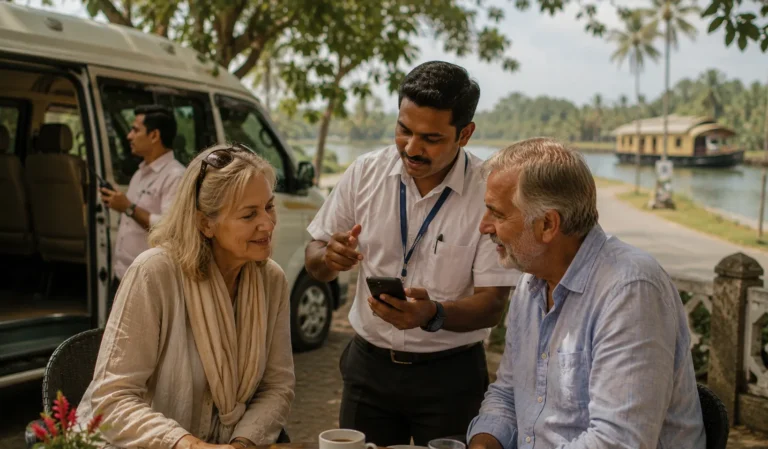
We Encourage Travelers To Ask Questions Right Up Until Departure
One thing we often say during the final stages of planning is, “If you think of another question tomorrow, ask it tomorrow.”
There is no expectation that travelers remember everything from the first conversation. New questions naturally appear.
Can I bring my drone? Should I pack an umbrella? Can I use my hair dryer? Will airport security allow this medication? How much should I tip?
Rather than hoping travelers find answers from random online forums, we encourage them to ask us directly.
Many of the practical guides we now provide exist because someone asked a thoughtful question before an earlier departure.
We Also Prepare Travelers For The Parts Of India They Can’t Pack For
By the time departure is only a few days away, most practical questions have already been answered.
Passports are ready. Flights are confirmed. Luggage is packed. Hotels and transportation have been arranged.
What remains are the things that cannot be folded into a suitcase: expectations, confidence, and understanding how the journey will feel.
For many first-time visitors, India is unlike any destination they have visited before. It is colourful, busy, welcoming, historic and constantly changing.
Some streets are lively. Others are peaceful. One day may begin with tea plantations in Munnar and end beside the backwaters of Kumarakom. Another may start at the Taj Mahal and finish in a centuries-old market. Preparing travelers for those contrasts is just as important as helping them pack the right shoes.
We Explain That India Isn’t One Experience
One misconception we gently address before departure is the idea that India feels the same everywhere. It doesn’t.
Each region has its own pace, food, architecture, traditions and atmosphere. That is why we spend time talking about the destinations on the itinerary rather than speaking about India as one place.
If someone is visiting Kerala, we explain that the journey will feel greener, slower and more focused on nature.
If they are travelling through Rajasthan, we talk about heritage cities, forts, desert landscapes and long-established traditions.
If the itinerary includes the Golden Triangle, we explain the balance between historic landmarks, busy cities and cultural experiences. Understanding these regional differences helps travelers appreciate each destination on its own terms instead of comparing one place with another.
We Encourage Curiosity Instead Of Perfection
One piece of advice we often share before departure has nothing to do with logistics. We encourage travelers to stay curious.
Not every meal will be exactly what you expected. Not every market will be quiet. Not every journey will follow the rhythm of home. That is part of international travel.
One traveler from Chicago, Mary Thompson, told us after returning from Rajasthan in March 2025, “The moments I remember most weren’t the ones I planned. They were the ones I never expected.”
She spoke about drinking chai with local shopkeepers while waiting for a brief rain shower. Another couple remembered a conversation with children playing cricket outside a village school.
Someone else talked about learning how spices were blended in a small family-run shop in Kochi. None of those moments appeared in the itinerary. But they became lasting memories because the travelers arrived with an open mind rather than a fixed script.
We Explain How Communication Continues During The Tour
Preparation does not stop once the aircraft lands. Travelers should know who to contact if they have a question.
How to reach the tour manager. Who to call in an emergency. How airport representatives, drivers, guides and the operations team work together.
Before departure, we explain these communication channels clearly.
Many travelers are surprised to learn that several teams remain connected behind the scenes throughout the holiday. If a flight is delayed, local operations are informed. If weather affects a planned route, transport partners receive updated instructions. If a dietary request changes, the hotel can be notified.
The Final Pre-Departure Review
A few days before departure, one final operational review takes place. This is not another sales conversation. It is simply an opportunity to confirm that everything is ready.
Our team reviews international and domestic flight details, hotel confirmations, airport pickup information, dietary requirements, medical notes shared by the traveler, special celebrations, transport arrangements, emergency contact information and final itinerary updates if any.
This review helps ensure that everyone involved in the tour is working from the same information. It is one of the last steps before the journey begins, but one of the most important.
Case Study: A Small Question That Prevented A Bigger Problem
During a February 2025 departure, Daniel and Sarah Roberts from Boston, Massachusetts, contacted us two days before their flight with a simple question: “Can we pack our prescription medication in checked luggage?”
Our operations coordinator explained why essential medication should always remain in carry-on baggage, along with copies of prescriptions where appropriate.
During their connection in Doha, one checked suitcase was delayed and arrived in Kochi the following day. Fortunately, their medication travelled with them in the cabin.
When we met them in Kerala, Daniel smiled and said, “That five-minute conversation probably saved us an entire day of worry.” It wasn’t a dramatic situation. It was simply another reminder that practical advice before departure can make a genuine difference later.
Case Study: Preparing A Family For Their First Visit To India
In December 2024, the Wilson family from Dallas, Texas, booked a fourteen-day holiday covering the Golden Triangle and Rajasthan. It was their first visit to India.
Their questions arrived one after another during the weeks before departure: Would the children enjoy the food? How much cash should they carry? Would Wi-Fi be available? Should they buy local SIM cards? What clothing would be suitable for visiting temples?
Instead of sending a single checklist, our team answered each topic as part of the preparation process.
By the time the family boarded their flight, they already knew what to expect from arrival to departure. After returning home, Jennifer Wilson wrote: “When we landed, it didn’t feel like we were entering an unfamiliar country. It felt like we already knew how the journey would begin.” That is exactly the outcome we hope to create.

We Never Assume Travelers Already Know The Answers
One lesson we have learned over the years is that there are no “obvious” questions.
Someone travelling internationally for the first time may ask about electrical sockets. Another person who has travelled extensively may ask about carrying camera batteries on domestic flights.
One family may need help understanding baggage allowances. Another may simply want to know whether bottled water is easy to find.
Every question deserves the same attention. Our role is not to judge what travelers should already know. It is to help them feel prepared before they arrive.
Looking Back, Preparation Is Really About Peace Of Mind
When people think about planning an India tour, they usually picture itineraries, hotels and sightseeing. Those are certainly important.
But over the years, we have realised that confidence often begins much earlier: when travelers know their documents are in order, understand airport arrivals, know what to pack, understand local customs, and know who will meet them after landing.
That preparation removes many of the small uncertainties that naturally come with visiting a new country.
At White Pigeon Holidays, we don’t see pre-departure support as an extra service. We see it as an essential part of helping travelers enjoy India from the moment they leave home. Because the journey doesn’t begin at immigration in Delhi or Kochi. It begins the day someone decides they are ready to visit India. Everything we do before departure is designed to make that decision feel easier.
Frequently Asked Questions
1. When does White Pigeon Holidays begin preparing travelers for their India tour?
Preparation begins soon after the itinerary is confirmed and continues until the traveler arrives in India.
2. What pre-departure information do you provide?
We provide practical guidance covering travel documents, packing, flights, money, communication, local customs and arrival procedures.
3. Do you review passports and travel documents?
We encourage travelers to review passports, visas, flight details and other important documents well before departure.
4. How do you help travelers decide what to pack?
Packing advice is based on the itinerary, destinations, season and planned activities rather than a generic checklist.
5. Should I carry cash or use credit cards in India?
Both are useful. Cards are widely accepted in many places, while cash remains convenient for smaller purchases.
6. Will my mobile phone work in India?
Many travelers use international roaming, local SIM cards or eSIM services depending on their provider and travel plans.
7. Do you provide guidance about local customs?
Yes. We explain practical etiquette, clothing recommendations and cultural considerations before departure.
8. What health preparations do you recommend?
We encourage travelers to carry prescription medications, share important medical information and organise travel insurance before departure.
9. What happens when I arrive at the airport in India?
Before departure, we explain the arrival process, including immigration, baggage collection and meeting your airport representative.
10. Can I ask questions after my itinerary has been confirmed?
Absolutely. We encourage travelers to ask questions at any stage before departure.
11. Do you review arrangements again before the tour begins?
Yes. Our operations team conducts a final review of flights, hotels, transportation, traveler requirements and operational details before departure.
12. Why is pre-departure preparation so important?
Good preparation helps travelers arrive with confidence, reduces unnecessary stress and allows them to enjoy their holiday from the very beginning.