
People often talk about places in Kerala.
Very few talk honestly about how the days feel.
And for seniors, that’s the real question.
Not how many waterfalls or tea gardens.
But whether the day feels steady… or draining.
If you’re over 60 and wondering whether Kerala moves too fast, too slow, or just right—this is for you.
Can Elderly People with Knee or Joint Problems Do a Kerala Tour?
Yes. But the honest answer is a bit longer than that — because it depends on which Kerala tour you’re talking about.
Kerala done right is one of the most knee-friendly travel experiences in India.
Kerala done wrong — rushed, overloaded, wrong hotel, wrong boat — can wear anyone down.
So let’s go through this properly.
What’s actually easy on the knees, what needs a little planning, and what you can skip entirely without missing anything important.

Written by
Nitin Batra
Founder & Travel Expert · White Pigeon Holidays
With 25+ years in the tourism industry — from Airport Concierge to Vice President — Nitin founded White Pigeon Holidays in 2021 to help international travellers explore India with confidence. His hands-on experience across Asia, Europe, the Middle East, and the West shapes every journey he crafts.
Why Pace Matters More Than the Itinerary for Seniors
At this stage of life, travel isn’t about squeezing value out of every hour.
It’s about energy.
Sleep.
Recovery.
And enjoying the day without counting how long until you can sit down again.
Many seniors tell us the same thing.
“I don’t mind seeing less. I just don’t want to feel rushed.”
That’s exactly why asking about Kerala tour pace for seniors is the right starting point.
Not the hotels.
Not the sightseeing list.
What “Tour Pace” Actually Means in Kerala
When people say “Kerala is relaxed,” it can sound vague.
So let’s break it down in real terms.
Tour pace here is a mix of three things.
How long you sit in the car.
How much you’re expected to do each day.
And whether rest is built into the day—or treated as an afterthought.
Kerala itineraries are not walking-heavy like European cities.
They are not monument-hopping like North India either.
They are spread out, yes—but they don’t need to be rushed.
That’s an important difference.
How a Senior-Friendly Day in Kerala Usually Feels
Let me walk you through a typical day—not as a schedule, but as a feeling.
Morning: Calm, Not Chaotic
You’re not pushed out of bed at dawn.
Breakfast is unhurried.
Sightseeing usually starts mid-morning, once the body has warmed up.
If there’s a drive, it’s usually the first thing done—before heat and traffic build up.
If there isn’t, the day stays local.
This is where kerala senior friendly tour pace quietly works in your favour.
Midday: Built-In Recovery
This is something Kerala does better than many destinations.
Afternoons are lighter by design.
Lunch isn’t rushed.
There’s time to go back to the hotel.
Feet up.
Air-conditioning on.
In senior-focused plans, afternoons are rarely packed with “must-see” items.
They’re treated as recovery time.
Evening: Optional, Never Forced
How Much Do You Actually Travel Each Day in Kerala?
This is one of the most common questions seniors ask.
And it’s a fair one.
On well-planned routes, daily travel usually falls into a 2 to 4 hour range.
Not every day.
Not back-to-back.
Longer drives are broken up with stops.
Hill journeys are paced more gently.
And good itineraries avoid zig-zag routing completely.
If you ever feel a plan has you driving 5–6 hours daily, that’s not “Kerala being tiring.”
That’s poor pacing.
And yes—how many hours a day do you travel in Kerala makes all the difference to how your body feels by evening.
Breakthrough Questions
Will I be constantly on the move during a Kerala tour?
Not on a well-planned senior itinerary. Most days combine sightseeing with downtime, allowing you to enjoy Kerala without feeling rushed or exhausted.
How much walking should I expect each day?
Most senior-friendly Kerala tours involve light walking at attractions, resorts, backwaters, and cultural sites, with regular opportunities to sit and rest.
Are the drives between Kerala destinations tiring?
Some journeys can take several hours, but senior-focused itineraries usually include scenic stops, meal breaks, and shorter sightseeing days to reduce fatigue.
Will there be enough free time to relax?
Yes. Kerala is naturally suited to slower travel, with houseboats, backwater resorts, hill stations, and wellness experiences that encourage a relaxed pace.
What pace do most seniors find comfortable in Kerala?
Most travellers prefer spending at least two nights in each destination, allowing time to enjoy the surroundings without packing, unpacking, and travelling every day.
Why Kerala Is Actually Gentler Than Most Indian Destinations
Most popular India trips involve a lot of walking.
The Golden Triangle means navigating Agra Fort, climbing up to Amber Fort, and walking through Humayun’s Tomb — all in the same week.
Rajasthan means cobblestone lanes, uneven heritage sites, and long distances between gates.
Kerala is different.
The core Kerala experience — backwaters, tea garden views, beach time, Ayurvedic resorts — is built around sitting, floating, and resting.
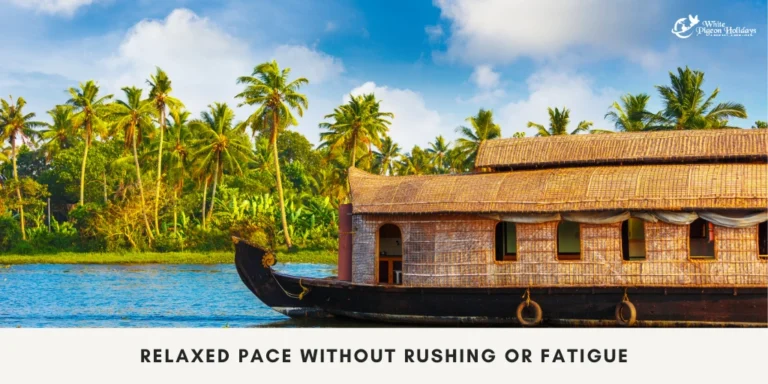
You’re on a houseboat watching the water.
You’re in an Ayurvedic treatment room.
You’re having a slow lunch at a resort.
You’re watching the sun go down over the Arabian Sea from a chair.
The terrain isn’t the point.
The feeling is.
That’s what makes Kerala naturally suited to seniors with joint concerns — not because everything is perfectly accessible, but because the best parts of it don’t require you to move much at all.

Let’s put this in context, because many seniors compare before choosing.
🌴 How Does Kerala’s Travel Pace Compare to Other Popular India Trips?
Many senior travellers compare different regions before choosing. Here’s how Kerala typically feels compared with other popular India itineraries.
Many travellers choose Kerala because the experience naturally encourages a slower rhythm, with backwaters, hill stations, wellness retreats, and longer stays in each destination.
This is why people often describe Kerala as gentler.
Not because it’s empty.
But because the pace is adjustable.
So when someone asks, “Is Kerala rushed or relaxed?”
The honest answer is: it depends on how it’s designed—but it leans relaxed.
Can Kerala Tours Be Slowed Down Even More for Seniors?
Yes.
And this is where Kerala really stands out.
You can slow things down by:
Staying two nights instead of one.
Choosing resorts over city hotels.
Skipping secondary attractions without guilt.
Keeping at least one completely free day.
Many seniors are relieved to learn that breaks are not an exception here.
They’re normal.
That’s why people searching “can seniors take breaks during Kerala tours” usually feel reassured once they see a properly paced plan.
Warning Signs a Kerala Tour Might Be Too Fast for You
Here’s something worth paying attention to.
If a plan has:
Early starts every single day.
Long drives followed immediately by sightseeing.
No mention of rest or hotel downtime.
That’s not a Kerala problem.
That’s a tour design problem.
And seniors feel it very quickly—in knees, back, and sleep quality.
Kerala Attraction by Attraction: What the Knees Actually Face
This is the part most blogs skip. So let’s be specific.
🚶 Walking Difficulty at Kerala Attractions
Good News for Senior Travellers
Most popular Kerala experiences involve very little walking. Houseboats, backwater cruises, wildlife boat rides and scenic viewpoints are comfortable even for travellers with knee or joint concerns. The only attractions that may be challenging are older temples and lighthouse climbs, both of which can easily be skipped without affecting the overall experience.
The truth is, 80% of what makes a Kerala trip memorable sits in the “low” column.
The lighthouse and a few old temples are in the high column.
And none of them are worth pushing through joint pain for.
Who Kerala’s Natural Pace Works Best For
Kerala suits seniors who enjoy:
Scenery over sightseeing counts.
Quality time at one place instead of constant movement.
Gentle days with space to breathe.
If rest is part of your idea of travel, Kerala usually fits well.
So, Is Kerala a Comfortable Pace for Older Travelers?
Yes—when planned thoughtfully.
Kerala is not physically demanding by default.
It becomes tiring only when too much is added.
For most seniors, the pace feels manageable, calm, and adaptable.
And that’s why many first-time older travelers say Kerala felt easier than expected.
If you’ve been wondering is Kerala tiring for older travelers, the real answer is this:
It doesn’t have to be.
Want to See What a Comfortable Kerala Tour Looks Like?
The Houseboat Question — What Actually Happens When You Board
This is the most common thing seniors with knee problems ask about, and the answer is specific.
Getting onto a houseboat involves one step.
The height difference between the jetty and the boat deck is typically 20 to 40 centimetres — roughly one large step. It’s not a ladder. It’s not a ramp. It’s a single step across, and the gap between the jetty edge and the boat can feel slightly unstable if the water is moving.
Here’s what helps:
- The boat crew will hold your hand and steady you.
- Good houseboats have a fixed handrail on deck (bamboo or wood, roughly 90–100 cm high) running the full length of both sides.
- Once you’re on board, there are no more stairs. Everything is on one level.
- The walkways between rooms are wide and flat.
- Bathrooms on premium houseboats are Western-style, with enough space.
Guests in their late 70s with knee problems have done this without incident — because the crew slows down, takes it one step at a time, and doesn’t rush.
The one thing worth asking before you book:
“Is the boarding step manageable for someone with knee problems, and will crew assist?”
A good operator will say yes immediately.
If they sound unsure, book a different boat.
Can This Kerala Tour Actually Match Your Comfort Level?
If you’d rather not guess whether a plan suits your energy level, that’s completely understandable.
We’ve mapped out how a senior-friendly Kerala journey is structured so you can see the daily rhythm, drive lengths, rest time, and how the pace is managed.
Discuss Your Comfortable Kerala Tour In A Consultation
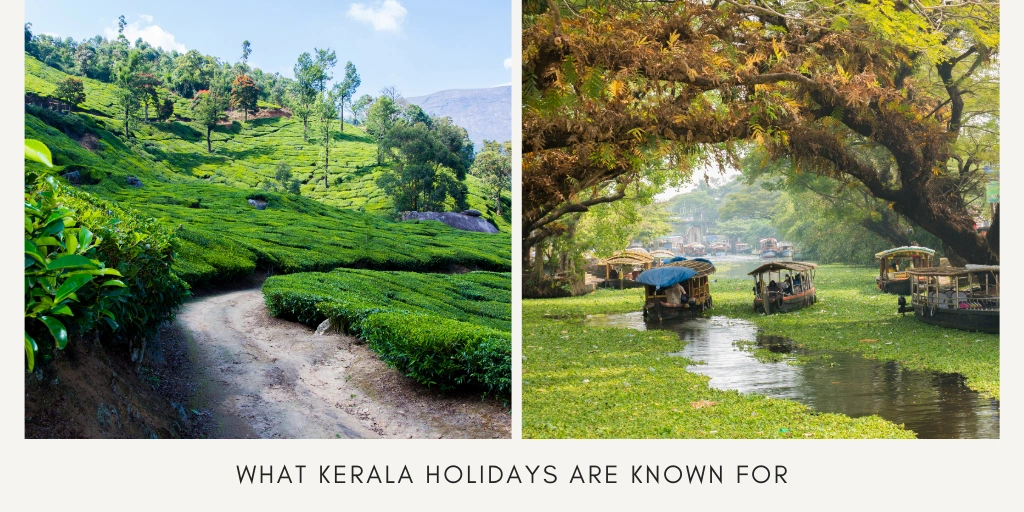
Munnar with Bad Knees — What’s Realistic
Munnar comes up in almost every Kerala itinerary.
And seniors with joint concerns sometimes worry about the hills.
Here’s the reality.
The drive up to Munnar is winding — some curves, some minor bumps. A good driver handles it well. But if car sickness or back pain is a concern, this stretch (about 3–4 hours from Kochi) needs a driver who knows to go slow.
The viewpoints — Mattupetty Dam, Echo Point, Top Station — are mostly drive-to.
You park, walk 5 to 15 minutes on a flat or gently sloping path, see the view, and return.
The tea gardens look like they’d require trekking through them. They don’t.
You stand at the edge, take it in, get back in the car.
Where Munnar can be hard on the knees:
Some resort properties in Munnar are built on hillsides with internal steps between buildings. Always confirm your room is on the ground floor or accessible by elevator before you book.
Munnar itself is not the problem. The accommodation choice within Munnar is where it matters.
The smarter approach for joint concerns:
Don’t cut Kerala. Adjust the list.
Focus stays on backwaters, resorts, and scenic drives.
Skip the lighthouses and fort climbs — they’re not the reason people fall in love with Kerala anyway.
Build in at least one full rest day mid-trip.
Pick a resort with an elevator and ground-floor room access.
One thing most people don’t realize:
Kerala is actually one of the best places in the world for joint problems.
Ayurvedic treatments for knee pain — Janu Basti, Abhyanga, herbal poultices — are widely available and genuinely effective for many seniors.
Some people come to Kerala specifically to treat joint pain and end up sightseeing between sessions.
So if your knees are a concern, Kerala might help more than you expect — not just manage around the problem.
Kerala Senior Travel FAQs
🛶My mother has bad knees. Can she still enjoy a Kerala houseboat?+
Yes. Ask whether the houseboat has a ramp or low boarding step. Once onboard, movement is minimal.
🚗Are Kerala's roads comfortable for seniors?+
Main roads are good. Munnar hill roads have bends, so an experienced driver is important.
🚶Will my parent need to walk a lot?+
No. Most attractions involve short walks from the parking area.
🦴Can someone with arthritis travel comfortably?+
Yes. Kerala's warm climate and Ayurvedic therapies are often comfortable for joints.
♿Are wheelchair-accessible houseboats available?+
Some are available but must be reserved in advance.
🌴Can we skip attractions if knees hurt?+
Yes. Flexible itineraries are ideal for senior travellers.
🦯Will a walking stick be a problem?+
No. Most hotels and tourist sites are suitable.
☀️Is Kerala's heat difficult?+
October to March offers the most pleasant weather.
💆Which Ayurveda treatments help knees?+
Janu Basti and Abhyanga are commonly recommended.
🏨Do Kerala resorts have lots of stairs?+
Modern resorts are generally more accessible than hillside heritage properties.