
“Who Will Actually Meet Us When We Land In India?”
On 11 January 2025, we had a video call with Robert and Linda Thompson from Scottsdale, Arizona. They were planning a 15-day journey across Kerala, Rajasthan, and the Golden Triangle.
By the end of the discussion, most of their questions had already been answered — flights, hotels, sightseeing, and travel flow.
Just before ending the call, Linda asked: “When we land in Kochi, who actually meets us? Do you have your own people there, or do you work with someone locally?”
It is a simple question, but it reflects something deeper — the need to know who will be there on arrival in a completely new country.
Many travelers imagine a single office managing everything across India. In reality, destination operations work very differently.
India is vast. Traveling between regions like Kerala, Rajasthan, and Delhi means moving across different cultures, languages, and local systems.
No single office can replace people who work on the ground every day in each destination.
That is why we focus on long-term local partnerships instead of centralised control from one location.
Because when travelers arrive, it is those local people who shape the first real impression of the journey.
A Local Network Is Built Slowly
People often think travel companies create a network by signing agreements with dozens of suppliers. In reality, it happens much more gradually.
One successful tour leads to another. A hotel team remembers how guests were looked after. A driver consistently arrives early. A guide receives positive feedback again and again.
Over time, these repeated experiences build trust that no contract can replace.
After a few years, those relationships stop feeling like supplier arrangements.
They become the first people you call when planning a journey.
That is how most professional destination networks are built — not in one season, but over many seasons.
Kerala Taught Us That Local Knowledge Starts Long Before Sightseeing
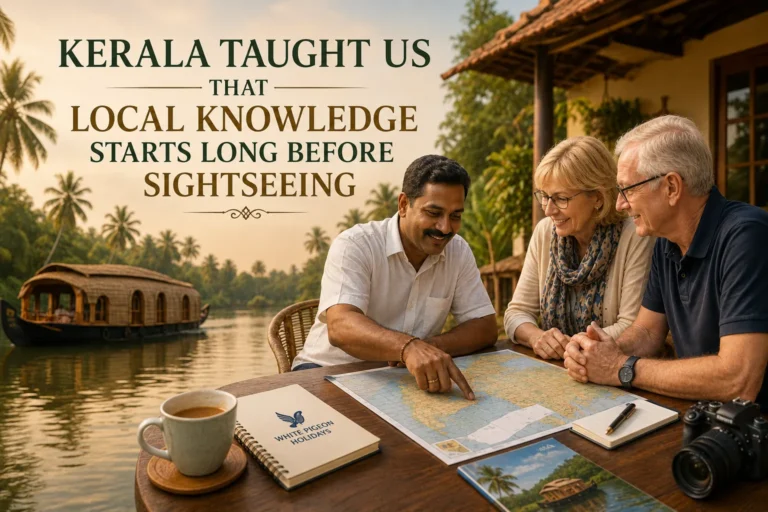
On 21 February 2025, a group of ten travelers from Texas, Illinois, and Virginia began their Kerala journey with a simple plan — Kochi to Munnar the next morning.
That evening, one of our regular drivers, Rajesh Nair, called our operations team — not because something went wrong, but because he had local insight from the road.
He mentioned steady rain near Neriamangalam and suggested shifting departure by thirty minutes to avoid slow-moving traffic in the hill section.
It was a small observation, based entirely on a full day of driving those routes.
The next morning, the group reached Munnar comfortably before lunchtime.
Most travelers never knew why the timing changed — and they didn’t need to.
Sometimes the best operations are the ones travelers never notice.
The Same Driver Is Not Right For Every Journey
People occasionally ask whether we always assign the same driver. The answer is no — not because we keep changing people, but because every journey is different.
A retired couple from Florida on a relaxed Kerala trip needs a different travel rhythm compared to a family of six exploring Rajasthan during school holidays.
Both require experienced drivers, but not necessarily the same driving style or approach.
• Others prefer quiet time to observe the scenery
• Senior travelers often prefer smooth driving with comfort breaks
• Families may prefer shorter stops to keep children engaged
These differences become clear over time when working closely with local transport partners.
That understanding helps us match people to journeys instead of simply assigning whoever is available.
Good Guides Rarely Sound Like Guides
One afternoon in Jaipur, a traveler from Boston said something that made one of our local guides laugh.
“You don’t sound like a guide.”
He smiled and replied, “That’s probably because I’m not trying to sound like one.”
That simple exchange captures what we value in a guide.
Knowledge is not just memorising facts. It is understanding how places are lived, not just how they are described.
• Pointing out small tea stalls locals have visited for decades
• Suggesting the right moment when light changes a monument completely
The best guidance rarely comes from a script. It comes from experience.
Hotel Relationships Continue After The Booking
Many travelers assume our relationship with a hotel ends once the reservation is confirmed. In reality, that is often when coordination becomes more active.
Small details shared in advance help hotels prepare for real situations like anniversaries, late-night arrivals, or early departures.
These are not unusual requests. They simply require timely communication between people who already understand each other’s working style.
Every Destination Has Its Own Rhythm
India is not one uniform travel experience. Each region works differently, and planning has to reflect that reality.
Kerala moves at a slower pace, with long moments around nature and backwaters. Rajasthan involves longer road journeys where travel itself becomes part of the experience. The Golden Triangle shifts with city schedules, monuments, and local activity patterns.
Trying to manage all destinations in the same way rarely works well because each region has its own natural flow.
That is why local knowledge matters — people understand the rhythm of the places they live and work in every day.

Sometimes A Five-Minute Phone Call Changes An Entire Day
One example still stands out clearly from our work in Jaipur during November 2024.
Anil Sharma, who coordinates operations in Jaipur, informed us about a possible political procession affecting one of the main city routes later that day.
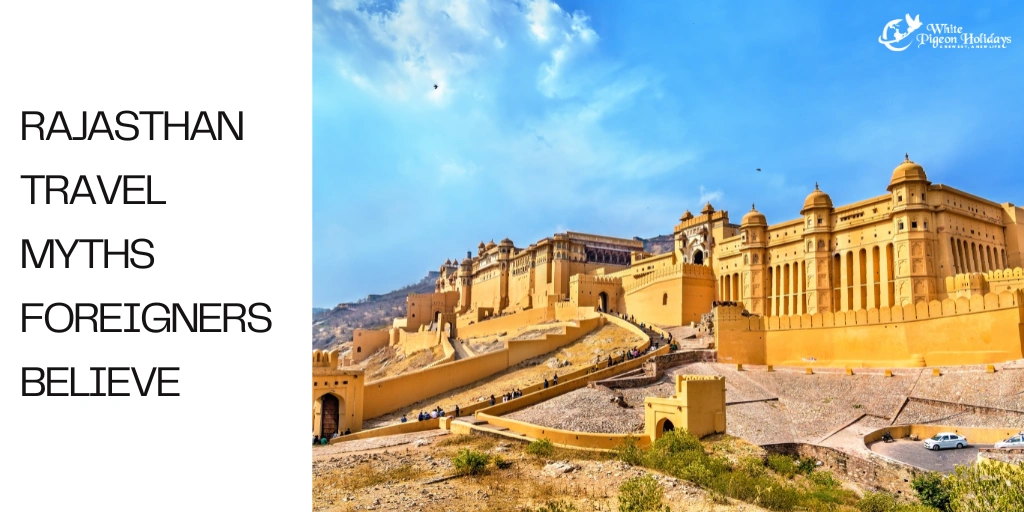
We adjusted the sightseeing order quietly — visiting Amber Fort first and shifting City Palace later in the day.
By the time traffic increased in the old city, the group had already completed their key experiences without disruption.
Most travelers never notice these changes happening behind the scenes — and that is exactly the point.
Relationships Build Confidence During Unexpected Situations
Travel is unpredictable. Flights get delayed, weather changes, and local events can affect schedules anywhere in the world.
What makes the difference is not avoiding these situations, but having the right people in place to respond quickly when they happen.
• Hotels prepared for late check-ins or early arrivals
• Local teams aware of itinerary adjustments in advance
These relationships reduce friction because they are built long before the traveler reaches India.

We Keep Working With People Who Share Similar Standards
Every year, we meet new hotels, guides, and transport providers. Some become long-term partners, and some do not.
The decision is rarely about price. It is about consistency — communication, patience, problem-solving, and understanding international travelers.
• Calm handling of unexpected situations
• Understanding guest expectations
• Ability to solve issues without delay
Over time, these factors matter far more than brochures or ratings.
Looking Back, Travelers Remember People More Than Processes
At the end of most tours, travelers talk about destinations — the backwaters, forts, palaces, and wildlife.
But very often, they also remember people — drivers, guides, and hotel staff who shaped small but meaningful moments.
• A guide explaining history in a simple way
• A hotel team remembering breakfast preferences
These details remind us that holidays are created by people just as much as places.
Systems don’t welcome travelers. People do.

Why These Local Relationships Make Every Journey Feel Effortless
Whenever someone asks whether White Pigeon Holidays has a local presence across Kerala, Rajasthan, and the Golden Triangle, we no longer think about offices.
We think about the people we speak with almost every day — drivers checking road conditions, guides confirming timings, hotel managers preparing for arrivals, and coordinators reviewing the next day’s plan.
These conversations happen quietly in the background. Most travelers never hear them, but they experience the outcome throughout their journey.
Over time, one simple pattern becomes clear.
Good itineraries help people visit India. Strong local relationships help them experience it comfortably.
That difference rarely appears on a booking confirmation — but it often defines how the journey feels in the end.