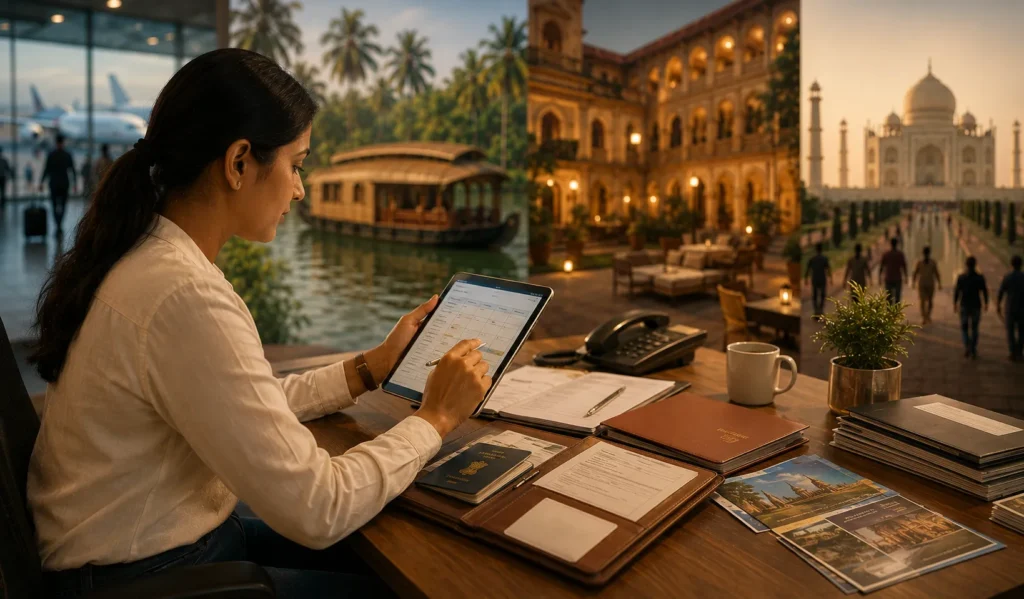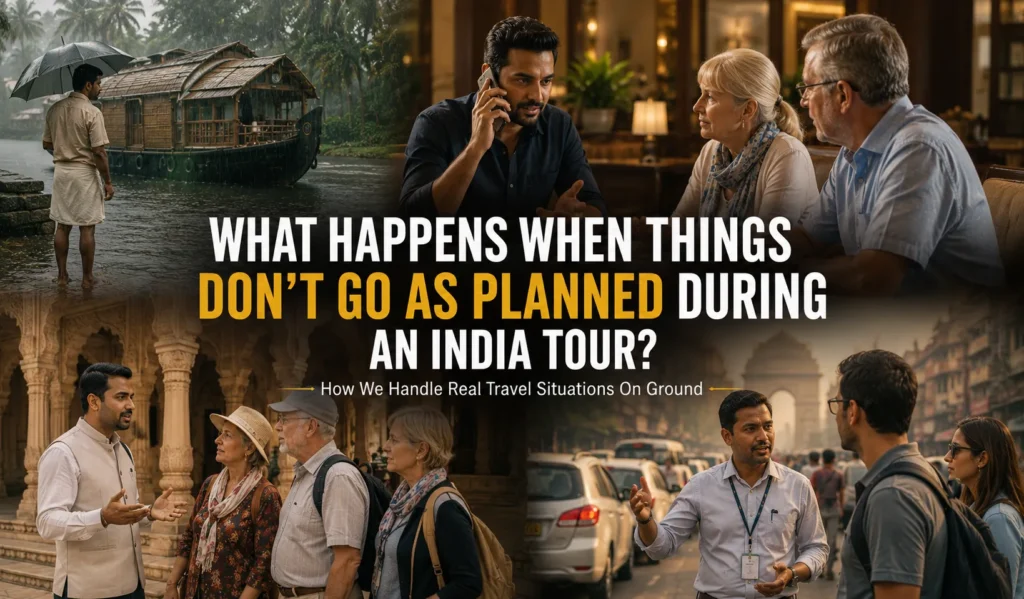
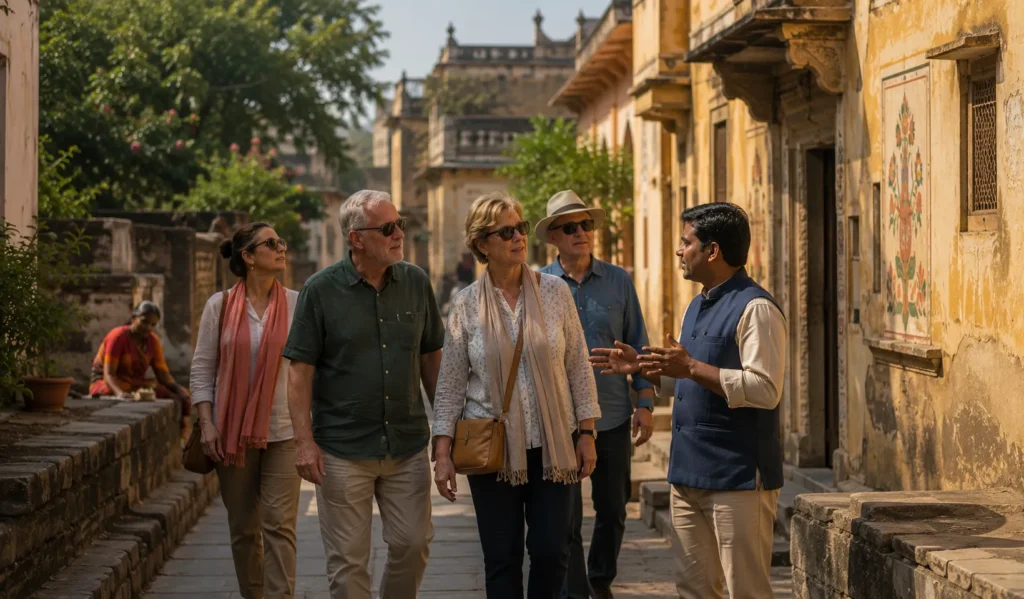
Every Tour Begins With A Decision Long Before Anyone Travels
People often ask about hotels, transportation, guides, and itineraries. These are important elements of any India tour, but each decision is shaped by a deeper question.
Why are these choices made in the first place — and what defines a successful journey?
Over years of planning tours for international travelers, our philosophy has become clear: a successful holiday is not defined by the number of destinations, but by the quality of the experience.
We focus on whether travelers feel comfortable, supported, unhurried, and able to experience India rather than simply pass through it.
We Believe Comfort Is More Important Than Speed
A more complex itinerary often looks impressive on paper — more cities, more monuments, and more activity. But in practice, it can become exhausting.
Comfort does not mean luxury. It means a manageable pace, fewer rushed transitions, and enough time to actually experience each destination.
It means arriving at hotels without exhaustion, enjoying meals without watching the clock, and not constantly preparing for the next transfer or activity.
These are the moments travelers rarely plan for, but often remember most.
For example, Mark and Laura Jensen from Seattle originally planned to add another city between Jodhpur and Udaipur. Instead, they spent an extra evening in Udaipur.
Later, Laura wrote that the quiet afternoon by the lake became one of their most memorable travel moments.
Sometimes travel feels richer not because more is added, but because enough space is left for the experience to unfold naturally.
We Plan Around People, Not Around Maps
A map can calculate distance, but it cannot understand context — such as a retirement celebration, a long-awaited family trip, or a traveler recovering from surgery.
That is why planning always begins with conversations rather than routes.
We focus on who is travelling, what kind of experience they expect, and how they prefer to move through each day.
These personal details often shape the itinerary more than geography itself, leading to journeys that feel more natural and comfortable.
We Don’t Believe Every Traveler Needs The Same India
Every traveler experiences India differently. Two couples visiting the same region in the same week may have completely different expectations and preferences.
Some prefer lively markets and street food experiences, while others enjoy quieter heritage stays and gradual introductions to local cuisine.
Neither approach is better. The goal is to design a journey that reflects personal comfort, interest, and travel style.
That is why planning conversations rarely start with fixed packages. They start with understanding expectations.
This early understanding helps create itineraries that feel more aligned with the traveler rather than the template.

Sometimes Responsible Advice Means Saying “Not This Time”
One of the most common conversations in travel planning involves ambitious itineraries that include multiple cities in a short time frame.
While such journeys are technically possible, experience often shows they may not create the most comfortable or enjoyable experience.
This is where responsible planning becomes important — not every request is about feasibility, but about overall travel quality.
Sometimes the best recommendation is not to add more, but to focus on fewer destinations with better balance and pacing.
Long-Term Relationships Usually Create Better Experiences
Hotels, drivers, guides and operational partners may change over time, but strong relationships built on trust and communication remain consistent.
We prefer working with partners who understand our approach to pacing, traveler comfort, and attention to detail rather than switching frequently based on short-term cost differences.
This includes hotels familiar with dietary and special requests, drivers who understand travel pacing preferences, and guides who balance storytelling with listening.
Over time, these relationships create consistency across journeys and improve the overall travel experience.
Each successful tour strengthens this network, making future journeys smoother and more predictable for travelers.
We Measure Success Differently
There are many ways to measure a holiday — number of monuments visited, distance travelled, cities covered, or photographs taken.
These numbers are easy to count. But they do not always reflect how the journey actually felt.
We focus instead on experience — whether travelers felt rushed, whether they enjoyed conversations, and whether they felt confident throughout the journey.
The strongest indicator of success is whether travelers would recommend the journey because it felt right, not because it covered the most ground.
Case Study: One Afternoon Changed How We Think About Free Time
Travel Dates: 3 February – 12 February 2025
Travelers: Robert and Susan Walker
Home: Charlotte, North Carolina
The original itinerary in Udaipur included a full day of sightseeing scheduled until sunset.
During a planning review, one smaller attraction was removed — not because it lacked value, but because the previous days had already been full.
The result was a completely free afternoon with no fixed plans or structured activities.
Robert and Susan explored the old city at their own pace, stopped for coffee overlooking the lake, and discovered a small art gallery by chance. They also spent time speaking with a miniature painting artist — an interaction that was not part of any itinerary.
After returning home, Susan shared that this unplanned afternoon became the most meaningful part of their visit.
The attraction that was removed was never mentioned again — but the free time was remembered clearly.
This reinforced an important lesson: responsible planning is not only about adding experiences, but also about protecting time for them to be enjoyed.
Our Philosophy Continues Changing Because Travel Continues Changing
One thing we have never wanted is a fixed philosophy that never evolves. Travel itself continues to change, and our thinking evolves with it.
Traveler expectations shift over time, new needs emerge, and the way people experience international journeys continues to develop.
What remains constant is our approach: careful planning, honest advice, respect for travelers, and comfort over speed.
Everything else continues to be refined through experience.
Every Decision Should Make The Journey Feel Better
At the core of our philosophy is a simple principle: every decision should improve the travel experience in some meaningful way.
This could mean changing a hotel, adjusting an itinerary, adding rest time, or removing unnecessary movement between destinations.
The decision itself is less important than the reasoning behind it — whether it creates a more comfortable, balanced, and enjoyable journey.
This principle has guided every part of White Pigeon Holidays, from itinerary planning to hotel selection and operational coordination.
It continues to shape how every new journey is designed and refined.
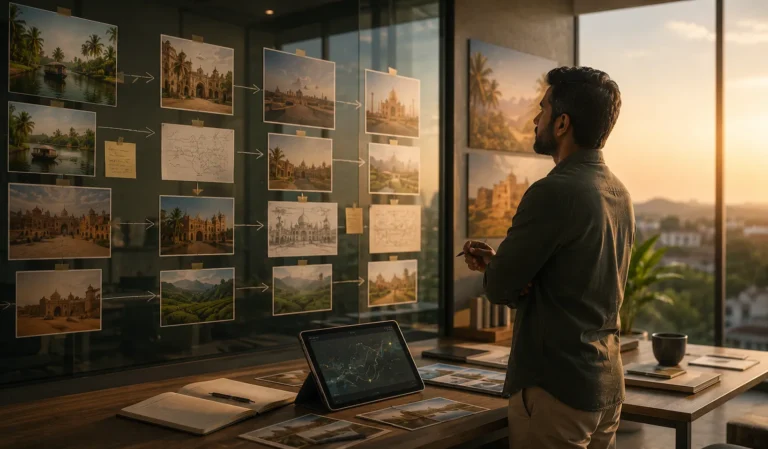
Responsible Travel Begins With Respect
When people hear the phrase “responsible travel,” they often think first about the environment. While that is important, our approach begins with something more fundamental — respect.
Respect for local communities, traditions, historic sites, and the people who make each journey possible behind the scenes.
Travelers may spend only a few days in a destination, but the local community lives there every day. That difference in perspective shapes how we plan experiences.
Small actions — like asking before taking photographs — often turn brief interactions into meaningful conversations that travelers remember long after the journey ends.
We Prefer Local Knowledge Over Generic Experiences
India is home to many iconic landmarks such as the Taj Mahal, Amber Fort, Kerala Backwaters, and Mysore Palace. These places are important, but they are only one part of the experience.
Some of the most meaningful moments happen in everyday settings where local life continues naturally.
A guide explaining traditions at a local temple, a spice grower in Kerala sharing how harvests are managed, or an artisan in Jaipur demonstrating block printing techniques — these moments offer deeper understanding.
These are not staged performances but real interactions with people who live and practice these traditions.
Whenever possible, we design itineraries that allow travelers to experience places through people rather than only through landmarks.
Long-Term Partnerships Create Better Travel
Over time, relationships with hotels, drivers, and guides naturally become stronger. Trust develops gradually through repeated collaboration and shared expectations.
Hotels learn how we operate, drivers understand our focus on comfort over speed, and guides become familiar with the style of experience our travelers prefer.
These expectations cannot be created quickly. They develop over time through consistency and communication.
The result is a smoother experience for travelers, where many details are already understood before the journey begins.
Supporting Local Businesses Doesn’t Mean Recommending Every Shop
We do not recommend shops simply for variety. We focus on places where quality, transparency, and respectful interactions have been consistent over time.
This includes family-run workshops, artisan studios, and local businesses where travelers can understand how products are made rather than just viewing them.
We encourage travelers to ask questions — about materials, techniques, and the time involved in creating each item. These conversations often become part of the experience itself.
For example, a traveler from Chicago spent nearly an hour speaking with a block-printing artisan near Jaipur and later shared that the conversation stayed with her longer than the purchase.
This reflects the kind of responsible travel experience we aim to support — where understanding comes before buying.
We Believe Cultural Experiences Should Feel Genuine
India has a rich cultural heritage that includes music, dance, craftsmanship, religious traditions, festivals, and food. These elements are deeply connected to everyday life.
Rather than turning these traditions into staged performances, we prefer experiences that remain rooted in real community life.
This includes observing art forms with context, visiting local markets used by residents, and meeting artisans in their working environments.
Authenticity is not always defined in words — it is usually recognised through experience that feels natural rather than staged.
Responsible Tourism Also Means Being Honest About Expectations
An important part of responsible travel is honesty about what travelers can realistically expect during their journey.
Road conditions may vary, weather can change, attractions may become busy, and flights can sometimes be delayed.
Instead of promising a flawless experience, we focus on setting clear expectations so travelers feel prepared rather than surprised.
Experience has shown that most travelers respond positively when information is shared honestly and early in the planning process.
This approach helps reduce uncertainty and ensures the journey feels more comfortable and transparent from the beginning.
We Encourage Travelers To Learn Before They Arrive
Preparation does not end with packing. It also includes understanding the destination before the journey begins.
We often encourage travelers to read a little about the places included in their itinerary, not to become experts, but to add context to what they see.
Understanding why Jaipur is called the Pink City, or learning about Kerala’s spice trade, often changes how travelers experience each destination.
Small knowledge before arrival often leads to deeper appreciation during the journey.
Case Study: A Market Visit That Was Never On The Itinerary
Travel Dates: 17 January – 26 January 2025
Travelers: Daniel and Sarah Roberts
Home: Boston, Massachusetts
The itinerary in Kochi included major landmarks such as Chinese fishing nets, Mattancherry Palace, Jew Town, and St. Francis Church.
During a walk through Fort Kochi, the guide noticed the travelers’ interest in spices displayed outside local shops and suggested a short visit to a nearby spice market.
The itinerary allowed flexibility, so the group spent around forty minutes speaking with local traders about pepper, cinnamon, cloves, and cardamom.
There was no pressure to purchase anything. The experience was entirely conversational and unplanned.
After the trip, Daniel mentioned that those informal conversations became more memorable than some of the planned museum visits.
This reflects an important principle: meaningful experiences often happen when itineraries allow space for curiosity rather than rigid structure.
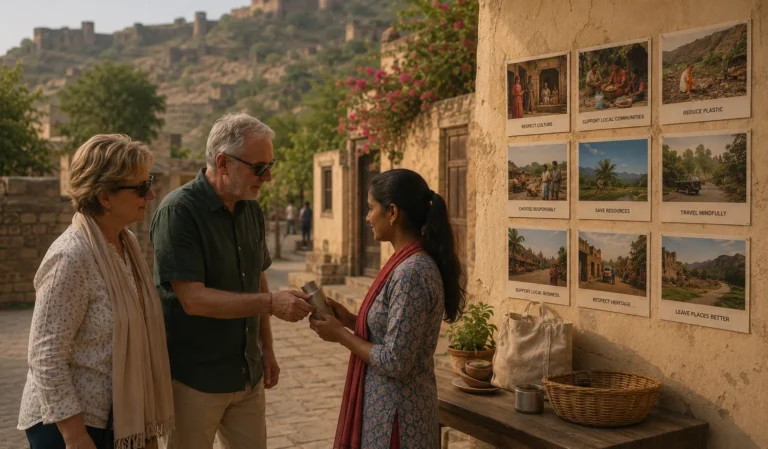
The Best Partnerships Benefit Everyone
Successful tourism should never feel one-sided. Travelers, local communities, hotels, guides, and drivers all play an important role in shaping the experience.
When each party benefits fairly, the overall journey becomes stronger, more consistent, and more meaningful for future travelers.
This balance helps us evaluate partnerships not only on service delivery, but on how they contribute to the kind of travel experience we want people to remember.
Responsible Travel Is Built Through Hundreds Of Small Decisions
Responsible travel is rarely defined by major or dramatic actions. It is shaped through small, consistent decisions made throughout the journey.
These include selecting guides who genuinely enjoy sharing knowledge, recommending meaningful local experiences, and allowing time for interaction instead of rushing between stops.
It also involves choosing partners who prioritize quality over shortcuts and preparing travelers with cultural understanding before they arrive.
Individually, these decisions may appear small. Together, they define the character of the entire journey.
They reflect the values we aim to uphold in every experience created by White Pigeon Holidays.
Every Tour Leaves Us With Something To Learn
After every departure, we do not only ask whether everything went according to plan. We ask what can be improved for the next journey.
This reflection has gradually shaped many of our operational practices over time.
Some improvements come from guides, some from hotels, and many directly from traveler feedback shared after tours.
Each completed journey becomes part of the planning process for the next one.
We Welcome Honest Feedback, Even When It Is Critical
Positive feedback is encouraging, but critical feedback often provides the most valuable insight into how experiences can be improved.
Different travelers experience the same itinerary in different ways — some prefer structured sightseeing, while others value more free time.
We pay close attention when similar feedback appears repeatedly, as it often highlights opportunities for meaningful improvement.
For example, after several Rajasthan departures in 2024, travelers shared that slightly earlier evenings allowed more relaxed time at hotels before dinner.
This insight led to small but valuable adjustments in pacing, making the overall experience feel more balanced and comfortable.
We Believe Trust Is Built Before It Is Needed
Trust is often thought of as something tested only during problems. In travel, it begins much earlier.
It begins when travelers receive honest answers, clear explanations, and realistic expectations before the journey starts.
This includes explaining when itinerary changes may improve the experience, or when certain seasons may be better than others.
Over time, these conversations build confidence that remains steady even when unexpected situations arise.
We Never Want Travelers To Feel Like They Are Being Rushed
Returning travelers often share a common reflection — that their journey felt unhurried and comfortable rather than rushed or tightly scheduled.
They tend to remember the pace of the journey more than the number of monuments visited.
Moments such as a relaxed breakfast, a quiet tea break, conversations with artisans, or watching a sunset without time pressure often stay with them the most.
These experiences are made possible when planning intentionally protects time instead of filling every hour.
As one traveler from Scottsdale, Arizona, Ronald Everett Wilcox, shared after his Kerala journey: “It never felt like we were racing from one photograph to the next.”
Luxury Means Different Things To Different Travelers
Luxury in travel is often associated with expensive hotels, large rooms, and exclusive experiences. While these have their place, they are not the only definition.
Over time, we have learned that many travelers associate luxury more with comfort, time, and the freedom to experience a destination without pressure.
For some, it may be a quiet balcony overlooking a lake. For others, it is a slow morning without the need to rush checkout or move immediately to the next destination.
Often, the most memorable moments come from simplicity rather than extravagance, shaping how we design travel experiences today.
We Prefer Long-Term Thinking Over Short-Term Decisions
Travel trends change frequently — destinations rise and fall in popularity, hotels evolve, and traveler expectations continue to shift.
Instead of constantly redesigning our approach, we focus on long-term consistency in planning and operations.
This includes building reliable partnerships, refining operational systems, reviewing hotels regularly, and listening closely to traveler feedback.
It also involves preparing travelers carefully before departure and ensuring expectations are realistic and well understood.
These are gradual improvements, but over time they create a more stable and consistent travel experience.
Case Study: A Conversation That Changed Nothing… And Everything
Travel Dates: 14 February – 24 February 2025
Travelers: David and Melissa Carter
Home: Austin, Texas
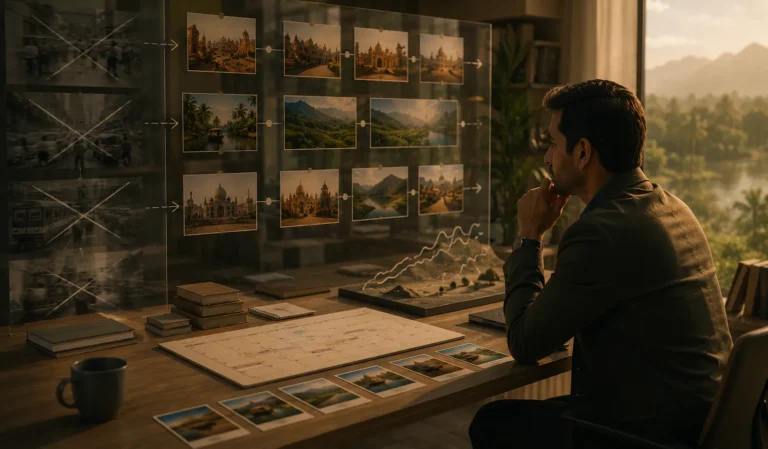
About two weeks before departure, David joined a planning call. There was no issue to resolve — only uncertainty before a first visit to India.
For nearly forty-five minutes, the conversation covered airport arrivals, food, traffic, clothing, money, mobile connectivity, and weather.
By the end, nothing in the itinerary had changed — hotels, flights, and routing remained exactly the same.
What changed instead was confidence. The traveler felt ready.
Our Philosophy Isn’t Written On Office Walls
Values like excellence, integrity, and innovation only matter when they are reflected in everyday decisions, not written statements.
They appear in small choices — adjusting hotel rooms for comfort, simplifying itineraries, or being honest about travel times.
They also appear in communication — calling travelers before departure, responding to concerns, and adapting plans when needed.
These actions define how a philosophy is actually practiced, far more than any written slogan.
Travelers rarely remember mission statements. They remember how they were treated throughout the journey.
Looking Back, Responsible Travel Is Really About Care
After years of organising tours across Kerala, Rajasthan, and the Golden Triangle, one idea continues to remain consistent: responsible travel is not a separate service or an optional upgrade.
It is a way of thinking that influences every part of the journey — from itinerary design and hotel selection to transportation, pacing, guiding, communication, and feedback.
Our aim has never been to help travelers see the maximum number of places. It has always been to help them experience India in a way that feels comfortable, respectful, and memorable.
Sometimes that means adding time in one destination. Sometimes it means changing timing, season, or pace. Sometimes it simply means listening more carefully.
Every traveler adds a new lesson. Every journey refines the process. And over time, these lessons shape how thoughtful travel continues to evolve.
Frequently Asked Questions
1. What does responsible travel mean at White Pigeon Holidays?
It means balancing traveler comfort with respect for local communities, cultural traditions, and long-term partnerships.
2. Does responsible travel mean sacrificing comfort?
No. Responsible travel and comfortable travel are designed to work together, not compete.
3. Why do you sometimes recommend fewer destinations?
Because a well-paced journey often creates a more meaningful experience than trying to visit many places in a short time.
4. How do local partnerships influence your tours?
Long-term relationships with hotels, guides, and transport partners help create more consistent and reliable travel experiences.
5. Do you support local businesses?
Yes. We recommend local artisans, family-run shops, and regional experiences that have consistently provided positive guest feedback.
6. How do traveler comments influence your philosophy?
Feedback helps refine itineraries, hotel selection, transport planning, and communication before and during tours.
7. Why is honesty an important part of your approach?
Clear and realistic expectations help travelers feel more prepared and confident before the journey begins.
8. Do you regularly review your planning processes?
Yes. Every completed tour contributes insights that help improve future planning and operations.
9. What is more important—luxury or comfort?
We believe thoughtful pacing and comfort often create a more lasting impression than luxury alone.
10. How do you prepare travelers for responsible travel?
We share practical guidance about cultural etiquette, local customs, and realistic expectations before departure.
11. How has your philosophy changed over time?
The core principles remain consistent but continue evolving through traveler feedback and operational experience.
12. What is the guiding principle behind every White Pigeon Holidays tour?
Every decision should help travelers experience India in a way that is comfortable, respectful, and genuinely enjoyable.