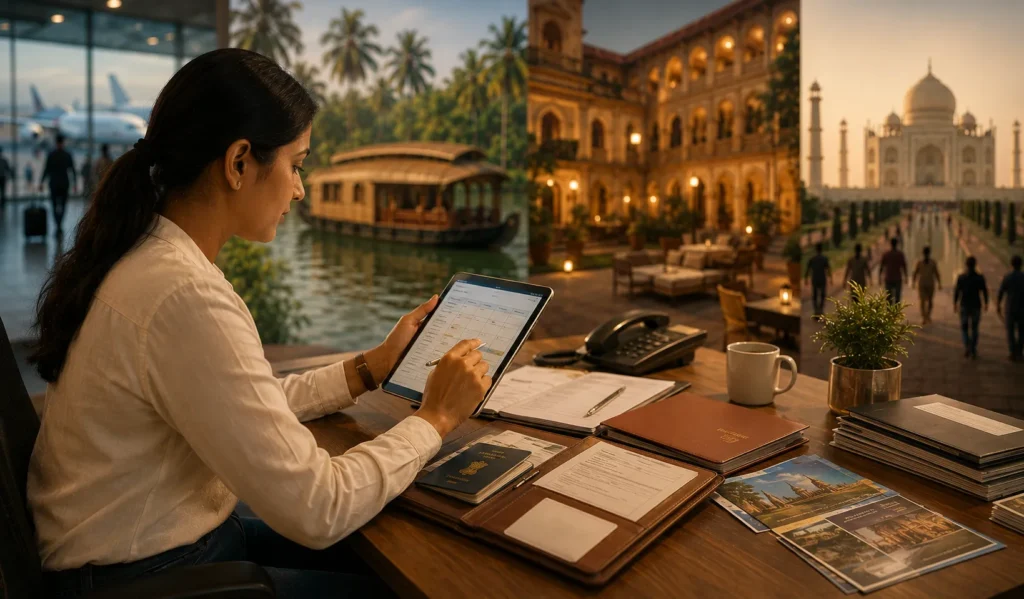

When Things Go Wrong in Travel, What Matters Is What Happens Next
A few months ago, I received a phone call from an American couple who had just landed in Delhi after almost twenty-four hours of travel.
One of their checked bags had not arrived. Inside were medicines, clothes, and personal items needed for the first few days.
The first reaction is always panic. That is completely natural after travelling thousands of miles from home.
While the travelers spoke with airline staff, our focus immediately shifted to the next few hours — not the next few days.
• Do they have passports and valuables with them?
• Do they need medicines immediately?
• Should tomorrow’s sightseeing remain the same?
Within an hour, the situation had already changed direction.
The baggage tracing process had started. The travelers reached their hotel. The airline had the delivery address.
By the next morning, things were calm. The luggage arrived later that day.
If you only look at the outcome, it seems small. What matters is the thinking that happens while everyone is still trying to react.
That is what experienced tour planning really is — not preventing every unexpected situation, but preparing for them before they happen.
Travel Is Predictable Until It Isn’t
People often ask me,
“Do these kinds of situations happen often?”
The honest answer is no.
Most India tours go exactly as planned.
Flights arrive.
Drivers are waiting.
Hotels are ready.
Sightseeing happens on schedule.
But travel involves airlines, weather, roads, local events and thousands of moving parts.
No travel company can promise that nothing unexpected will ever happen.
What matters is something else.
How quickly can everyone adjust when it does?
That question is much more important than pretending unexpected situations never happen.

Flight Delays Usually Affect More Than Just Flights
When people hear the words flight delay, they often think only about reaching the destination later.
In reality, a delayed flight can affect several other things.
Airport pickup.
Hotel check-in.
Dinner timings.
The next morning’s sightseeing.
Sometimes even another domestic flight.
I remember one family travelling from the United States who reached Delhi several hours later than expected because their connecting international flight was delayed.
The original itinerary included an evening visit nearby.
Instead of asking the family to continue with the original plan, we looked at something much simpler.
How tired would they actually feel?
The answer was obvious.
They had already spent enough time travelling.
So we shifted that activity to the following morning.
Nothing important was cancelled.
Nothing meaningful was lost.
The family simply started the holiday with rest instead of rushing.
Sometimes the best decision is not finding another activity.
Sometimes it is removing one.
Weather Does Not Read Travel Itineraries
Many travelers spend months planning an India holiday.
Unfortunately, weather does not know those plans exist.
Heavy rain.
Unexpected fog.
Road closures.
Strong winds.
These things occasionally happen.
One winter morning, I remember receiving updates that visibility around Delhi was much lower than expected.
Some flights were delayed.
Road travel was slower than usual.
Instead of hoping everything would improve quickly, we immediately started looking at alternatives.
Would it make more sense to leave a little later?
Should sightseeing happen in a different order?
Would another activity make better use of the day?
Most travelers never notice those discussions because they happen quietly behind the scenes.
And honestly, that is how it should be.
The objective is not to create unnecessary concern.
The objective is to keep the holiday moving as smoothly as possible.
One thing I have learned after planning many India tours is that sticking to the original itinerary is not always the smartest decision.
Sometimes the smartest decision is changing it.
That may sound strange.
After all, people spend weeks discussing hotels, sightseeing, timings and flights before confirming a trip.
So naturally, everyone expects the itinerary to remain exactly the same.
But travel does not always work like that.
If changing one small part of the day helps travelers enjoy the rest of their holiday, I would rather change the plan than follow it just because it was written on paper.
That is one reason experienced planning is often flexible instead of rigid.
A Road Closure Can Change The Entire Day
Not every delay happens because of flights. Sometimes the roads tell a different story.
There are days when local festivals, public events, political movements, or maintenance work affect traffic in certain parts of a city.
I remember one morning when a major road leading to a popular sightseeing area became heavily congested due to an unexpected local event.
The travelers were having breakfast at the hotel. While they were getting ready, we were already discussing an alternate route with the driver.
We also adjusted the sightseeing order. Instead of sitting in traffic, they visited another attraction first.
By the afternoon, traffic had reduced and the original destination was covered without any rush.
Later, when we asked how their day had been, they simply said:
“Everything went smoothly.”
That is probably the best compliment any tour planner can receive. Because the travelers never had to experience the problem we were solving behind the scenes.
Hotel Issues Are Rare, But We Still Think About Them
Hotels work very hard to provide a good experience.
Most stays go exactly as planned.
But just like airlines, hotels also deal with situations that nobody expects.
Sometimes a room is not ready.
Sometimes there is a maintenance issue.
Sometimes a traveler needs a different room because of mobility requirements.
Sometimes an unexpected group booking changes room availability.
Whenever something like this happens, the first priority is always the traveler.
Not the booking.
I remember a senior couple who arrived after a long international flight.
The hotel informed us that their room would take a little longer to prepare.
Instead of asking the couple to wait in the lobby after such a long journey, we coordinated with the hotel to arrange another comfortable room immediately while the original room was being prepared.
The travelers checked in, rested and never had to spend hours waiting after landing.
From their perspective, the experience felt smooth.
That is exactly how it should feel.

Sometimes Travelers Need Medical Help
This is another topic that people rarely discuss before travelling.
Most holidays are completed without any medical concerns. But nobody can guarantee that someone will never feel unwell during a two-week international trip.
It may be something simple like dehydration, fatigue after several travel days, or the need for a short medical consultation.
I still remember a traveler who started feeling unwell after several busy sightseeing days. Nothing serious — just exhaustion combined with a change in weather.
Instead of continuing with the original schedule, the family chose to take the afternoon for rest.
The next day’s itinerary was adjusted slightly so that everyone could continue comfortably.
By the following morning, the travelers were ready to continue the journey without stress.
If we had insisted on following the original schedule, the experience would have become far more stressful.
Sometimes taking care of the traveler becomes more important than taking care of the itinerary.
We Never Assume Every Day Will Go Exactly According To Schedule
One question I often ask while reviewing an itinerary is,
“What happens if this activity takes longer than expected?”
Many things can influence timing.
Someone may want to spend extra time at the Taj Mahal because they have waited years to see it.
A family may enjoy shopping at a local market longer than expected.
Travelers may stop to take photographs during a road journey.
Lunch may become a relaxed conversation instead of a quick meal.
None of these things are problems.
They are part of travelling.
That is why we avoid creating schedules where every hour depends on the previous one.
A little flexibility usually creates a much more enjoyable holiday.
Some Of The Best Decisions Are Made On The Same Day
People sometimes imagine that every decision during a holiday is made weeks in advance.
That is only partly true.
The bigger planning happens before the journey.
Some of the smaller decisions happen during the journey itself.
For example…
If the weather is pleasant and travelers are enjoying a particular place, why hurry them back to the vehicle?
If someone wants to spend another thirty minutes at a local café, should the day really fall apart because of that?
If a family prefers returning early after a long sightseeing day, why force another attraction just because it appears on the itinerary?
Good planning should leave room for real experiences.
Otherwise, people spend more time following a schedule than enjoying the destination.
Communication Often Solves Problems Before They Become Bigger
I have noticed something interesting over the years.
Many travel problems become much easier when people communicate early.
Sometimes travelers hesitate.
They think,
“Maybe this is not important enough to mention.”
In reality, those small conversations help everyone.
If someone feels tired, we can adjust the next morning.
If someone wants to skip an activity, we can discuss alternatives.
If someone has questions about local customs or restaurants, we can usually answer them immediately.
Communication is not only for emergencies.
It is part of making the entire journey comfortable.
We Never Want Travelers To Feel Alone
Imagine arriving in another country where everything is unfamiliar.
The language sounds different.
The roads look different.
The food is different.
Even experienced international travelers sometimes have small questions during the journey.
That is perfectly normal.
I have always believed that travelers should know whom to contact if they need help.
Sometimes they only need reassurance.
Sometimes they need information.
Sometimes they simply want to confirm whether everything is going according to plan.
Knowing that someone is available often gives people confidence, even if they never actually need assistance.
And confidence is one of the most valuable things during international travel.
Good Planning Is Not About A Perfect Trip. It Is About Being Prepared.
If there is one thing I have learned after planning India tours, it is this.
No travel company can honestly promise that nothing unexpected will ever happen.
Flights are managed by airlines. Road conditions change. Weather changes. Hotels sometimes face situations beyond their control.
These are parts of travel that nobody can fully control.
What we can control is how prepared we are before the journey even begins.
That preparation often makes the difference between a small inconvenience and a stressful experience.
We Try To Think About Problems Before Travelers Ever Face Them
Whenever we finish preparing an itinerary, we do not simply send it and move on.
We review it once again.
We ask ourselves a few questions.
What happens if the flight arrives late?
Will there still be enough time to reach the hotel comfortably?
Is the sightseeing schedule too tight?
Does the traveler have enough free time during the holiday?
Will changing one activity affect the rest of the trip?
Most travelers never see this part.
They only receive the final itinerary.
But a lot of thought usually goes into those small decisions.
Experience Helps People Stay Calm
I have noticed something over the years.
Unexpected situations often feel much bigger when someone is travelling in a new country for the first time.
That is understandable.
Everything is unfamiliar.
Even a small delay can feel worrying.
On the other hand, when someone explains what is happening, what the next step is and what options are available, the same situation often feels much easier to handle.
Good communication cannot stop a delayed flight.
But it can remove a lot of unnecessary uncertainty.
Sometimes that is exactly what travelers need.

The Goal Has Never Been To Create A Busy Itinerary
Many people judge a holiday by the number of places they visited.
We look at it a little differently.
At the end of the journey, we want travelers to return home thinking,
“That trip was comfortable.”
“Everything felt well organised.”
“We never felt rushed.”
Those comments mean much more than hearing someone say they visited one extra city.
Because comfortable travel usually creates better memories than crowded schedules.
Looking Back, Most Problems Become Stories
It is interesting how travel works.
The small flight delay that felt stressful on the first day eventually becomes a story people laugh about.
The unexpected rain becomes part of the adventure.
The change in plans leads to another experience they had never expected.
Many travelers later tell us,
“Everything worked out better than we thought.”
That sentence always reminds me why preparation matters.
Not because every journey will have problems.
Because when something unexpected does happen, people should still be able to enjoy their holiday.
Final Thoughts
Travel will never be completely predictable. And honestly, that is part of its charm.
Every journey is different. Every traveler is different. Every day brings something new.
The objective has never been to create a holiday where every minute goes exactly according to schedule.
The objective is to prepare well enough that small changes do not become big worries.
If someone returns home remembering India’s people, culture, food, landscapes and experiences instead of travel problems, then the planning has achieved what it was meant to do.
That has always been our way of looking at travel.