

Three Completely Different Landscapes.
One Destination. A Few Hours Apart.
Kerala is one of those rare destinations where quiet waterways, open coastline, and misty hill stations sit within a few hours of each other.
Each one is distinct.
Each one is worth your time.
This guide answers exactly that.
Scroll down for the full region-by-region breakdown.
What each landscape offers, when to visit, and how to build your itinerary around them.
Not Sure How Many Days to Spend in Each Region, or Which Beaches Suit Your Travel Style?
Our Kerala travel specialists plan this every week. Share your details and we'll sort your Kerala trip — right beach, right pace, right days.
Tell us about your trip — we'll do the planning
What Makes Kerala Different from Other Indian Destinations
Most Indian destinations are known for one thing — the deserts of Rajasthan, the temples of Tamil Nadu, the mountains of Himachal.
Kerala gives you three landscapes in a single trip.
You can spend two nights on a houseboat gliding through canals, then drive two hours to a cliff-top beach with an Arabian Sea view, then head inland to Munnar’s tea-covered hills in another two hours.
No internal flights needed.
No exhausting transitions.
The geography does the work for you.
That is why Kerala works particularly well for first-time India visitors — it is varied without being overwhelming, and slow without being boring.
The Backwaters: Kerala’s Most Misunderstood Experience
What the Backwaters Actually Are
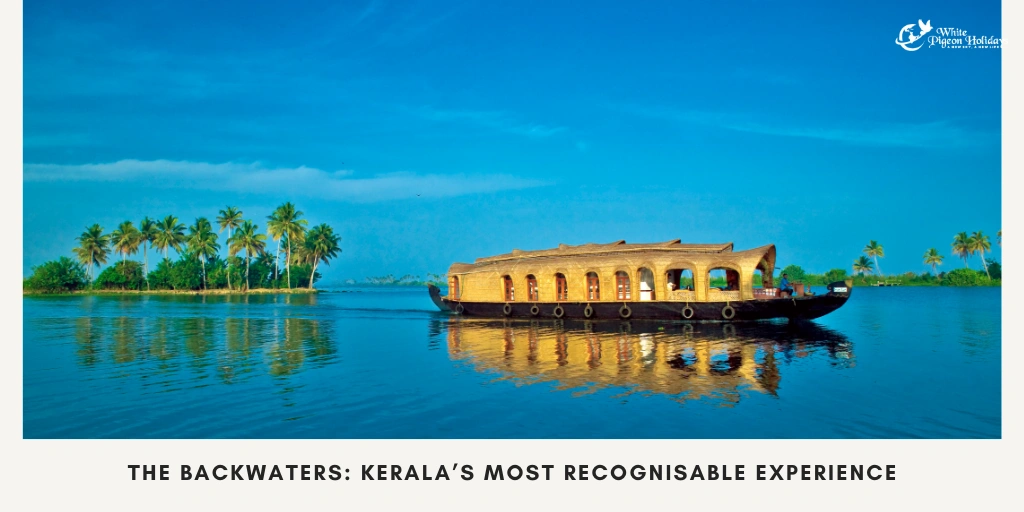
The Kerala backwaters are a 900-km network of interconnected canals, lakes, rivers, and lagoons running parallel to the Arabian Sea coastline.
They are not a single place you visit and leave.
They are a landscape — one that unfolds slowly as you move through it.
What you actually see from the water:
- Narrow canal paths lined with coconut palms
- Local homes built facing the water, with boats tied outside
- Paddy fields on raised banks
- Fishing nets lowered and lifted by hand
- Village life moving at its own rhythm
There is no agenda here.
That is the entire point.
| Feature | Alleppey (Alappuzha) | Kumarakom |
|---|---|---|
| Vibe | More activity, more boats accessible | Quieter, more exclusive |
| Best for | First-timers, budget-friendly stays | Couples, resort holidays |
| Houseboat access | Excellent | Good |
| Bird sanctuary nearby | No | Yes (Kumarakom Bird Sanctuary) |
| Price range | ₹5,000–₹30,000/night | ₹15,000–₹50,000/night |
Vibe
Best for
Houseboat access
Bird sanctuary nearby
Price range
| Category | Weekly Rate | Weekend Rate |
|---|---|---|
| Deluxe (1 bedroom) | ₹6,000–₹11,000 | ₹12,000–₹15,000 |
| Premium (1–2 bedrooms) | ₹11,000–₹16,000 | ₹18,000–₹22,000 |
| Luxury (2+ bedrooms) | ₹18,000–₹50,000 | ₹30,000–₹80,000 |
Deluxe (1 bedroom)
Premium (1–2 bedrooms)
Luxury (2+ bedrooms)
| Feature | Kovalam | Varkala | Marari |
|---|---|---|---|
| Distance from Trivandrum | 16 km | 51 km | ~120 km |
| Vibe | Lively, commercial | Clifftop, scenic | Quiet fishing village |
| Best for | Families, first-timers | Couples, solo travellers | Pure relaxation |
| Crowd level | High in peak season | Medium | Low |
| Restaurant scene | Extensive | Good clifftop cafes | Limited |
| Swimming safety | Lifeguards present | Moderate, check flags | Generally calm |
| Nightlife | Some | Minimal | None |
Distance from Trivandrum
Vibe
Best for
Crowd level
Restaurant scene
Swimming safety
Nightlife

Not Sure How to Combine Backwaters, Beaches, and Hills in 7, 10, or 14 Days?
We'll build a day-by-day plan around your travel dates and pace — no generic templates.
Kerala’s Hill Stations: What the Hills Actually Offer
Munnar: The Most Visited Kerala Hill Station
Munnar sits at 1,600 metres above sea level, about 130 km northeast of Kochi.
The drive up is part of the experience — hairpin bends, waterfalls appearing through the mist, and the air visibly cooling as you gain altitude.
At the top, you find:
- Tea plantations covering 60,000+ acres across the Kannan Devan Hills (one of Asia’s largest tea-growing regions, managed by Tata Consumer Products/KDHP)
- Temperatures 8–12°C cooler than coastal Kerala
- Morning mist that rolls through valleys and lifts by 9 AM
- Eravikulam National Park, home to the endangered Nilgiri Tahr
What to do in Munnar:
- Walk through a working tea plantation (most estates allow this for free or ₹75–₹150 entry)
- Visit the TATA Tea Museum — ₹125 per adult, includes tea tasting
- Drive to Top Station (32 km from Munnar town) for panoramic views into Tamil Nadu
- Watch sunrise from Mattupetty Dam viewpoint
Time needed: 2 nights minimum. 3 nights if you want to explore without rushing.
Wayanad: The Less-Visited Alternative
Wayanad in northern Kerala is quieter than Munnar and more forested.
If wildlife, tribal culture, and coffee plantations appeal more than tea estates and tourist crowds, Wayanad suits you better.
| Key Differences | Munnar | Wayanad |
|---|---|---|
| Altitude | 1,600 m | 700–2,100 m |
| Main attraction | Tea estates, viewpoints | Forests, wildlife, caves |
| Tourist volume | High | Moderate |
| Best for | Couples, families | Nature seekers, adventurers |
| Distance from Kochi | 130 km (~4 hrs) | 290 km (~5.5 hrs) |
Altitude
Main attraction
Tourist volume
Best for
Distance from Kochi
Thekkady (Periyar): For Wildlife Combined with Hills
Thekkady sits at 900 metres and sits around Periyar Tiger Reserve — one of India’s best-managed wildlife sanctuaries.
You are unlikely to spot a tiger (they exist but are rarely seen).
What you will likely see on a lake boat safari: Indian bison, elephants at the water’s edge, sambar deer, and dozens of bird species.
Entry fee for Periyar Tiger Reserve: ₹300 per adult (Indian), ₹1,200 per adult (foreigner).
Boat safari booking: Open 7 AM–4 PM. Early morning slots (7–9 AM) give you the best wildlife sightings.
The Right Order to Visit: Backwaters → Beach → Hills
Most travelers who visit Kerala in the wrong order end up feeling like something was off.
The natural flow that works:
Day 1–2: Kochi (Fort Kochi) Settle in. Walk through colonial streets. Eat Kerala seafood. This is your entry point.
Day 3–5: Alleppey Backwaters Slow down. Go on the water. Watch the pace of life change completely.
Day 6–7: Marari or Varkala Beach Open up. Breathe salt air. Rest.
Day 8–10: Munnar or Wayanad Hills Cool down. Drive through green. End the trip with altitude and quiet.
This order works because each landscape mentally prepares you for the next.
You cannot fully appreciate the silence of the hills if you have not slowed down through the backwaters first.
| Season | Months | Backwaters | Beaches | Hills |
|---|---|---|---|---|
| Peak | Nov–Feb | Excellent | Excellent | Excellent |
| Shoulder | Mar–May | Good | Good (hot) | Good |
| Monsoon | Jun–Sep | Restricted (some houseboats pause) | Rough seas | Lush, misty, dramatic |
| Post-monsoon | Oct | Good | Good | Very good |
The honest monsoon truth:
Many travellers avoid Kerala June–September because of rain. But Munnar during monsoon is genuinely beautiful — the hills are intensely green, waterfalls appear everywhere, and tea estates are at their most photogenic.
Houseboats are restricted in some stretches during peak monsoon (July–August) due to water level regulations, so check before booking if you are travelling then.
Beaches are rough June–August and swimming is not advisable.
Peak — Nov–Feb
Shoulder — Mar–May
Monsoon — Jun–Sep
Post-monsoon — Oct
The honest monsoon truth:
Many travellers avoid Kerala June–September because of rain. But Munnar during monsoon is genuinely beautiful — the hills are intensely green, waterfalls appear everywhere, and tea estates are at their most photogenic.
Houseboats are restricted in some stretches during peak monsoon (July–August) due to water level regulations, so check before booking if you are travelling then.
Beaches are rough June–August and swimming is not advisable.
| Destination | Nearest Airport | Distance |
|---|---|---|
| Alleppey Backwaters | Kochi (COK) | 85 km (~2 hrs) |
| Kovalam / Varkala | Thiruvananthapuram (TRV) | 16–51 km |
| Munnar | Kochi (COK) | 130 km (~4 hrs) |
| Wayanad | Calicut (CCJ) | 85 km (~2.5 hrs) |
| Thekkady | Madurai (IXM) or Kochi (COK) | 115–180 km |
Internal transport:
Hiring a private car with driver (₹2,500–₹4,000/day) is the most practical way to move between regions.
Kerala’s roads have improved significantly, but hill routes still involve winding sections that add travel time.
Public buses exist but add hours and require luggage management.
Alleppey Backwaters
Kovalam / Varkala
Munnar
Wayanad
Thekkady
Internal transport:
Hiring a private car with driver (₹2,500–₹4,000/day) is the most practical way to move between regions.
Kerala’s roads have improved significantly, but hill routes still involve winding sections that add travel time.
Public buses exist but add hours and require luggage management.
Backwaters + Beach + Hills over 10 Days — What Does It Actually Cost for 2 People?
Get a realistic budget breakdown across accommodation, transfers, activities, and food.
Who Kerala Works Best For — And Who Should Think Twice
Kerala suits you well if:
- You prefer experiences over monument-checking
- You enjoy slow travel and absorbing atmosphere
- You are traveling as a couple, small family, or solo
- You want variety without exhausting yourself
- You are visiting India for the first time and want a manageable entry point
Kerala may not be the right fit if:
- You need nightlife and late-night energy (Goa suits you better)
- You want dramatic mountain altitudes above 3,000 metres (go to Himachal or Uttarakhand)
- You prefer dense historical and architectural sites (Rajasthan is your match)
- You only have 3–4 days (you will feel rushed and not get the real Kerala pace)
One Last Thing Before You Plan
Kerala rewards travelers who slow down.
The instinct to pack in backwaters, three beaches, two hill stations, Kochi, wildlife safari, and Ayurveda into 8 days will leave you with a blur of impressions rather than memories.
Pick your priorities.
Give each landscape 2–3 days.
Let the pace of the place settle into you.
That is when Kerala delivers what it promises.
Real Questions Kerala Travelers Ask
Honest answers to the questions travellers actually search before booking a Kerala trip.
Is 7 days enough for Kerala backwaters, beaches, and hills?
Seven days is tight but workable if you limit yourself to one main destination per landscape — Alleppey for backwaters, Varkala for beach, Munnar for hills. You will not feel rushed if you skip trying to "do everything."
Do I need a travel agent for Kerala or can I book independently?
You can book independently, but houseboats, wildlife safaris, and hill resort transfers require advance planning. A good consultant saves you the wasted time of comparing fifty houseboat operators with no clear way to judge quality.
Is Kerala safe for solo women travelers?
Kerala consistently ranks among India's safer states for solo women. Tourist areas in Alleppey, Kovalam, and Munnar are well-traveled. Standard city-travel precautions apply in Kochi, particularly at night.
Can I visit Kerala during the monsoon?
Yes, but selectively. Munnar is beautiful in July–August. Houseboat cruises are restricted on some routes and beaches are unsafe for swimming. If you are specifically going for green landscapes and lower prices, the monsoon shoulder months (October, early November) give you both.
What is the minimum budget for a Kerala trip per person for 10 days?
Budget range: ₹30,000–₹45,000 per person (shared room, local transport, basic houseboat, simple meals). Mid-range: ₹60,000–₹90,000 per person (comfortable hotels, private car, quality houseboat). Luxury: ₹1,50,000+ per person (heritage resorts, premium houseboats, curated experiences).
Which Kerala beach is best for swimming?
Kovalam's Lighthouse Beach is the safest option — it has lifeguards, safety flags, and clear sections marked for swimming. Varkala has strong currents in some sections; always check the flag system. Marari is generally gentle but has no lifeguards.
How far in advance should I book a Kerala houseboat?
6–8 weeks ahead during October–March. For Christmas week and New Year, book 3–4 months ahead — good boats are genuinely booked out.
Is it worth spending time in Kochi, or should I head straight to the backwaters?
Spend one full day in Fort Kochi. The Dutch-era streets, Chinese fishing nets, and spice market give you useful context before you slow down in the backwaters. It also gives you time to recover from a long flight before getting on water.
Can I combine Kerala with Sri Lanka or the Maldives?
Very practical. Thiruvananthapuram has direct flights to Colombo (Sri Lanka) and Male (Maldives). Many travelers end a Kerala trip with 3–4 days in the Maldives. Two weeks total covers both comfortably.
What should I eat in Kerala that I cannot find elsewhere?
Karimeen pollichathu (pearl spot fish roasted in banana leaf), prawn moilee (coconut milk curry), Kerala beef fry, appam with stew, and puttu with kadala curry. The backwater region in particular has exceptional fresh fish, served simply and without fuss.
Is Ayurvedic treatment worth doing in Kerala?
If you want a genuine multi-day treatment (Panchakarma or Abhyanga), plan it specifically — it works best at the start or end of your trip when you can rest. A one-hour relaxation massage at a reputable resort is fine anytime. Avoid roadside Ayurveda shops in tourist areas — quality control is inconsistent.
How different is Wayanad from Munnar?
Wayanad is lower, greener, less crowded, and more focused on forests and tribal culture. Munnar is higher, cooler, more dramatic in terms of tea estate landscapes, and significantly more visited. Both are worth it — the choice depends on whether you want iconic hill scenery (Munnar) or quieter, wildlife-rich forest experiences (Wayanad).

✈️ Special Offer
Get FREE Personalised Trip Plan!
Tell us your dream destination — we'll plan it for free
Our travel expert will call you within 24 hours with a customised itinerary 🗺️
📅 Travel Month
🔒 No spam. Your details are 100% safe with us.