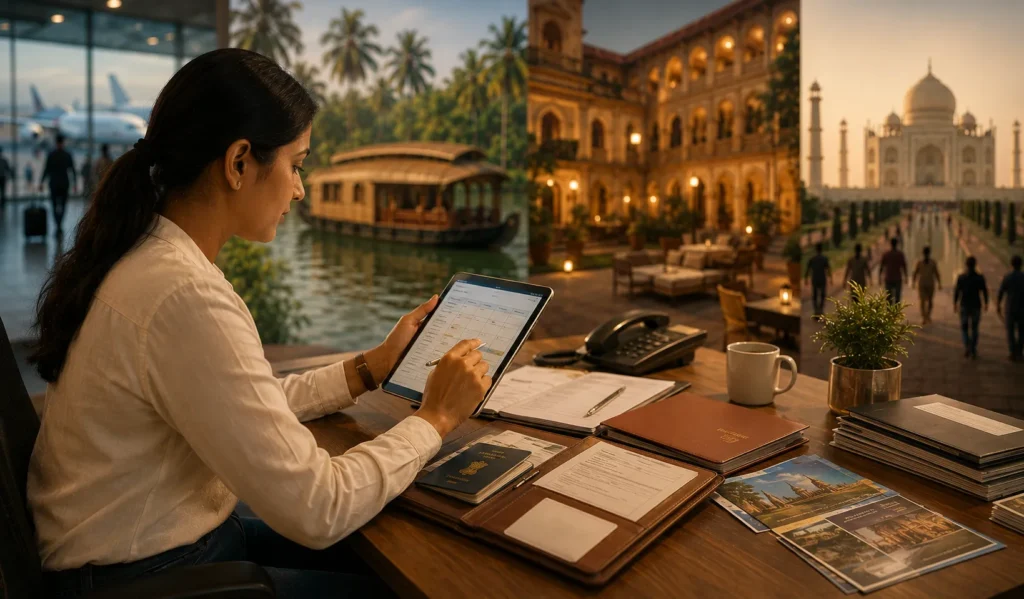

Safety Is Usually The First Concern. We Think It Should Be.
If you are planning your first trip to India, safety is often the first question that comes up — and it is a valid one.
Traveling to a new country brings excitement, but also uncertainty around roads, hotels, timing, health situations, and daily logistics.
At White Pigeon Holidays, safety is not treated as something that starts after arrival. It is built into planning from the very beginning and continues until the journey ends.
Most travelers never notice these measures during their trip, and that usually means the system is working as intended.
When a journey feels smooth and well organised, safety decisions are already working quietly in the background.
We Start Thinking About Safety Before We Start Booking
Safety planning does not begin with emergencies. It begins much earlier — during the design of the itinerary itself.
Before confirming bookings, we evaluate whether the itinerary is practical, comfortable, and realistic for travel conditions on the ground.
We focus on reducing unnecessary stress rather than reacting to problems later in the journey.
• Preventing rushed arrival and departure timings
• Recommending domestic flights where appropriate
• Adding rest time after long international travel
These decisions are often seen as comfort choices, but they also play a major role in overall travel safety.
Good planning reduces risk long before a traveler boards the flight.

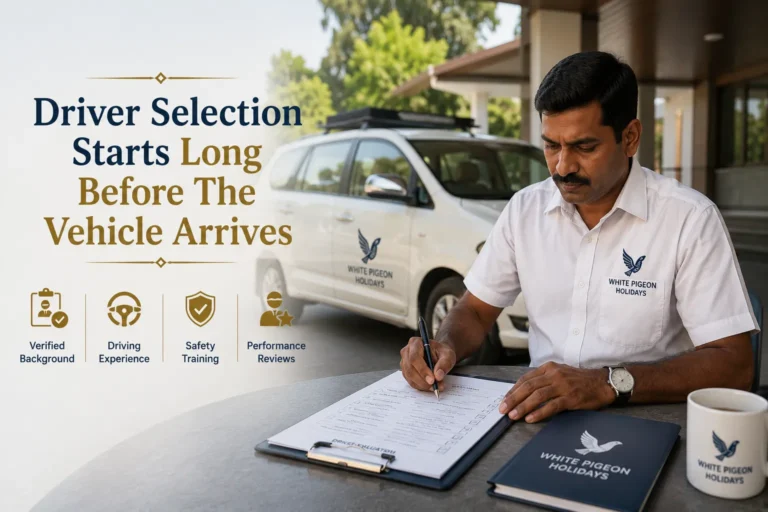
Driver Selection Starts Long Before The Vehicle Arrives
People often ask whether we have our own drivers. The way we approach it is slightly different.
Instead of asking whether a driver is available, we ask whether the driver is the right fit for a specific journey.
Basic qualifications such as licensing and professional experience are expected. The selection process goes further into suitability for the route and the travelers.
• Experience with international travelers
• Consistent feedback and reliability
• Communication style and professionalism
• Comfort level during long-distance driving
Different types of travelers require different driving approaches, whether it is senior travelers who prefer smoother pacing or families who need flexibility during the day.
The goal is not to assign a vehicle. The goal is to assign the right experience on the road.
Every Vehicle Is Reviewed For The Journey It Will Be Used For
A comfortable vehicle is not defined by appearance alone. It is defined by how well it fits the journey.
Different group sizes, luggage needs, and travel distances require different vehicle types to ensure comfort throughout the trip.
Before confirming transport, we evaluate multiple practical factors to match the vehicle with the itinerary.
• Passenger capacity and seating comfort
• Luggage space requirements
• Air conditioning performance
• Cleanliness and maintenance standards
• Comfort level for long-distance travel
These details may appear operational, but they directly influence how comfortable travelers feel during long road journeys.
The right vehicle is not the one that looks best — it is the one that fits the journey best.
Hotel Safety Goes Beyond The Room Itself
Hotel selection for international travelers involves much more than comparing star ratings or room photographs.
A property may look excellent online, but suitability depends on accessibility, safety, and how comfortably it fits into the overall journey.
Before confirming a hotel, we evaluate several practical aspects that directly impact traveler comfort and safety.
• Professional and responsive front desk service
• Surrounding neighborhood environment
• Convenience of airport or station transfers
• Comfort during late evening returns
• Overall suitability for international guests
These considerations are especially important for first-time visitors, where confidence often comes from small operational details rather than luxury alone.
True hotel safety is not just about what is inside the room — it is about everything around it.
We Avoid Unnecessary Late-Night Road Travel Whenever Possible
India is a large country, and road journeys naturally form an important part of many itineraries.
Whenever possible, we plan arrivals before dinner to ensure travel happens in daylight and the overall journey feels more relaxed.
This is not because night travel is impossible, but because daylight travel generally improves comfort and reduces unnecessary fatigue.
• Reduced driver fatigue and improved safety margins
• Easier hotel check-in and arrival coordination
• More relaxed dinner and evening routines
These decisions may appear small, but they significantly improve the overall rhythm of the journey.
Comfort in travel often comes from the timing of decisions, not just the destinations themselves.
Communication Is Part Of Safety Too
Many travelers do not realize how much coordination happens before they arrive in India.
When a flight is delayed or arrives later than expected, multiple teams must be informed immediately to ensure smooth coordination.
This includes airport representatives, drivers, hotels, and operations teams who are all part of the same journey.
• Drivers adjust timing and routing accordingly
• Hotels prepare for revised check-in schedules
• Operations teams coordinate all moving parts
The goal is to ensure that travelers do not need to manage multiple calls or updates after a long international journey.
When communication works well behind the scenes, the impact of changes becomes much smaller for the traveler.
Good communication reduces confusion and protects the traveler from unnecessary stress on arrival.
We Collect Emergency Information Before We Need It
Before every departure, travelers are asked to share essential pre-travel information through a standard form.
This includes emergency contacts and other important details that may be needed during the journey if any unexpected situation arises.
We also encourage travelers to share relevant health and travel-related information to ensure better planning and support.
• Food allergies or dietary requirements
• Mobility or accessibility needs
• Regular medications
• Emergency contact details
This information is not collected because problems are expected, but because preparation allows better decisions when time matters.
Good preparation is not about anticipating issues — it is about being ready if they ever occur.
Local Operations Teams Stay Connected Throughout The Journey
An India tour involves multiple teams working together rather than a single point of contact.
Hotels, drivers, guides, airport representatives, and operations coordinators all work in coordination to manage each part of the journey.
If any change occurs during the trip, such as a delayed flight or revised schedule, the information is shared across all relevant teams immediately.
• Hotel teams receive revised arrival details
• Transport schedules are adjusted when flights change
• Guides align activities based on updated timings
This coordination ensures that travelers do not need to manage logistics themselves during the journey.
Continuous communication between local teams is what keeps the entire journey running smoothly.
Case Study: Adjusting A Journey Before It Became Uncomfortable
In February 2025, a group of twelve travelers from Texas, Ohio, and North Carolina was travelling from Jaipur to Jodhpur.
The journey was progressing as planned when a traveler mentioned feeling more tired than expected, even though nothing was wrong operationally.
The driver also noticed that the group had become quieter over time, which indicated that a short pause might help improve comfort.
• The group took a brief break at a clean roadside restaurant
• Arrival in Jodhpur was delayed by approximately 25 minutes
The adjustment did not change the itinerary in any meaningful way, but it significantly improved traveler comfort.
Later that evening, a traveler shared that the short break made the journey feel much more relaxed and manageable.
Good travel decisions are not always about big changes — sometimes they are about noticing small signs early.
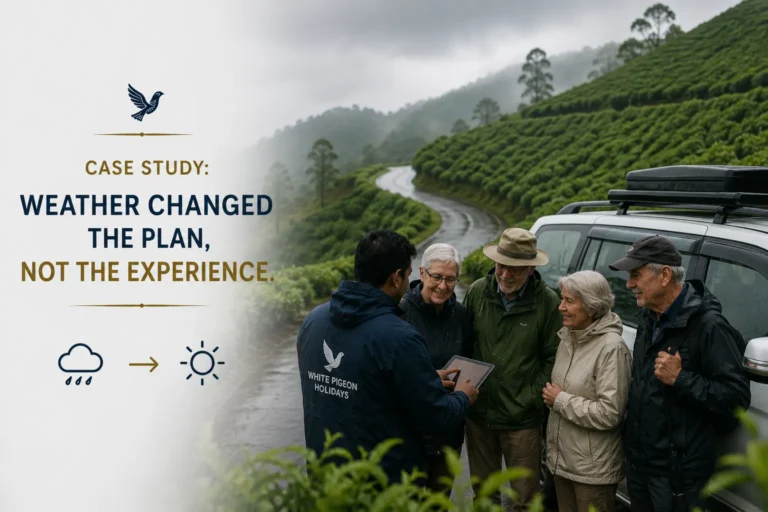
Case Study: Weather Changed The Plan, Not The Experience
During July 2024, heavy rainfall was forecast across parts of Kerala, especially along the hill routes toward Munnar.
A transport update indicated slower-than-usual traffic near the hill sections due to continuous rainfall from the previous day.
Instead of waiting for delays to build up, the departure schedule was adjusted in advance.
• Breakfast completed slightly ahead of schedule
• Travel began before peak traffic conditions
The group reached Munnar comfortably before weather conditions worsened.
The plan changed, but the experience remained smooth and uninterrupted.
We Don’t Plan For Emergencies. We Plan So They Are Easier To Handle.
No travel experience can be completely free from uncertainty. Flights may delay, weather may change, and road conditions may vary.
The focus is not on preventing every change, but on ensuring that every change is handled in a structured and comfortable way.
• Hotels adjust check-in and meal timings in advance
• Drivers receive updated schedules immediately
• Local operations teams coordinate all changes
Instead of reacting to problems, communication ensures that everyone involved is already prepared when changes occur.
The question is never “what went wrong,” but always “what is the most comfortable solution for the traveler.”
We Stay Connected With Travelers Without Becoming Intrusive
A common concern among travelers is whether they will be left on their own once the journey begins.
The approach is simple: support is always available in the background, but it should never interfere with the travel experience itself.
Communication is maintained with all key stakeholders involved in the journey rather than repeatedly checking in with travelers.
• Hotels receive updates when required
• Local representatives coordinate on-ground support
• Guides follow planned timing and adjustments
This ensures travelers are not burdened with unnecessary communication while still having support available whenever needed.
When coordination is done well, travelers feel supported — without feeling interrupted.
Safety Also Depends On Choosing The Right Pace
When people think about safety, they often focus on vehicles, hotels, and emergency support systems.
In practice, travel pace plays an equally important role in ensuring comfort and reducing unnecessary stress during a journey.
After long international flights, immediate sightseeing may not always be the most comfortable option, even if it is technically possible.
• Some travelers need more rest after arrival
• Early slow days improve overall travel experience
• Balanced pacing reduces fatigue throughout the trip
The same principle applies during the journey when multiple long travel days are involved.
In such cases, itineraries are adjusted by adding rest time, changing activity order, or reducing travel intensity where appropriate.
A well-paced itinerary is not slower — it is more thoughtful, and ultimately more comfortable.

We Pay Special Attention To Senior Travelers
Many of our travelers are retired couples or families travelling with parents, which requires a more thoughtful approach to planning.
Small adjustments in accommodation, pacing, and mobility considerations often make a significant difference in overall comfort.
• Minimal walking between drop-off points and entrances
• Regular comfort breaks during long drives
• Balanced sightseeing pace without rush
• Earlier dinner and rest schedules
These considerations are not complex individually, but together they significantly improve travel comfort.
During a Kerala group tour in January 2025, a traveler mentioned during the pre-tour questionnaire that stair climbing had become difficult after a knee replacement surgery.
Based on this, minor adjustments were made to accommodation requests and one sightseeing stop involving steep climbing was replaced with a more comfortable alternative.
The group continued their journey without disruption, and the traveler never felt excluded or separated from the experience.
When planning is built around people, not fixed schedules, every traveler feels included in the journey.
Food Safety Is Another Conversation We Take Seriously
Food is one of the most common topics discussed before an India tour begins, especially for first-time visitors.
The focus is not on limiting culinary experiences, but on ensuring travelers can enjoy local cuisine comfortably based on their preferences and requirements.
Before departure, dietary preferences and medical considerations are discussed and shared with relevant hotels whenever possible.
• Gluten-free dietary requirements
• Nut or ingredient allergies
• Diabetic meal timing considerations
• Preference for milder food during initial days
These details help ensure that meals are not only enjoyable but also aligned with each traveler’s comfort level during the journey.
Travel should introduce new experiences gradually, not create unnecessary discomfort.
We Believe Travelers Should Always Know Who To Contact
One of the most important parts of travel preparation is ensuring that travelers never feel uncertain about who to reach out to if needed.
Before the journey begins, all essential contact details are shared so that travelers have clear support channels throughout their trip.
This includes airport assistance, operations support, hotel contacts, and driver details where applicable.
• Operations support for itinerary-related coordination
• Hotel contact information for stay-related needs
• Driver details for day-to-day travel coordination
In most cases, travelers never need to use these contacts. However, knowing they are available creates confidence throughout the journey.
Support is not only about responding to situations — it is about ensuring travelers never feel alone while traveling.
Safety Is Also About Setting Realistic Expectations
One common mistake in travel planning is presenting the journey as if everything will always go exactly as scheduled.
At White Pigeon Holidays, we believe it is more responsible to set clear and realistic expectations rather than promise a perfect experience.
India is vibrant, dynamic, and occasionally unpredictable. These characteristics are part of what makes travel here unique.
• Weather conditions can influence travel plans
• Traffic can vary across cities and seasons
• Local events may impact timing or routes
The goal is not to eliminate these possibilities, but to ensure they remain manageable and do not disrupt the overall journey.
Good travel planning does not remove uncertainty — it reduces its impact.
Looking Back, Safety Is Really About Hundreds Of Small Decisions
Most people think of safety as a single system or policy. In reality, it is the result of many small decisions made consistently throughout the journey.
Each decision may look minor on its own, but together they shape how secure and comfortable the entire travel experience feels.
• Assigning drivers based on route familiarity and travel style
• Reviewing road journeys for comfort and timing
• Sharing medical and emergency details in advance
• Adjusting transfers after flight schedule changes
• Checking weather conditions before sensitive routes
• Providing clear emergency contact information
• Reviewing the full itinerary before departure
Individually, none of these steps appear significant. Together, they create a structured and reliable travel experience.
At White Pigeon Holidays, this approach guides every India tour we plan — focusing on preparation rather than reaction.
Real travel safety is not one decision. It is the consistency of many thoughtful decisions made before and during the journey.