
Let me start with the honest bit most websites avoid.
When seniors ask about walking in Kerala, they’re usually not worried about sightseeing.
They’re worried about surprises.
Surprises like:
- suddenly realising there are stairs after you’ve already committed
- being told “it’s just a short walk” and finding out it’s longer than expected
- feeling awkward about slowing others down
Kerala, thankfully, is one of the few places in India where most of this can be avoided — if you know what to expect.
How Much Walking Is Actually Involved in a Kerala Trip?
Most Kerala trips involve less than 15–20 minutes of walking at any single stop.
Here’s a rough breakdown by destination:

Written by
Nitin Batra
Founder & Travel Expert · White Pigeon Holidays
With 25+ years in the tourism industry — from Airport Concierge to Vice President — Nitin founded White Pigeon Holidays in 2021 to help international travellers explore India with confidence. His hands-on experience across Asia, Europe, the Middle East, and the West shapes every journey he crafts.
🚶 Walking Difficulty at Kerala Attractions
Travel Planning Tip
Most popular attractions in Kerala are easy to access and involve very little walking. Houseboats and wildlife safaris require minimal movement, while viewpoints in Munnar are generally just a short walk from the parking area.
If you're travelling with seniors, young children or anyone with limited mobility, Kerala is one of the easier destinations in India to explore comfortably.
The honest answer: most days on a senior Kerala tour, you’re in the car more than you’re on your feet.
The bulk of your energy goes into getting in and out of vehicles — not walking.
First, The Big Misunderstanding About Kerala
Kerala is not a “walking destination.”
It’s not Rome.
It’s not Lisbon.
It’s not even like old European towns where you stroll for hours.
Kerala sightseeing is vehicle-based.
You drive → stop → walk a little → sit → move on.
That single fact already puts Kerala ahead for seniors.
🌿 Worried About Kerala’s Hills? Here’s What Most Seniors Actually Experience
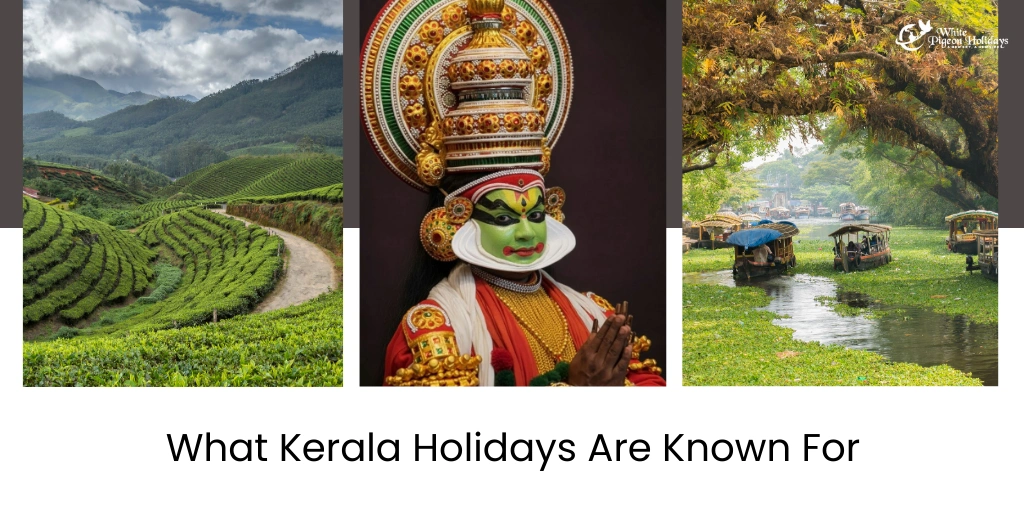
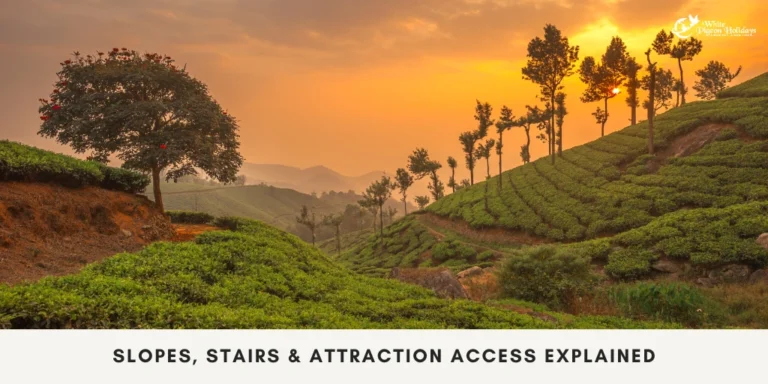
Yes, Kerala has hill regions such as Munnar and Wayanad. But that doesn’t mean spending the day climbing steep paths or tackling challenging hikes.
Some locations have gentle slopes, but they are usually manageable and can often be adapted to your comfort level.
If walking uphill is uncomfortable, your itinerary can easily be adjusted with shorter stops, closer drop-off points, or alternative experiences that involve little walking. Nothing is compulsory, and Kerala can be enjoyed at your own pace.
🚤 The Backwaters: Kerala’s Most Relaxed Experience
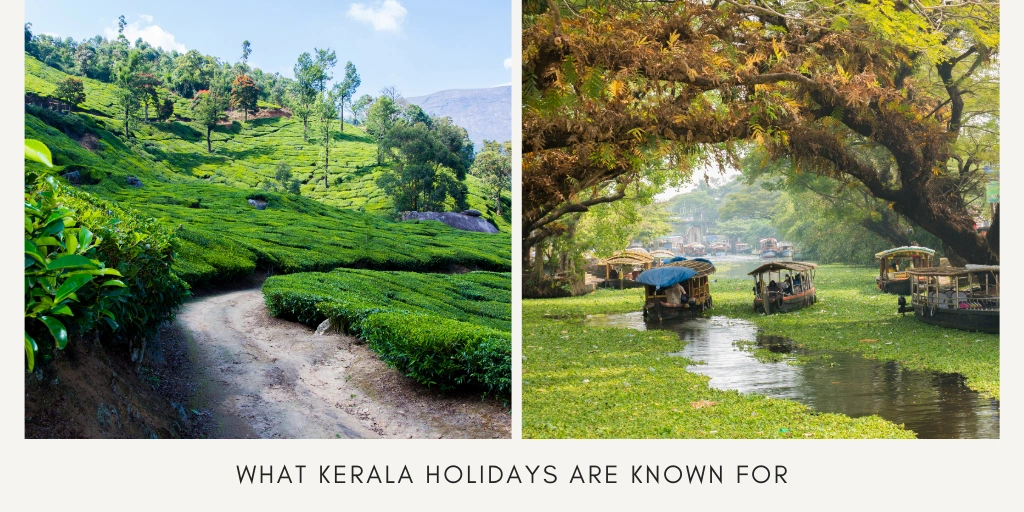
For many senior travellers, places like Alleppey and Kumarakom are where the pace naturally slows down and the holiday starts to feel effortless.
The backwaters are often the point in the trip where concerns about walking fade into the background. Instead of focusing on distances, travellers find themselves enjoying the views, the slower pace, and the peaceful surroundings.
Is Kerala Accessible for Wheelchair Users?
Some parts of Kerala have made real accessibility improvements. Others haven’t.
What works well:
- Alleppey Beach — India’s first disabled-friendly beach, with ramps and trained staff
- Fort Kochi — raised platforms for Chinese fishing nets viewing, ramps at heritage sites
- Kovalam Beach — accessible pathways and seating
- Houseboat cruises — some operators have ramps and wider doorways, but you need to call ahead
What to be careful about:
- Many temples have uneven stone floors and narrow doorways
- Hillside resorts in Munnar often have steps between rooms and common areas
- Some Thekkady jetties have a short flight of stairs to board boats
If wheelchair access matters, always confirm with the specific property or operator before booking — not the booking platform. Call them directly.
🦌 Wildlife Experiences Are Often Easier Than People Expect
Many travellers hear “wildlife sanctuary” and imagine long walks through forests. In places like Thekkady, the reality is often much more relaxed.
If a particular activity feels too active, it’s perfectly fine to skip it. Many travellers enjoy Kerala’s wildlife areas through boat rides, viewpoints, and scenic drives without spending much time on their feet.
How Difficult Is It to Board a Kerala Houseboat?
This is one of the most under-answered questions for senior travelers — and it matters.
Getting onto a houseboat usually involves one of these:
- Stepping from a low jetty directly onto the deck (1–2 steps, manageable for most)
- Stepping across a small plank or bridge (needs balance and confident footing)
- In some cases, a short ramp if the operator has arranged it
The boarding moment is the trickiest part of the whole experience.
Once you’re on board, the boat itself is flat, shaded, and completely relaxing.
What to do: Tell your tour operator about any balance or mobility concerns before the trip. A good operator will select a houseboat that has easier boarding, or arrange for staff to assist.
Don’t find out at the jetty.
🏛️ Kochi: Easy to Explore at Your Own Pace
Many seniors enjoy Kochi because sightseeing here feels relaxed rather than demanding. Exploring areas like Fort Kochi is more about wandering, people-watching, and soaking in the atmosphere than covering long distances.
One of Kochi’s biggest advantages is flexibility. You can walk for ten minutes, stop for a coffee, enjoy the views, and continue whenever you’re ready. The experience adapts to your pace, not the other way around.
Which Kerala Attractions Have the Most Stairs?
Most Kerala attractions are gentler than people expect. But a few are worth flagging:
Higher stair involvement:
- Mattancherry Palace (Kochi) — some interior stairs, though the main areas are flat
- Certain hilltop viewpoints in Munnar — optional, and most can be skipped
- Some temple sanctums — steps at the entrance are standard across most temples
- Jatayu Earth Centre — requires a cable car or climbing (usually skipped on senior itineraries)
Low or near-zero stairs:
- Backwater boat rides — almost entirely flat
- Tea garden walks — gentle slopes, no stairs
- Kathakali show venues — usually flat or ramp-accessible
- Most resort dining areas — depends on property, worth checking
The key word here is “optional.” Every high-stair spot in Kerala has a workaround — a different viewpoint, a closer drop-off, or simply staying at the base and enjoying the view from there.
🪜 Concerned About Stairs? Here’s What Most Seniors Find in Kerala
One of the most common questions we hear is about steps and staircases. The good news is that Kerala is generally easier to navigate than many travellers expect.
Unlike some destinations known for large forts and extensive staircases, Kerala’s attractions are often more accessible and easier to enjoy at a comfortable pace.
At temples, cultural sites, and viewpoints, it’s perfectly normal to enjoy only the accessible areas. You don’t need to climb every staircase to have a rewarding Kerala experience.
🚗 Want an Even More Comfortable Kerala Trip? It’s Easier Than You Think
The comfort of a Kerala tour often comes down to how it’s planned. Small choices can make a noticeable difference to your daily energy levels.
Most discomfort comes from trying to fit too much into each day—not from Kerala itself. A relaxed itinerary with sensible travel times is usually all that’s needed for a comfortable and enjoyable experience.
Is Munnar Suitable for Seniors With Knee Problems?
Yes — with the right plan.
The common worry is hills. Munnar is a hill station, so people assume it means climbing. It doesn’t have to.
Here’s what Munnar actually looks like on a senior itinerary:
- You drive up to viewpoints by car — the viewpoint is the destination
- Tea gardens have flat walking paths if you want a short stroll
- Eravikulam National Park has a short, paved walking trail — doable with knee concerns, but optional
- Top Station is a drive-up viewpoint — no climbing needed
Where knees actually matter in Munnar: getting in and out of vehicles on mountain roads. If you’re doing a long day of 4–5 stops, repeated bending to enter a low car seat adds up.
A higher vehicle (like a small SUV or an Innova-style car) makes this much easier.
Ask your operator specifically for a high-entry vehicle if knee flexibility is limited.
💡 Who Benefits Most from Extra Planning?
Kerala is considered one of India’s more relaxed destinations, but some travellers benefit from a slower-paced itinerary and additional support.
In most cases, the solution isn’t avoiding Kerala—it’s choosing the right pace. With private transport, carefully selected hotels, and realistic sightseeing plans, many travellers enjoy Kerala comfortably regardless of age.
Breakthrough Question
Will I need to climb a lot of stairs during a Kerala tour?
Most popular Kerala experiences involve minimal stair climbing. Backwater cruises, scenic viewpoints, cultural shows, and many resorts can be enjoyed with limited physical effort. Seniors may encounter some steps at temples, historic sites, and certain viewpoints.
Are Kerala’s hill stations difficult for seniors to explore?
Not usually. Destinations like Munnar offer many viewpoints, tea gardens, and scenic drives that can be enjoyed without long walks, although some attractions may include gentle slopes.
Which Kerala experiences require the least walking?
Houseboat cruises, backwater resorts, wildlife boat rides, Kathakali performances, and scenic coastal stays are among the easiest experiences for travellers who prefer minimal walking.
Can Kerala be enjoyed if I have knee or mobility concerns?
Yes. Many senior travellers choose Kerala because itineraries can be adapted with private transport, shorter walks, regular rest stops, and accommodation close to major attractions.
Should I avoid Kerala if I am not comfortable with hills and slopes?
No. While some destinations have inclines, most visitors can enjoy Kerala comfortably by focusing on accessible viewpoints, backwaters, coastal areas, and senior-friendly sightseeing options.

So… is Kerala Manageable For Seniors Worried About Walking?
Yes.
And not just “yes” — it’s one of the easiest regions in India for seniors.
The key point is this:
In Kerala, most walking is optional.
Comfort comes from planning, not physical strength.
Age alone is not the deciding factor.
How the trip is designed is.
Want to Avoid Physical Surprises Altogether?
Every Senior’s Mobility Is Different.
Two People Of The Same Age Can Experience The Same Place Very Differently.
That’s Why Understanding Your Comfort And Mobility Level Before Planning Can Save A Lot Of Regret Later.
Instead Of A Self-Check, We Can Help You Understand What Level Of Walking, Transfers, And Pace Will Actually Suit You.
Discuss Your Kerala Mobility Fit In A Consultation
Final Thought (From Someone Who’s Seen Hundreds of Senior Trips)
Kerala doesn’t demand stamina.
It rewards knowing your limits and respecting them.
When expectations are clear, Kerala feels gentle, reassuring, and deeply enjoyable — exactly what most seniors want from travel at this stage of life.
If you want, next we can go even more specific —
which exact places to skip, which hotels make walking easier, or how to design a “mostly seated” Kerala itinerary.
🚶 Kerala Walking & Accessibility FAQs
How many steps are there at a typical Kerala temple?
Most temples have 5–15 entrance steps. Once inside, the main courtyard is generally flat. Larger temples may have additional steps, but many famous temples restrict access beyond the outer courtyard for non-Hindu visitors.
Can I visit Kerala if I cannot walk more than 10 minutes?
Yes. Kerala is ideal for relaxed travel. Most sightseeing involves short walks with cafés, benches and shaded rest areas nearby. Inform your guide beforehand so the itinerary includes regular breaks.
Do I need to remove footwear at many places?
Yes, at temples. Slip-on sandals or shoes make this much easier, especially for travellers with knee or back issues.
Is Thekkady difficult for seniors?
No. The main attraction is the Periyar boat safari, which involves almost no walking. Optional forest walks can simply be skipped.
Will hotels have lifts?
Modern resorts usually have elevators. Heritage properties and smaller homestays may not. Request a ground-floor room when booking if needed.
Is Kerala easier than Rajasthan or Goa?
Generally yes. Kerala focuses on scenic drives, houseboats and short walks, while Rajasthan often involves forts with long staircases.
What's physically the hardest part of a Kerala trip?
Usually getting in and out of the vehicle multiple times a day. Choosing a comfortable vehicle and allowing more time between stops makes a noticeable difference.
Can I still enjoy Munnar if I should avoid hills?
Yes. Most viewpoints are just a few minutes from the parking area, and many of Munnar's famous landscapes can be enjoyed directly from the roadside.
Are there slippery or uneven areas?
Some temple courtyards and heritage streets in Fort Kochi can become slippery after rain. Good non-slip footwear is recommended.
Can I enjoy Kerala if I use a walking stick?
Absolutely. Most popular tourist sites have flat paths, paved walkways and accessible boat jetties. Only a few historic areas have uneven stone surfaces.