
Before We Talk About Destinations, We Usually Talk About Concerns
When someone from the United States contacts White Pigeon Holidays for the first time, the conversation rarely begins with sightseeing plans.
It usually begins with questions about safety, health, connectivity, travel conditions, and what to expect on arrival.
These questions are important because they reflect what travelers genuinely think about before committing to an international journey.
• Can we drink water safely during the trip?
• Will mobile phones and internet work reliably?
• What happens if a flight is delayed?
• Is the weather too extreme during travel dates?
Many of these concerns do not appear in brochures, yet they often influence travel decisions more than the itinerary itself.
Instead of offering short answers, we focus on clear explanations based on destination, season, and travel style.
Understanding concerns first helps create more confident and comfortable travel planning.
Is India Safe For American Travelers?
This is almost always the first question we hear from travelers planning their visit to India.
Millions of international travelers visit India every year and complete their journeys without serious issues, but experiences vary depending on planning, location, and travel style.
India is a large and diverse country, and travel experiences can differ significantly between regions.
• Rajasthan involves longer road journeys between destinations
• Delhi includes busy urban areas and high activity zones
• Smaller towns often provide quieter and calmer surroundings
Because of this diversity, we avoid giving one universal answer and instead focus on practical travel planning.
This includes selecting suitable hotel locations, arranging reliable airport transfers, working with trusted local partners, and designing realistic travel schedules.
In our experience, traveler confidence comes not only from the destination, but from how well the journey is planned.
Will I Get Sick From The Food?
This is a question many travelers ask with understandable concern before visiting India.
Most travelers enjoy Indian cuisine without any issues, but adjusting to new food after a long international flight should be done gradually.
We usually recommend starting with freshly prepared meals at reputable hotels or well-known restaurants during the first day or two.
• Allow your body time to adjust after travel
• Start with familiar, mild dishes initially
• Gradually explore regional cuisine as comfort increases
There is no need to rush into trying every spice or regional specialty on the first day.
Enjoying local food should feel like part of the experience, not something that creates stress or discomfort.
Good travel planning includes not only where you eat, but how comfortably you adjust to it.
How Much Cash Should We Carry?
India has seen a major shift toward digital payments over the past decade, especially in cities and tourist destinations.
Most hotels, restaurants, shopping centres, and larger establishments accept cards and digital payment methods.
However, carrying some cash in Indian Rupees is still useful for small, everyday expenses during travel.
• Small cafés and tea stalls
• Tips for drivers and hotel staff
• Minor purchases during sightseeing stops
• Select public conveniences in smaller areas
You do not need to carry large amounts of cash. A modest backup amount is usually sufficient for most situations.
Digital payments handle most of the journey, while a small amount of cash simply adds convenience.
Can We Use Our Credit Cards Almost Everywhere?
This is one of the most common questions from international travelers planning a trip to India.
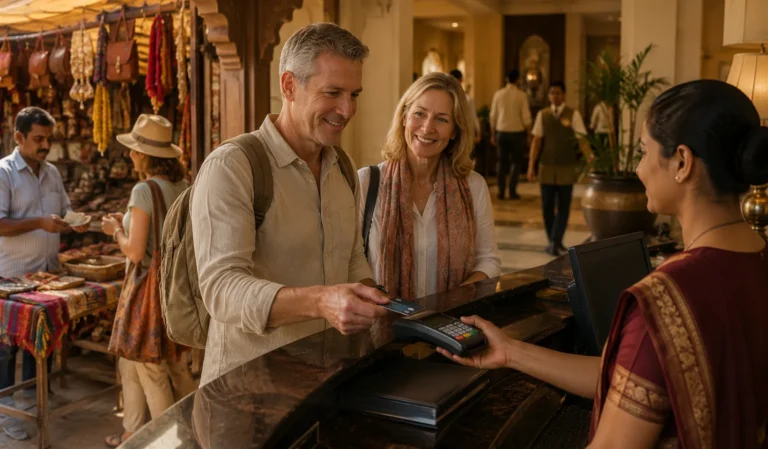
Credit cards are widely accepted in hotels, larger restaurants, shopping centres, and established businesses across most major cities.
However, acceptance is not universal, especially in smaller or local establishments.
• Local markets often operate on cash or digital wallets
• Street vendors typically do not accept cards
• Rural or remote areas may have limited card infrastructure
For this reason, carrying a reasonable amount of Indian currency alongside your cards is recommended.
A combination of cards and local cash ensures smoother day-to-day travel without interruptions.
Will Our Mobile Phones Work In India?
In most cases, yes. Modern smartphones generally work without issues in India.
Connectivity is widely available in cities and major tourist destinations, although performance may vary depending on location and network coverage.
Before travelling, it is recommended to check international roaming options with your mobile service provider.
• Local SIM cards are widely used by travelers
• eSIM options are often more convenient for short and long stays
• Hotel Wi-Fi is generally available in most accommodations
Many travelers choose local SIMs or eSIMs because they are often more cost-effective during longer trips.
Staying connected in India is usually straightforward with a bit of pre-travel preparation.
What About Jet Lag?
Jet lag is one of the most commonly underestimated aspects of long-distance travel from the United States to India.
Travelers react differently to time zone changes—some adjust quickly, while others need more time to feel fully rested.
Because of this variation, arrival days are generally planned with a relaxed approach rather than a packed schedule.
• Rest time is prioritized after international flights
• Sightseeing begins after adequate recovery
• Mornings following arrival feel more comfortable
While some travelers initially prefer a more active start, many later appreciate the slower beginning once they experience the journey.
A well-planned arrival is not about doing more—it is about feeling ready to enjoy what comes next.

Should We Be Worried About Traffic?
India’s traffic conditions can feel very different from what many American travelers are accustomed to.
City travel times can vary significantly depending on traffic density, weather, local events, and time of day.
That is why itineraries are not designed around ideal or best-case travel durations.
• Breaks for meals, photography, and rest are considered
• Routes may be adjusted based on local conditions
• Flexible scheduling helps reduce travel stress
By planning around real travel conditions instead of theoretical timings, journeys remain more comfortable and less rushed.
Good planning does not eliminate traffic—it ensures traffic does not control the experience.
What Should We Wear?
Clothing choices in India depend on both season and destination, and small adjustments can make travel more comfortable.
We usually provide destination-specific guidance before departure so travelers know what to expect in different regions and climates.
• Layered clothing for winter mornings in North India
• Comfortable walking shoes for sightseeing days
• Modest clothing for religious and cultural sites
• Footwear that can be easily removed when required
Practical clothing choices often make long sightseeing days significantly more comfortable.
The goal is not to change personal style, but to ensure comfort throughout the journey.
Is English Widely Spoken?
In most tourism-related situations, yes. English is commonly understood in major travel environments across India.
Communication is generally smooth in hotels, airports, guided tours, restaurants, and transport services that work with international travelers.
India has many regional languages, but visitors in popular destinations rarely face communication challenges in day-to-day travel situations.
• Airport assistance teams communicate in English
• Licensed guides work with international travelers regularly
• Drivers familiar with tourism routes understand basic communication needs
In well-planned itineraries, language is rarely a barrier to a comfortable experience.
Do We Need Travel Insurance?
We strongly recommend travel insurance for all international trips.
The recommendation is not based on expecting problems, but on preparing for situations that can occasionally occur during long-distance travel.
International journeys may involve unforeseen situations such as delays, medical needs, baggage issues, or itinerary disruptions.
• Unexpected medical situations
• Lost or delayed baggage
• Trip interruptions or schedule changes
Travel insurance provides additional confidence and support during such situations, especially on long international itineraries.
It is a simple step that adds an important layer of protection and peace of mind.
What Happens If Our Flight To India Is Delayed?
This is a very common and practical concern, especially for travelers flying from major U.S. cities such as New York, Chicago, Dallas, or Los Angeles.
International journeys often involve long travel times and multiple connections, so delays can occasionally happen even with well-planned itineraries.
If there is a significant delay, the operations team reviews the situation and coordinates with all relevant service providers.
• Hotels are informed if check-in needs to be adjusted
• Local operations teams monitor the situation in real time
• Itinerary adjustments are made if the next day is affected
The objective is to ensure travelers do not need to manage coordination themselves while traveling.
When you arrive after a long journey, everything should already be in place.
Will Somebody Actually Be Waiting At The Airport?
Yes. For first-time visitors, airport arrival is designed to be simple and stress-free.
Airport representatives and drivers are assigned in advance and already have access to your flight details before your arrival.
Even if immigration or baggage collection takes longer than expected, the airport team remains informed and prepared.
• Flight details are shared in advance with the pickup team
• Waiting arrangements account for immigration delays
• Coordination continues until the traveler is safely met
This preparation ensures that travelers are not left managing logistics after a long international journey.
A smooth arrival begins with coordination long before the flight lands.
What If I Need Medical Help During The Tour?
This is a concern many travelers prefer not to think about before departure, but it is a practical and important question.
If travelers require regular medication, it is always recommended to carry sufficient supplies for the entire trip along with a copy of the prescription when applicable.
Before the journey begins, we also request relevant medical information to ensure better planning and preparedness if assistance is ever required.
• Mobility limitations or accessibility needs
• Serious allergies or medical sensitivities
• Regular medication requirements
This information is not collected with the expectation of medical issues, but to ensure better preparedness if situations arise during travel.
Preparation allows support to be faster, clearer, and more effective when it matters most.
Can We Drink The Tap Water?
Our guidance on this is very simple and consistent for all travelers.
We recommend avoiding tap water and using bottled or properly filtered water throughout the journey.
Safe drinking water is widely available across hotels, restaurants, and tourist destinations in India.
• Most hotels provide safe drinking water options
• Restaurants serving international travelers follow standard hygiene practices
• Carrying sealed bottled water is the most reliable option during travel
This simple precaution quickly becomes a natural part of daily travel routines and helps avoid unnecessary health concerns.
Small daily habits often contribute the most to a comfortable travel experience.
Will We Feel Overwhelmed?
The honest answer is that some travelers may feel a little overwhelmed during the first day or two, especially after a long international journey.
India is vibrant, energetic, and visually rich, which can feel like a significant change compared to what many first-time visitors are used to.
This feeling usually settles quickly as travelers adjust to the rhythm of different destinations.
• Rajasthan includes longer journeys between destinations
• Jaipur combines culture, traffic, and historical sites
• Rural regions feel quieter and more open
India is not one uniform experience—it is a collection of very different travel environments.
Do We Need To Bargain While Shopping?
Shopping in India varies depending on where you are and what you are buying.
Fixed prices are common in malls, branded stores, and government-run emporiums, while local markets often follow a more flexible pricing approach.
• Negotiation common in local markets and bazaars
• Handicrafts and souvenirs may involve bargaining
• Pricing norms vary by destination and shop type
If bargaining feels unfamiliar, travelers are not expected to master it immediately or participate in every situation.
Understanding local context is more important than perfect negotiation.
Will We Have Time To Relax?
Many travelers ask this question after reviewing their itinerary for the first time.
A well-planned India itinerary is not only about sightseeing—it also includes space for rest and unstructured time.
While some days may begin early for specific experiences such as sunrise visits, the overall journey is designed with balance in mind.
• Free afternoons to rest or explore at your own pace
• Time to enjoy hotels, lakes, and scenic surroundings
• Balanced pacing between travel and leisure
Most travelers remember how a trip felt, not how tightly it was scheduled.
Should We Pack For Every Possible Situation?
Many travelers feel the need to prepare for every possible scenario before arriving in India.
In reality, most essentials are readily available across major travel destinations, making overpacking unnecessary.
• Weather-appropriate clothing based on season
• Personal medications and basic essentials
• Travel documents and identification
• Universal power adapter for devices
Once the journey begins, most additional needs can be managed easily with local availability.
Thoughtful packing improves comfort—overpacking does not improve travel.
How Far In Advance Should We Book?
Booking timelines can significantly influence availability, flexibility, and overall travel planning experience.
Early planning is especially useful for travelers with fixed dates, preferred hotels, or those traveling during peak seasons.
It allows more time to design a comfortable itinerary instead of making rushed decisions close to departure.
• More flexibility in domestic flight selection
• Smoother itinerary planning process
• Reduced last-minute scheduling pressure
In most cases, earlier planning leads to a more relaxed and well-balanced travel experience.
What If Something Doesn’t Go According To Plan?
Travel is naturally unpredictable, and small changes are part of almost every journey.
Delays, weather changes, traffic conditions, or personal preference adjustments are normal parts of travel experiences.
What matters more than the change itself is how effectively it is managed.
• Local teams coordinate changes across services
• Hotels and drivers are updated immediately
• Alternatives are considered before decisions are made
The goal is to ensure that changes do not affect the overall comfort or experience of the journey.
Travelers usually remember how smoothly changes were handled, not the changes themselves.
Looking Back, The Questions Matter Just As Much As The Answers
Over the years, while planning tours for travelers from the United States, Canada, and other countries, we have noticed a clear pattern in early conversations.
The first discussion is rarely about sightseeing plans—it is about confidence, comfort, and clarity before traveling to a new country.
Travelers want to understand how daily logistics work and what level of support they can expect throughout the journey.
• Will support be available if something changes?
• How will transportation and hotels be coordinated?
• What happens if plans need adjustment during the trip?
We encourage these questions because they help create clarity before the journey begins rather than uncertainty after arrival.
In our experience, informed travelers arrive with more confidence and enjoy the journey with greater ease.