What Foreign Travelers Get Wrong About Rajasthan (And What’s Actually True)
Most concerns foreign travelers carry about Rajasthan were formed before they ever researched Rajasthan specifically.
They came from general India coverage, outdated forum posts, or someone’s second-hand experience from 2009.
This page cuts through that.
Not to sell you on going — but to give you the honest picture so you can decide with your eyes open.
Not Sure If Rajasthan Is Right for You?
Book a free 20-minute call — ask real questions, get honest answers.
Right Itinerary
Match cities to your travel style
Budget Clarity
Know what to expect before you decide
Best Time to Go
Honest advice on seasons & weather
Reserve your free consultation slot
Myth 1: Rajasthan Is Dangerous for Foreign Travelers
This is the most widespread myth — and it comes from a real source.
When international media covers India, it rarely separates regions.
A crime story from a city in a completely different state gets absorbed into a single mental image: “India is unsafe.”
Rajasthan then gets folded into that image without context.
What’s actually on the ground:
Rajasthan has hosted international tourists at significant scale for over four decades.
Jaipur, Udaipur, Jodhpur, Jaisalmer, and Pushkar all have dedicated tourist police units — not tourist-friendly branding, but actual uniformed officers assigned specifically to tourist zones.
Most heritage hotels, especially those in the mid-range and above, train staff explicitly for international guests.
Licensed guides are registered with the Rajasthan Tourism Department and carry verifiable ID.
Where the real risks exist:
Like any destination, Rajasthan has areas that are better managed than others.
Crowded markets in peak season attract petty theft — pickpocketing is the most common concern, not violence.
Unlicensed “guides” who approach travelers outside major monuments do exist — they’re more likely to waste your time than harm you, but avoiding them is simple: book guides through your hotel or through verified platforms.
Who does Rajasthan suit well for safety?
- Solo female travelers who want a structured itinerary with pre-booked transport and accommodation
- First-time India visitors who travel with a guide for at least the first few days
- Families with children, given the region’s relatively slower pace compared to metro cities
Who should be extra cautious?
- Budget backpackers traveling without any fixed plan and staying in very low-cost accommodation in poorly reviewed areas
- Anyone traveling in remote rural areas without local contacts or phone network
The honest answer to “Is Rajasthan safe for foreigners?” is: yes, for structured travel — with the same alertness you’d apply anywhere unfamiliar.
Myth 2: You’ll Get Sick the Entire Time
This fear is extremely common among travelers from the US, UK, Australia, and Europe.
It isn’t imaginary — digestive upset from travel is real, especially when you’re switching from one food system to another.
But the version most people imagine — being bedridden for days, unable to leave the hotel — is far from the typical experience.
What actually happens to most foreign visitors:
According to travel medicine research, roughly 30–70% of international travelers to South Asia experience some form of traveler’s diarrhea — most cases are mild and resolve within 1–2 days without medical treatment.
The key variable isn’t Rajasthan specifically — it’s food choices, water discipline, and how carefully you transition.
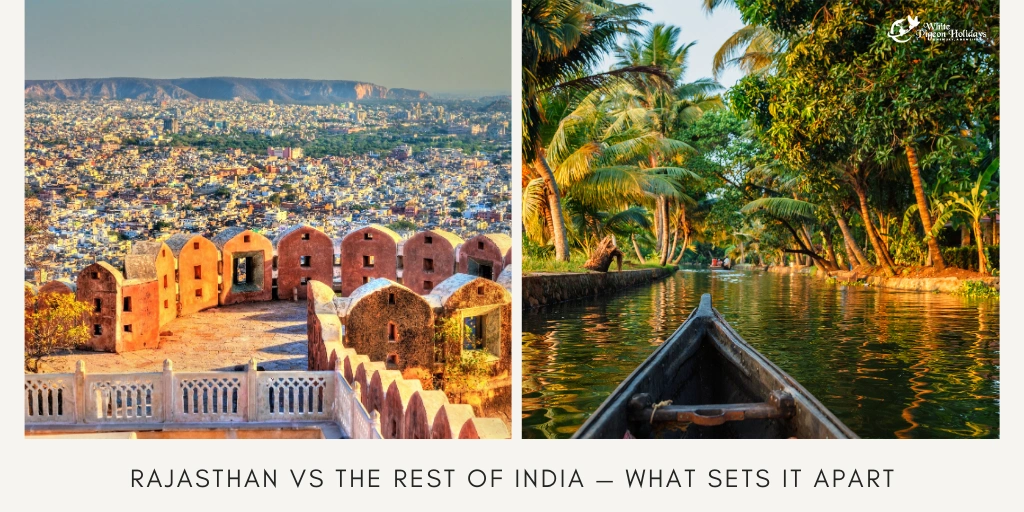
Kerala vs Other India Honeymoon Destinations
If you're choosing between options, here's how Kerala compares:
| Destination | Vibe | Best For | Avoid If |
|---|---|---|---|
| Kerala | Slow, green, water-based | Couples wanting relaxation | You want history and palaces |
| Rajasthan | Royal, cultural, dramatic | Heritage lovers | You're sensitive to heat + crowds |
| Goa | Beach, party, laid-back | Short trips, beach lovers | You want something deeper |
| Himachal/Uttarakhand | Mountains, adventure | Active couples | You prefer coastal/warm weather |
For couples who want a comfortable, low-stress first India trip, Kerala is usually the best starting point.
Kerala
Rajasthan
Goa
Himachal/Uttarakhand
For couples who want a comfortable, low-stress first India trip, Kerala is usually the best starting point.
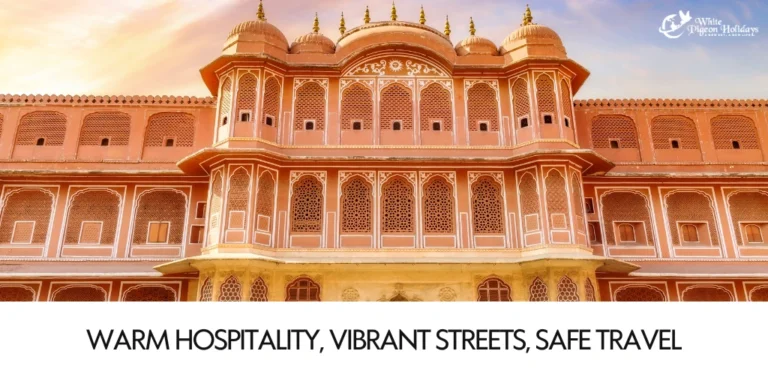
Myth 3: Rajasthan Is Just Palaces, Camels, and Desert
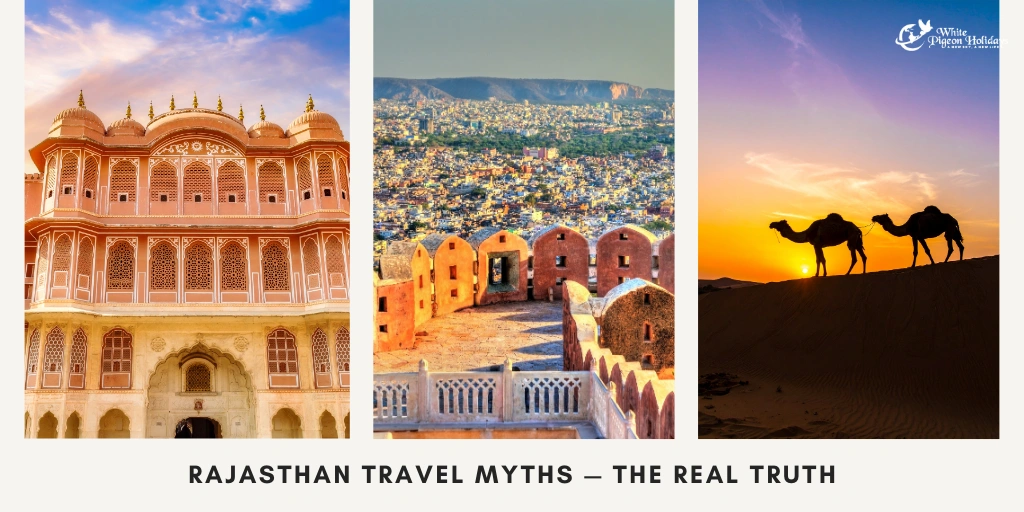
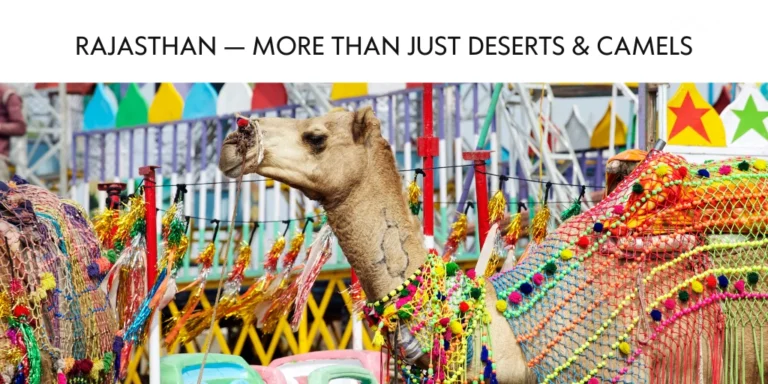
Travel photography has created a very specific visual shorthand for Rajasthan.
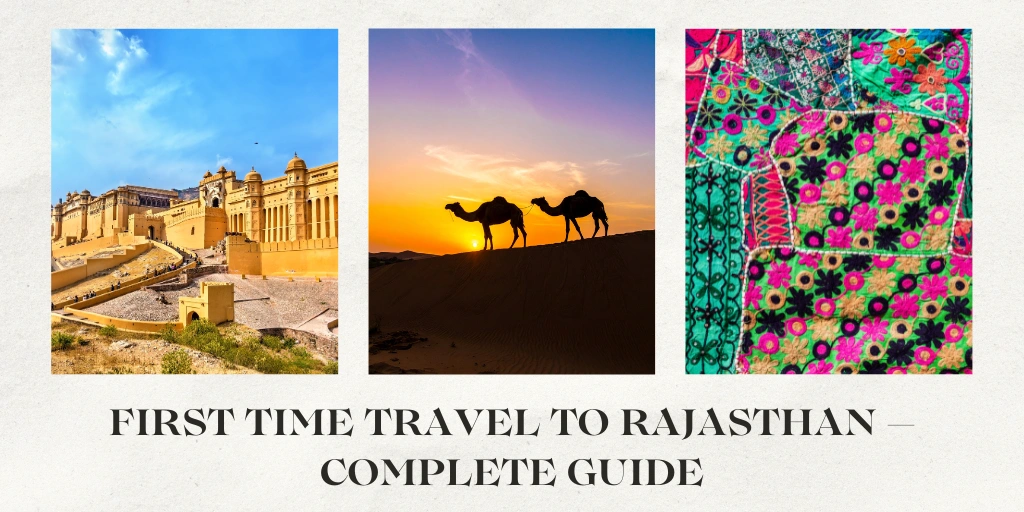
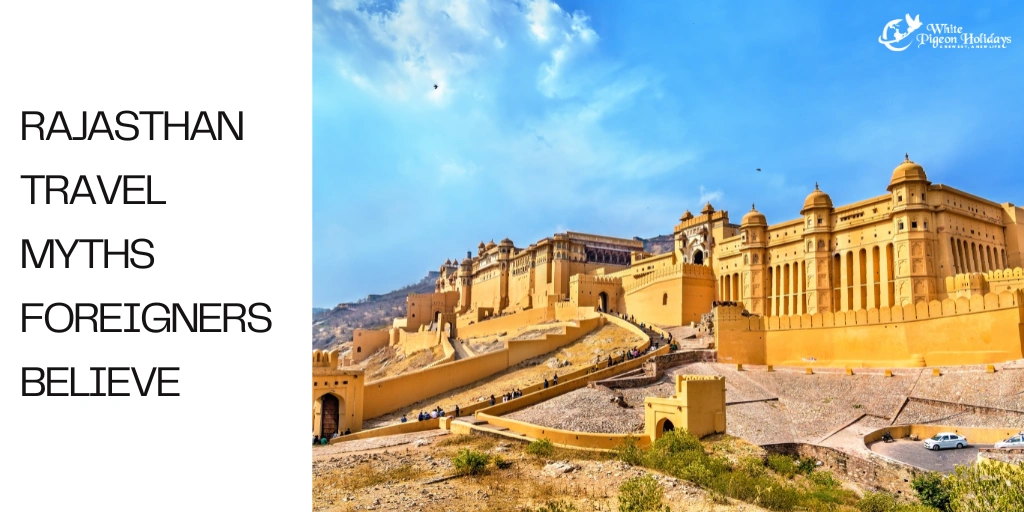
Amber Fort at golden hour.
A camel silhouetted against dunes.
Women in bright red fabric.
These images are real — but they’re not the whole story, and they’ve created a false sense that Rajasthan is essentially a museum destination without daily life.
What Rajasthan actually contains:
Living cities, not preserved exhibits
Jodhpur’s old city is still fully inhabited.
Families live inside 500-year-old havelis (traditional mansions).
Workshops producing blue pottery, block print textiles, and silver jewelry are working businesses, not demonstrations.
Landscape variety most visitors don't expect
| Region | Landscape | What It Offers |
|---|---|---|
| Eastern Rajasthan (Ranthambore, Alwar) | Forest and hills | Wildlife safaris, jungle lodges |
| Southern Rajasthan (Udaipur, Kumbhalgarh) | Lakes and Aravalli hills | Trekking, heritage, water landscapes |
| Central Rajasthan (Ajmer, Pushkar) | Plateau and semi-arid | Pilgrimage culture, camel fair |
| Western Rajasthan (Jaisalmer, Barmer) | Thar Desert | Sand dunes, border culture, tribal crafts |
Cultural depth beyond sightseeing
Rajasthan has one of India's strongest living folk traditions.
Manganiyar musicians from the desert communities perform music that has influenced world music circles.
The Pushkar Camel Fair (November) is one of the largest livestock fairs on earth — not a tourist show, but a functional market that tourists happen to attend.
Mewar and Marwar kingdoms left behind distinct visual identities in architecture, jewelry, and textile — still visible in everyday life.
Eastern Rajasthan (Ranthambore, Alwar)
Southern Rajasthan (Udaipur, Kumbhalgarh)
Central Rajasthan (Ajmer, Pushkar)
Western Rajasthan (Jaisalmer, Barmer)
Cultural depth beyond sightseeing
Rajasthan has one of India's strongest living folk traditions.
Manganiyar musicians from the desert communities perform music that has influenced world music circles.
The Pushkar Camel Fair (November) is one of the largest livestock fairs on earth — not a tourist show, but a functional market that tourists happen to attend.
Mewar and Marwar kingdoms left behind distinct visual identities in architecture, jewelry, and textile — still visible in everyday life.
Get Your Custom Rajasthan Itinerary
Not sure which part of Rajasthan fits your interests and travel time? We'll map out a day-by-day plan based on what you actually want to see — not a generic circuit.
Right Cities for YouSkip the places that don't match your pace or interests
Day-by-Day BreakdownKnow exactly where to go and how many nights
Fits Your BudgetPlanned around what you're comfortable spending
Logical RouteNo backtracking, no wasted travel days
Tell us about your trip — we'll do the rest
Myth 4: Rajasthan Is Overwhelming and Chaotic
The word “chaotic” appears in almost every generic India travel warning.
And India’s major metros — Delhi, Mumbai — do require a mental gear shift from what most Western travelers expect.
But Rajasthan’s tourist circuit is structured differently.
How travel actually feels:
Most visitors to Rajasthan travel a relatively defined route: Delhi → Jaipur → Ranthambore → Pushkar → Jodhpur → Jaisalmer → Udaipur → back to Delhi or onward to Mumbai.
This Golden Triangle Plus circuit is so well-worn that every element — transfers, hotels, guides, ticketing — has been refined over decades.
What travelers usually say after arriving:
“I expected pure chaos.
The first day in Jaipur was busy, but by day two I had a rhythm.”
“Having a driver made the whole thing feel completely different from what I imagined.”
“The hotel staff knew exactly what I needed before I asked.”
This isn’t a marketing claim — it reflects the fact that Rajasthan’s tourist infrastructure exists specifically to absorb the gap between expectation and reality.
When does it actually feel overwhelming?
- Arriving in Delhi after a long-haul flight with no driver or pickup arranged
- Navigating a major market like Johari Bazaar alone without a guide on your first day
- Booking nothing in advance during peak season (October–March) and finding key sites crowded
These are planning decisions, not destination problems.
Myth 5: Rajasthan Is “Too Touristy” — Not Real India
This is a common sentiment in travel communities, especially among experienced independent travelers.
The idea is that Rajasthan has been packaged for Western tourists and doesn’t offer “authentic” India anymore.
It’s worth unpacking what this actually means.
What “real India” usually means to those who say it:
Unfamiliar places, low tourist infrastructure, few other foreigners, spontaneous experiences.
What Rajasthan actually is:
Rajasthan isn’t less real because it has tourist infrastructure — it’s real in a specific way.
The royal families who shaped Rajasthan’s identity are still involved in heritage hotels and cultural preservation.
Artisan communities in Bagru, Sanganer, and Barmer still produce block-printed textiles primarily for domestic Indian markets — not just tourism.
Religious life in Pushkar, Nathdwara, and Osian continues independently of tourist calendars.
The honest trade-off:
If you want destinations with almost no tourist infrastructure, you want rural Rajasthan — areas like Shekhawati (painted havelis region), Bundi, or Chittorgarh.
These are genuinely less visited, logistically more demanding, and require either a car with a driver or very flexible planning.
If you want comfort, clarity, and cultural depth together, the main Rajasthan circuit delivers that.
Neither is more or less “real” — they’re different experiences for different travel styles.
What the Right Preparation Actually Changes
Most negative Rajasthan travel experiences trace back to three things:
- No advance planning Rajasthan in peak season (November–February) requires hotel bookings weeks to months ahead.
- Popular sites like Amber Fort have timed entry slots now — showing up without a plan means waiting.
- No local support Having a local driver-guide combination — even for 3–4 days — transforms the experience.
- You spend less time figuring out logistics and more time actually being somewhere.
- Unrealistic expectations in both directions Some travelers expect paradise and get frustrated by ordinary imperfections.
- Some expect disaster and miss how comfortable the experience actually is.
- Both distortions cost you the trip.
Rajasthan Seasonal Reality Check
| Season | Months | Temperature | Crowd Level | Best For |
|---|---|---|---|---|
| Peak | Oct – Feb | 10°C – 25°C | High | Sightseeing, desert camping |
| Shoulder | March – April | 25°C – 38°C | Moderate | Budget travelers, fewer crowds |
| Off-season | May – June | 38°C – 45°C+ | Very Low | Budget deals, heat-tolerant travelers |
| Monsoon | July – Sept | 28°C – 35°C | Low | Green landscapes, Ranthambore (October reopening) |
The most common mistake: visiting in May–June without preparing for extreme heat.
The most underrated time: late September to early October — heat is dropping, rains have freshened the landscape, and crowds haven't arrived yet.
Peak
Shoulder
Off-season
Monsoon
The most common mistake: visiting in May–June without preparing for extreme heat.
The most underrated time: late September to early October — heat is dropping, rains have freshened the landscape, and crowds haven't arrived yet.
Rajasthan Budget & Season Planner
Unsure which month suits your budget and travel style? Get month-by-month cost estimates, crowd levels, and itinerary recommendations — free.
Budget Range
Per-person cost estimate for your month
Crowd Index
How busy each destination gets
Route Suggestion
Best circuit for your travel window
Share your details — we'll send your personalised planner
FAQs: Travelling to Rajasthan
Everything US and UK travellers commonly ask before planning a trip to Rajasthan.
Is Rajasthan safe for solo female travelers from the US or UK?
Yes, with structured planning. Solo female travelers do well in Rajasthan when they book accommodation in advance, use pre-arranged transport rather than hailing vehicles randomly, and stay in areas with good review histories. The main cities on the tourist circuit — Jaipur, Udaipur, Jodhpur — have visible tourist police presence. Dressing modestly (shoulders and knees covered) reduces unwanted attention in smaller towns and religious sites.
Do I need vaccinations before visiting Rajasthan?
The CDC recommends Hepatitis A, Typhoid, and routine vaccinations for India travel. Malaria is low-risk in most tourist areas of Rajasthan but prophylactics are sometimes recommended for rural areas. Consult a travel medicine clinic 4–6 weeks before departure.
Can I drink tap water anywhere in Rajasthan?
No. Tap water is not safe to drink for foreign travelers anywhere in Rajasthan. Bottled water (sealed) is available everywhere — hotel rooms, restaurants, shops, petrol stations. Budget approximately ₹20–30 per 1-litre bottle. Most hotels provide complimentary bottled water.
Is vegetarian food the only option in Rajasthan?
No. Rajasthan has a strong vegetarian food tradition, especially in cities with Jain communities like Jaisalmer and Bikaner. However, non-vegetarian food — chicken, mutton, fish in some cities — is widely available. Most heritage hotels and restaurants in tourist areas have both options clearly marked. Pork is rare; beef is not served.
How much does a 7-day Rajasthan trip cost for a foreign traveler?
Budget ranges vary significantly. A comfortable mid-range trip (3-star heritage hotels, private driver, guided sightseeing, meals) runs approximately USD 100–180 per person per day. Luxury trips (5-star palace hotels, private vehicles, curated experiences) run USD 350–700+ per person per day. Budget backpacker options exist from USD 40–60 per day but require flexible plans and tolerance for variable quality.
Is it necessary to hire a guide in Rajasthan?
Not mandatory, but strongly recommended for the major monuments. Guides at Amber Fort, City Palace, Mehrangarh, and similar sites provide context that is genuinely hard to replicate from audio tours or reading — the architectural stories, the royal family histories, the craftsmanship details. Most guides are licensed and available for ₹500–1,500 for a 2–3 hour tour.
How do I avoid tourist scams in Rajasthan?
The most common scams are gem investment schemes (in Jaipur), being told that your hotel "has burned down" and redirected to another property, and unlicensed tour operators at major entry points. Book hotels directly or through verified platforms. Confirm your hotel exists before arrival. Never buy gems as investment under any pressure. Any "recommended" shop from an auto-rickshaw driver or stranger typically involves a commission.
Can I travel Rajasthan independently without a guide or agency?
Yes. Many travelers do it independently using a rental car with driver, pre-booked accommodation, and apps like MakeMyTrip or Yatra for logistics. It requires more planning effort and works better for experienced travelers who have visited at least one other complex destination independently. First-time India travelers generally find agency-supported travel significantly less stressful.
Is Rajasthan accessible for senior travelers or those with mobility issues?
Partially. Most forts and palaces involve significant walking on uneven stone surfaces and steep staircases — Amber Fort, Mehrangarh, and Kumbhalgarh all require physical effort. Some palaces offer golf carts or chair alternatives for sections. Udaipur's lakeside areas and most hotel properties are more accessible. Inform your travel agent of specific mobility requirements so they can plan accordingly.
What's the best way to get between cities in Rajasthan?
Private car with driver is the most comfortable and flexible option for most tourists — costs roughly ₹12–18 per kilometer depending on vehicle type. Train travel is scenic and affordable but requires advance booking (trains fill up weeks ahead in peak season). Rajasthan has good train connectivity between Jaipur, Jodhpur, Jaisalmer, and Udaipur. Internal flights operate between Jaipur, Jodhpur, and Udaipur for those with limited time.
Is photography restricted at Rajasthan's major monuments?
Rules vary by site. Amber Fort allows photography freely. Some palaces charge a separate camera fee (₹50–200 for still cameras; more for video). Photography inside temples and certain private palace rooms is often restricted — look for signs or ask your guide. Photographing local people should always involve asking permission first, especially women in rural areas.