Most first-time visitors to India start with the same question: “Should I go to Rajasthan or somewhere else?”
It’s a fair question — and a genuinely difficult one, because India is not one travel experience.
It’s closer to ten different countries sharing a border.
This guide won’t push you toward Rajasthan.
It will tell you exactly what Rajasthan is, how it compares to other regions, and who tends to connect with it most — so you can decide with confidence.
Not Sure Where to Start Your India Trip?
Talk to Nitin Batra — a travel consultant with years of on-ground experience across India. One free call is all it takes to match the right region to your travel style, timeline, and budget.
No commitment. No sales pitch. Just honest advice to help you plan better.
Is Rajasthan a Country?
No — Rajasthan is not a country.
It is India’s largest state by area, located in the northwest of the country, bordering Pakistan to the west.
Many international travelers confuse it for a country because it has such a strong, distinct identity — its own visual culture, architecture, cuisine, and history that feel completely separate from what most people imagine when they think “India.”
But it is one state within a country of 28 states and 8 union territories.
Quick facts about Rajasthan:
- Area: 342,239 sq km — larger than Germany
- Population: approx. 81 million (2024 estimate)
- Capital: Jaipur
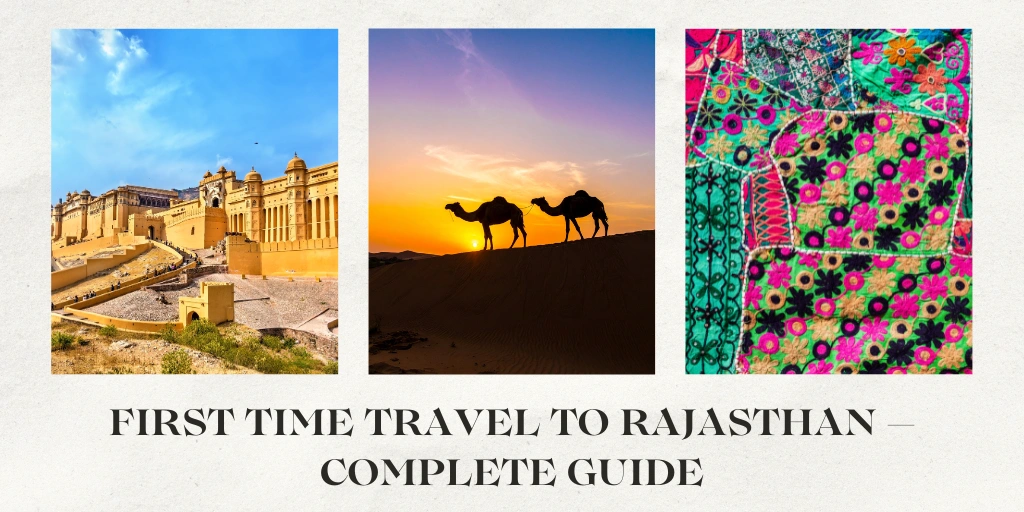
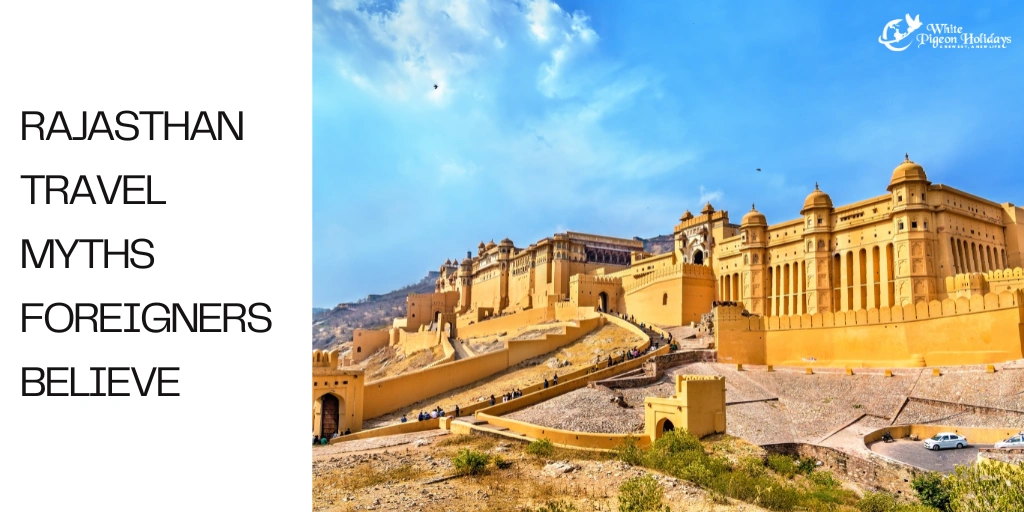
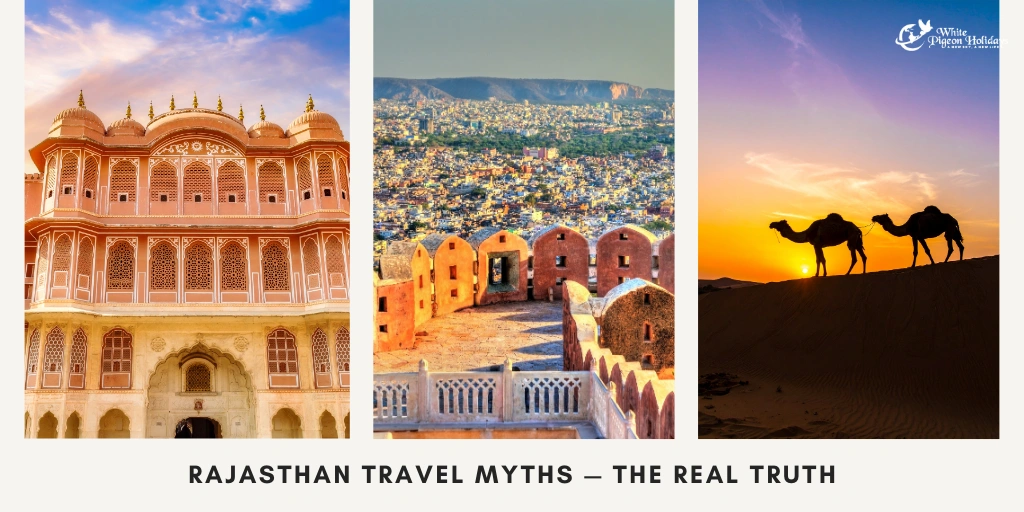
- Known for: Amber Fort, Mehrangarh Fort, Thar Desert, Lake Pichola, camel safaris, royal heritage hotels
- Languages: Hindi, Rajasthani
- Religion: Predominantly Hindu, with Jain and Muslim heritage sites
Understanding this context matters before you compare regions — because Rajasthan has more internal variety than many travelers expect.
Why India Feels Like Multiple Countries
India changes dramatically every few hundred kilometres.
This is not a cliché — it is practical travel information.
A traveller who visits Jaipur and then flies to Kochi will feel as though they’ve entered a different world. The food changes.
The language changes.
The architecture changes.
The climate changes.
Even the pace of daily life changes.
Here is a quick orientation of India’s major travel regions:
| Region | Character | Best Known For | Climate Type |
|---|---|---|---|
| Rajasthan (NW) | Royal, desert, historic | Forts, palaces, camels, heritage | Dry, extreme heat/cold |
| Kerala (SW) | Tropical, coastal, relaxed | Backwaters, Ayurveda, beaches | Humid, heavy monsoon |
| Himachal Pradesh (N) | Mountain, adventure | Trekking, temples, valleys | Alpine, cold winters |
| Goa (W) | Coastal, colonial, party | Beaches, churches, nightlife | Tropical, hot and humid |
| Tamil Nadu (S) | Temple culture, Dravidian | Ancient temples, classical arts | Hot, humid year-round |
| Uttarakhand (N) | Spiritual, mountain | Yoga, Rishikesh, Haridwar, Char Dham | Seasonal, alpine |
| West Bengal (E) | Colonial, literary, foodie | Kolkata, Darjeeling, Sundarbans | Hot, monsoon-heavy |
| Madhya Pradesh (C) | Wildlife, tribal heritage | Tiger reserves, ancient caves | Extreme heat in summer |
Rajasthan (NW)
Kerala (SW)
Himachal Pradesh (N)
Goa (W)
Tamil Nadu (S)
Uttarakhand (N)
West Bengal (E)
Madhya Pradesh (C)
Rajasthan vs South India: The Biggest Contrast
Most first-time visitors are choosing between Rajasthan and South India (Kerala, Tamil Nadu, or Karnataka).
These two are the most popular starting points — and they are almost opposites.
Architecture
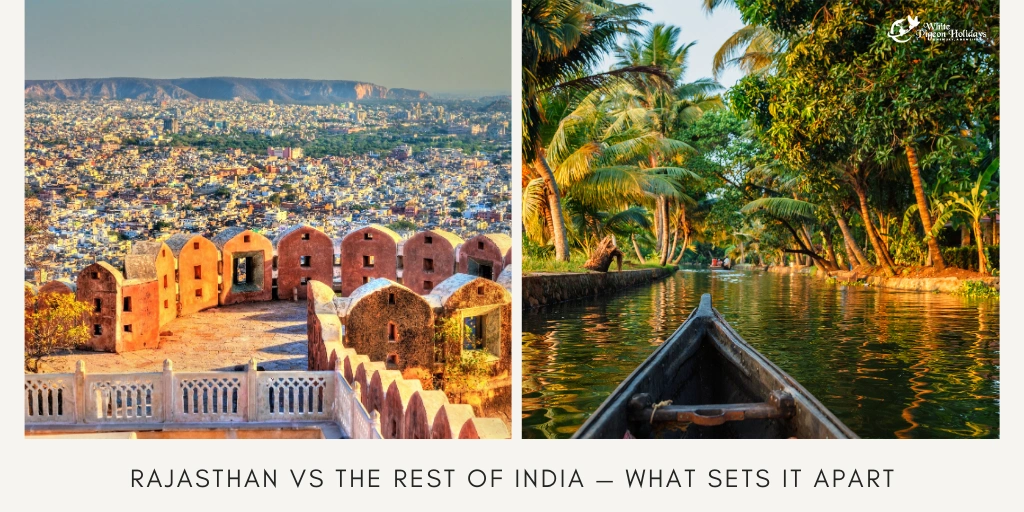
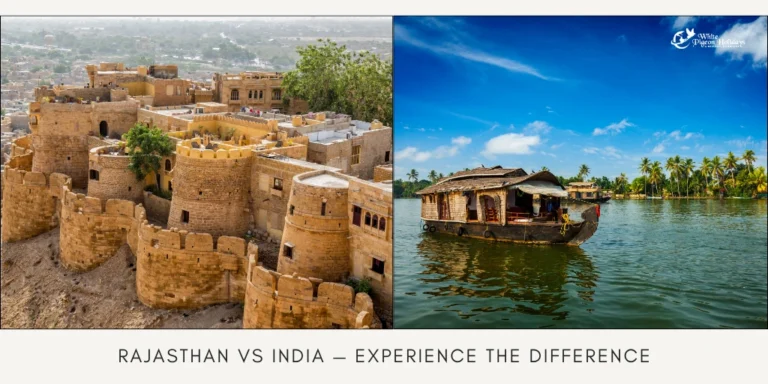
Rajasthan: Forts on hilltops, palaces with mirror work, havelis with intricate carvings, desert watchtowers. South India: Towering Dravidian temple gopurams, covered with thousands of carved deities, painted in vivid colour.
Landscape
Rajasthan: Sand dunes, rocky hills, dry riverbeds, walled old cities. South India: Lush backwaters, coconut groves, rice paddies, tropical forests.
Food
Rajasthan: Dal baati churma, laal maas, ghevar, bajra roti. Rich, heavily spiced, ghee-based. South India: Rice-based, coconut-forward, tamarind-soured. Idli, dosa, sambar, fish curry.
Who connects more with Rajasthan?
Travellers who love visible history, castle-style architecture, desert landscapes, and organized city exploration tend to prefer Rajasthan.
Who connects more with South India?
Travellers who want nature, tropical beauty, slower pace, Ayurvedic wellness, or boat-based exploration tend to prefer South India.
Important: Both are beginner-friendly. Neither requires experience. The choice is about your travel personality, not your comfort level.
Rajasthan vs North India (Golden Triangle vs Extended Circuits)
The Golden Triangle — Delhi, Agra, Jaipur — is India’s most popular tourist route.
Jaipur is in Rajasthan. So for many visitors, “North India” and “Rajasthan” overlap.
But the distinction matters when planning beyond the Golden Triangle.
| Factor | Delhi + Agra only | Full Rajasthan Circuit |
|---|---|---|
| Duration needed | 5–7 days | 10–16 days |
| Historical depth | Mughal empire focus | Rajput + Mughal + desert trade |
| Visual variety | High (Taj Mahal, Red Fort, Agra Fort) | Very high (7+ distinct cities) |
| Logistics | Easy, well-connected | Moderate (long drives between cities) |
| Crowd level | Very high at key sites | Varies by city |
| Budget range (mid) | ₹4,000–7,000/day | ₹5,000–10,000/day |
Duration needed
Historical depth
Visual variety
Logistics
Crowd level
Budget range (mid)
Which India Region Matches Your Travel Style?
Answer 5 quick questions and find the region built for you — culture, nature, food, adventure & more.
Your India region is almost ready!
Enter your details below to unlock your personalised region match & a curated trip idea.
What Makes Rajasthan Genuinely Different
1. History is architecture, not just museums
In Rajasthan, you don’t go to a museum to see history. You walk through it.
Mehrangarh Fort in Jodhpur rises 120 metres above the city.
Amber Fort outside Jaipur still has its original elephant path worn into the stone.
Jaisalmer Fort has 3,000 people living inside its 12th-century walls today.
This is rare anywhere in the world — and almost unmatched within India.
2. Cities were designed, not just built
Jaipur was planned in 1727 by Maharaja Jai Singh II, using principles from the ancient Vastu Shastra text.
The grid layout, the pink-coloured buildings, the wide main roads — all intentional.
Udaipur was built around two artificial lakes, with the royal palace designed to be reflected in the water.
This kind of intentional urban design creates a very different travel experience compared to cities that grew organically.
3. Heritage hotels that are actual palaces
Rajasthan has the highest concentration of palace hotels in the world.
You can stay in:
- Taj Lake Palace, Udaipur — built on an island in Lake Pichola in 1746
- Umaid Bhawan Palace, Jodhpur — still partially a royal residence
- Samode Palace, near Jaipur — 475-year-old haveli converted to a luxury property
These are not themed resorts. They are actual former royal residences.
4. Desert is not just dunes
Many travellers assume the Thar Desert means sand dunes everywhere. It doesn’t.
The dunes are concentrated around Sam Sand Dunes, near Jaisalmer.
The rest of Rajasthan is rocky plateau, scrub forest, and rolling hills.
Jaipur is green and urban. Udaipur is built around lakes. Mount Abu has forests and waterfalls.
The desert geography applies mainly to the western third of the state.
| City | Character | Don't Miss | Ideal For |
|---|---|---|---|
| Jaipur | Royal capital, busy, pink-walled | Amber Fort, Hawa Mahal, City Palace | First-timers, history lovers |
| Jodhpur | Blue city, dramatic fort | Mehrangarh Fort, Toorji Ka Jhalra | Photography, fort architecture |
| Udaipur | Lake city, romantic | Lake Pichola, City Palace, Jagdish Temple | Couples, luxury travellers |
| Jaisalmer | Desert outpost, golden sandstone | Jaisalmer Fort, Sam Dunes | Desert experience, camel safari |
| Pushkar | Spiritual, small-town | Brahma Temple, Pushkar Lake ghats | Solo travellers, spiritual seekers |
| Ranthambore | Wildlife zone | Tiger safari | Wildlife enthusiasts |
| Bikaner | Less-visited, camelback heritage | Junagarh Fort, camel research station | Off-beat travellers |
| Bundi | Artists' town, stepwells | Taragarh Fort, Raniji ki Baori | History, photography |
Jaipur
Jodhpur
Udaipur
Jaisalmer
Pushkar
Ranthambore
Bikaner
Bundi
Who Should Visit Rajasthan First — and Who Might Prefer Elsewhere
Rajasthan is ideal if you:
- Are visiting India for the first time and want maximum visual impact
- Love architecture, history, and royal heritage
- Prefer organized sightseeing over spontaneous wandering
- Want comfort — good hotels, tourist-familiar restaurants, English-speaking guides
- Are traveling with older parents or young children who need predictability
- Have 8–14 days
Consider another region first if you:
- Want beaches, tropical nature, or water-based activities → Go to Kerala or Goa
- Want serious Himalayan trekking → Go to Himachal Pradesh or Uttarakhand
- Are most interested in ancient temple architecture (South Indian style) → Go to Tamil Nadu or Karnataka
- Want a wildlife-focused trip → Madhya Pradesh has stronger tiger reserves overall
- Are highly budget-conscious and prefer backpacker culture → Goa or Himachal Pradesh will feel easier
There is no wrong answer. The wrong answer is visiting a region that doesn’t match what you actually enjoy.
| Region | Best Months | Avoid |
|---|---|---|
| Rajasthan | October–March | April–June (extreme heat, 45°C+) |
| Kerala | September–March | June–August (heavy monsoon) |
| Goa | November–February | June–September (monsoon) |
| Himachal Pradesh | April–June, Sept–Oct | December–February (snow cuts roads) |
| Tamil Nadu | November–February | October–November (northeast monsoon) |
Rajasthan
Kerala
Goa
Himachal Pradesh
Tamil Nadu
Rajasthan Trip Cost Estimator
Tell us how you travel, and we'll give you a realistic daily budget breakdown — tailored to your trip.
Your Rajasthan budget estimate is ready!
Enter your details to unlock the full cost breakdown with category-wise daily spend.
How Safe is Rajasthan for International Travelers?
Rajasthan is one of India’s safest states for international tourists.
It has a long, established tourism infrastructure — decades of hosting visitors from Europe, the US, Japan, and Australia.
Practical safety notes:
- Solo women travelers: Generally safe in tourist areas. Dress modestly (cover shoulders and knees) in old city areas and religious sites. Avoid isolated areas after dark.
- Scams: Common around major monuments — unofficial “guides,” gem/carpet shop pressure, inflated rickshaw fares. Agree on prices before getting in any vehicle.
- Water: Drink only bottled or filtered water. Most mid-range and above hotels provide it free.
- Health: Carry a basic kit. Sunstroke is a real risk October–March if you’re sightseeing in afternoon heat. Carry electrolytes.
- Medical: Jaipur, Jodhpur, and Udaipur have private hospitals with international patient experience. Smaller towns have limited facilities.
The India Tourism Safety Advisory from the Ministry of Tourism is worth bookmarking before you travel.
Rajasthan Compared to International Destinations
Some travelers ask: “Is Rajasthan like Morocco?” or “Is it similar to the Middle East?”
It’s a fair comparison — and not entirely wrong.
Rajasthan shares certain visual qualities with Morocco: desert landscape, fortified old cities, vibrant markets, camel culture, and intricate tilework.
But Rajasthan’s history is distinctly Indian: the Rajput warrior kingdoms, Mughal architectural influence, Jain temple heritage, and a caste-based social structure that still shapes daily life.
It’s not Morocco. It’s not the Middle East. It is its own thing — one of the most architecturally rich travel destinations in Asia.
According to Lonely Planet’s India travel data, Rajasthan is consistently among the top 3 most-visited states by international tourists in India.
The Honest Bottom Line
Rajasthan is not a beginner’s shortcut to India.
It is a genuinely complex, historically rich, visually stunning travel region that happens to be more accessible than most of India for first-time visitors.
If what draws you to India is history, architecture, royal heritage, and a landscape unlike anything in Europe or the Americas — Rajasthan will likely exceed your expectations.
If what draws you to India is tropical nature, backwaters, yoga retreats, or mountain trekking — plan for another region, and save Rajasthan for your second India trip.
Either way: plan properly. India rewards the traveler who does their homework.
FAQs: Rajasthan Holiday
Everything travellers commonly ask before planning a trip to Rajasthan — answered honestly.
Is Rajasthan a country or a state?
Rajasthan is a state within India — the country's largest by area. It borders Pakistan to the west. It has a strong distinct identity but is not a separate country.
How many days do I need in Rajasthan?
A minimum of 7 days covers the Golden Triangle extension (Jaipur + one more city). For a meaningful Rajasthan-focused trip covering 4–5 cities, plan 12–14 days.
Is Rajasthan better than Kerala for first-timers?
It depends on your travel style. Rajasthan offers more visible history and architecture. Kerala offers nature, backwaters, and tropical beauty. Neither is universally "better." Most repeat visitors eventually do both.
Can I visit Rajasthan and Goa in one trip?
Yes — many travellers combine them. A common route is Jaipur → Jodhpur → Udaipur → fly to Goa. Budget 10–14 days total.
What is the cheapest time to visit Rajasthan?
April–June offers lowest hotel rates, but temperatures regularly exceed 42–45°C. If you're budget-sensitive and heat-tolerant, you'll save 40–60% on accommodation. Otherwise, shoulder season (September–October) offers a good price-to-comfort balance.
Is Rajasthan suitable for senior travellers?
Yes — more than most Indian regions. Heritage hotels have elevators, most major fort sites have vehicle access partway up, and English-speaking guides are easy to hire. Some fort walks involve uneven stone stairs — comfortable footwear matters.
Do I need a visa to visit Rajasthan?
Rajasthan is a state within India, so India visa rules apply. Most nationalities can apply for an e-Visa online at indianvisaonline.gov.in. US, UK, EU, and Australian passport holders are eligible. Process typically takes 3–5 business days.
Is it expensive to travel in Rajasthan?
Rajasthan has options at every budget. Budget backpackers can manage ₹2,000–3,000/day (≈ $24–36 USD). Mid-range travellers typically spend ₹6,000–12,000/day (≈ $72–144 USD). Luxury palace hotels can cost ₹25,000–80,000+/night.
What should I wear in Rajasthan?
Light, breathable fabrics (cotton or linen) for daytime. A warm layer for evenings in winter (November–February). Modest clothing — covered shoulders and knees — for temples, mosques, and old city markets. Comfortable walking shoes are essential.
Can I do a self-drive road trip through Rajasthan?
Yes — and it's one of the best ways to experience smaller towns. Roads between major cities (Jaipur–Jodhpur, Jodhpur–Jaisalmer, Jodhpur–Udaipur) are reasonably well maintained. Driving at night is not recommended due to unlit roads and stray animals. Hiring a driver-guide for 10–14 days costs approximately ₹18,000–25,000 (≈ $215–300 USD) including fuel.
Is Rajasthan good for a honeymoon?
Udaipur is consistently ranked one of Asia's most romantic cities. Jaisalmer offers desert camp experiences under star-filled skies. Heritage hotel stays in palaces add a level of romance most destinations can't match. Yes — it works very well for honeymoons.
How does Rajasthan compare to visiting just Delhi and the Taj Mahal?
Delhi + Agra (Taj Mahal) gives you Mughal India. Adding Jaipur creates the classic Golden Triangle. Extending to Jodhpur, Jaisalmer, or Udaipur adds Rajput India — a completely different visual and historical layer. The Taj Mahal is stunning, but Rajasthan's cities offer more cumulative depth over time.