
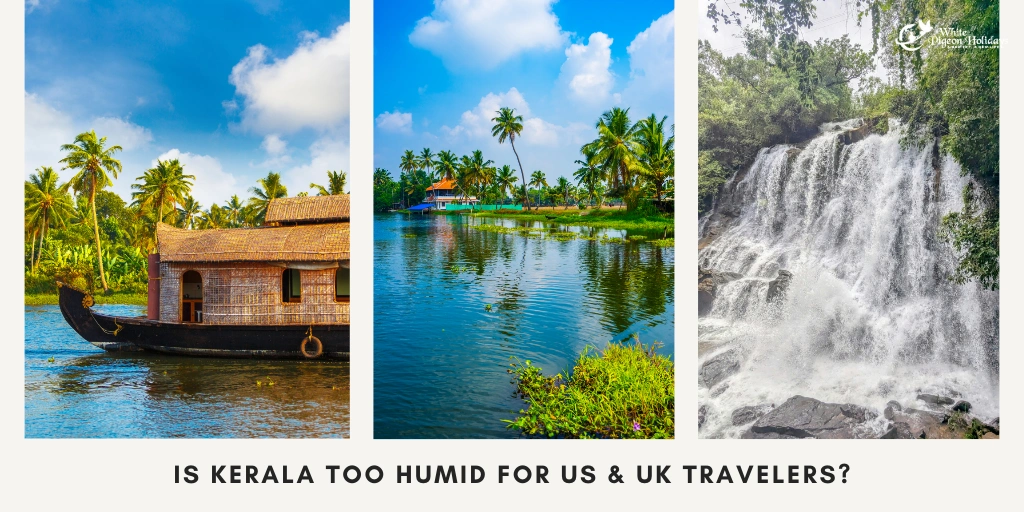
Let’s address the concern head-on.
If you’re coming from the US or the UK, it’s completely fair to ask, is Kerala humid—and will it affect your comfort?
Kerala sits in the tropics, so yes, humidity exists. But it’s not a deal-breaker.
Think of it as a climate feature you plan around, not a barrier that cancels the trip.
With the right season, smart pacing, and a few on-ground habits, most travelers find Kerala far more comfortable than they expected.
This guide explains how the Kerala climate for tourists really feels by season—and how to stay cool without sacrificing experiences.
Want a simple, practical plan to beat the heat? Download our free Kerala Climate Comfort Guide with a packing checklist, daily routines, and a season-by-season comparison chart.
Kerala’s Climate Decoded: It’s All About the Seasons
Not All Seasons Are Created Equal: When Humidity Peaks
Kerala’s weather shifts meaningfully across the year.
The table below gives a clear, side-by-side view of humidity and comfort for travelers used to temperate climates.
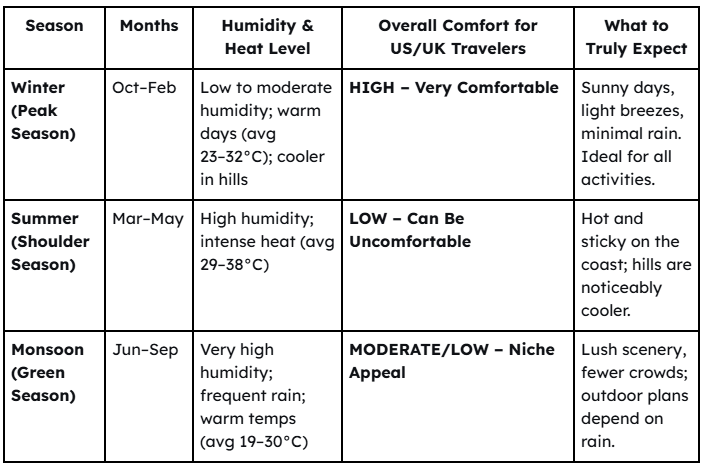
Quick takeaway: If comfort is your top priority, winter is the clear winner. Summer and monsoon are workable with adjustments and the right itinerary.
Your Personal Comfort Strategy: Beating the Heat & Humidity
Smart Traveler Tips: How to Stay Cool and Comfortable

This is where reassurance turns into action.
These are proven, simple ways travelers manage humidity—especially helpful if you’re sensitive to heat.
Strategic Planning & Scheduling
- Choose winter if you can. It’s the single most effective move for lower humidity.
- Built in hill stations. Places like Munnar, Wayanad, and Thekkady stay 5–8°C cooler than the coast.
- Follow the daily rhythm. Do outdoor sightseeing early in the morning or late afternoon. Use 11 a.m.–3 p.m. for museums, long lunches, spa time, or poolside rest.
The Right Gear & Clothing
- Fabric matters. Pack loose cotton and linen. Skip heavy synthetics.
- Footwear that breathes. Open sandals or ventilated shoes reduce discomfort.
- Sun & rain essentials. Wide-brim hat, high-SPF sunscreen, sunglasses. Carry a compact umbrella year-round.
- Hydration routine. Keep a refillable bottle with you and sip often—even when you don’t feel thirsty.
On-the-Ground Habits
- Prioritize AC for sleep. Book hotels with air conditioning if you’re heat-sensitive.
- Cool resets. Short, cool showers work wonders between outings.
Eat lighter. Fresh fruits, salads, grilled seafood, and smaller portions help you feel energized.
Mind Over Climate: Reframing the Humidity Experience
The Silver Linings: Unexpected Perks of Kerala’s Climate
A bit of perspective helps. The same climate that brings humidity also delivers benefits travelers love.
- Deep green landscapes. Humidity is why Kerala looks so vibrant—waterfalls, palms, and rice fields at full intensity.
- Ayurveda sweet spot. The monsoon period is favored for traditional treatments; the body responds well in this climate.
- Quieter travel windows. Shoulder and monsoon months mean fewer crowds and more tranquil visits at popular sites.

Your Comfortable Kerala Adventure Is Possible
Humidity is a factor—but not a reason to skip Kerala.
Choose the right season (winter), balance the coast with hill stations, pace your days, and pack smart.
Do that, and most US and UK travelers find Kerala comfortable, refreshing, and deeply enjoyable.
Ready to plan a trip that puts comfort first?
Explore our Climate Comfort Guide, or speak with our travel experts to shape an itinerary that keeps you cool while covering the best of Kerala.
What is the least humid month to visit Kerala?
January is typically the coolest and least humid. December and February are close behind and equally comfortable.
Is coastal humidity bearable in places like Kochi and Alleppey?
Yes during winter (Oct–Feb), thanks to sea breezes. In summer and monsoon, pair coastal stays with hill stations for balance—especially around Kochi and Alleppey.
Will humidity damage electronics?
Take precautions. Store devices in sealed bags with silica gel, particularly during monsoon. Avoid leaving them long periods in non-AC rooms.
Is air conditioning widely available?
Yes in tourist-grade hotels, resorts, and many restaurants. Some homestays and budget guesthouses may offer fans only—check before booking.
How does Kerala’s humidity compare to Thailand or the Caribbean?
Comparable during monsoon. The difference is Kerala’s long winter window (Oct–Mar) with noticeably lower humidity, which many tropical destinations don’t have.
