Toilet Access and Cleanliness in Rajasthan — An Honest Guide for Senior Travelers
Nobody talks about this openly. But every senior traveler I’ve worked with has asked the same question privately, before any itinerary discussion.
What are the bathrooms actually like in Rajasthan?
This page gives you an honest, detailed answer — not the polished version that avoids your real concerns, but the kind of information a trusted travel consultant gives you over a cup of tea before you book your flights.
Written by
Nitin Batra
Founder & Travel Expert · White Pigeon Holidays
With 25+ years in the tourism industry — from Airport Concierge to Vice President — Nitin founded White Pigeon Holidays in 2021 to help international travellers explore India with confidence. His hands-on experience across Asia, Europe, the Middle East, and the West shapes every journey he crafts.
Free Pre-Trip Consultation
Planning a senior trip to Rajasthan? Get practical advice on comfort, accessibility, and hotel selection from Nitin Batra before you book your journey.
Why This Is a Bigger Deal Than Most People Admit
For younger travelers, a questionable toilet is a minor inconvenience.
For a senior traveler — especially one managing a health condition, taking medication that affects urgency, or traveling with limited mobility — bathroom access can genuinely determine whether a trip is enjoyable or stressful.
There are three specific concerns that come up every time:
Will there be western-style toilets? India uses squat toilets in many public settings, and for someone with knee pain, arthritis, or hip replacement history, this isn’t just uncomfortable — it can be physically impossible.
How clean will they be? Hygiene sensitivities increase with age, and the risk of stomach upset or infection from poor sanitation is higher for older travelers.
What happens on a 4-hour drive between cities? Rajasthan involves long stretches of road between Jaipur, Jodhpur, Udaipur, Jaisalmer, and Pushkar. Roadside stops are not always predictable.
Let’s work through each of these properly.
What Hotels Actually Offer
The good news is that hotel bathrooms — not public ones — are where you’ll spend most of your time, and the standard at mid-range and above properties is genuinely good.
Here’s how the reality breaks down by hotel category:
| Hotel Category | Toilet Type | Cleanliness | Grab Rails | Hot Water |
|---|---|---|---|---|
| 5-Star & Luxury | Western (always) | Excellent | Often available | Reliable 24/7 |
| Heritage Boutique Hotels | Western (standard) | Very Good | Sometimes available | Reliable |
| 3-4 Star Hotels | Western (standard) | Good | Rarely standard | Available mornings |
| Budget Guesthouses (under ₹2,500/night) | Mixed – western or squat | Variable | Unlikely | Morning only |
| Homestays | Mixed | Variable | Unlikely | Morning only |
5-Star & Luxury
Heritage Boutique Hotels
3-4 Star Hotels
Budget Guesthouses (under ₹2,500/night)
Homestays
What “mixed” means in practice: In budget accommodation, you may walk into a bathroom and find an Indian-style squat toilet. This is rare in hotels that actively cater to international tourists but still happens in the ₹1,500–2,500 price range.
The safe rule: For senior travelers from the US, UK, or Australia, booking a 3-star or higher hotel in Rajasthan almost guarantees a western toilet. If you’re booking through a tour operator, confirm explicitly — reputable operators do this as standard practice.
Public Toilets at Rajasthan’s Tourist Sites: An Honest Picture
This is where expectations need adjusting.
Rajasthan’s major tourist attractions — Amber Fort, City Palace, Mehrangarh Fort, Jaisalmer Fort, Lake Pichola — all have toilet facilities. But the experience varies considerably depending on the site, the time of day, and the season.
What you’ll generally find at major sites:
- Western-style toilets exist at most ticketed tourist complexes
- Hygiene is better maintained early in the morning before crowds arrive
- Pay toilets (₹5–20 per use) at major sites are consistently better than free ones
- Attendants are often present at higher-footfall monuments
What you should prepare for:
- Squat toilet options may be present alongside western ones, especially at older sites
- Walking distances to toilets inside large forts or palace complexes can be 200–400 meters
- Toilet paper is almost never provided — carry your own every day
- Soap availability is inconsistent — hand sanitizer is essential
Sites with relatively reliable facilities:
- Jaipur: Amber Fort, Hawa Mahal complex, City Palace (ticketed areas)
- Jodhpur: Mehrangarh Fort (multiple facilities inside)
- Udaipur: City Palace Museum
- Pushkar: Near the main bazaar (pay toilets)
- Jaisalmer Fort: Facilities exist but are basic
Sites where planning is especially important:
- Step wells (Chand Baori, Raniji ki Baori): Facilities are basic or limited
- Desert camps and dunes: Facilities are managed by the camp operator — always ask in advance
- Rural heritage villages: Minimal facilities; plan around this
Under India’s Swachh Bharat Mission, over 6.3 lakh public toilets have been constructed in urban India since 2014, and Rajasthan has been part of this push. The improvement is real — but it hasn’t reached every heritage site uniformly.
Accessibility for Seniors with Mobility Needs
This is the area where Rajasthan lags most noticeably behind Western standards — and where advance planning matters most.
What is available in good hotels: Many 4-star and 5-star hotels in Jaipur, Udaipur, and Jodhpur now offer accessible rooms on request. These typically include:
- Grab rails near the toilet
- Walk-in or roll-in shower options
- Wider bathroom doorways
- Non-slip flooring
However, you must request these rooms explicitly at booking time. They are not automatically assigned.
What to ask your hotel directly (before booking):
- “Does the accessible room have grab rails beside the toilet?”
- “Is the bathroom step-free or does it have a threshold?”
- “Is the room on a floor reachable without stairs if the lift is unavailable?”
- “Are there anti-slip mats in the shower?”
Heritage properties and older havelis: These are beautiful to stay in, but many were built in the 18th or 19th century. Architecture often includes:
- High threshold steps into bathrooms
- Narrow doorways not suitable for walkers or wheelchairs
- Uneven stone or marble floors that can be slippery when wet
- No elevators in some properties
This doesn’t mean you should avoid heritage hotels — it means you need a consultant who knows which specific properties have modernized their bathrooms, and which haven’t.
At tourist sites: Accessibility at heritage monuments is improving but patchy. According to India’s Ministry of Tourism accessible tourism initiative, efforts are underway to retrofit major sites, but implementation varies.
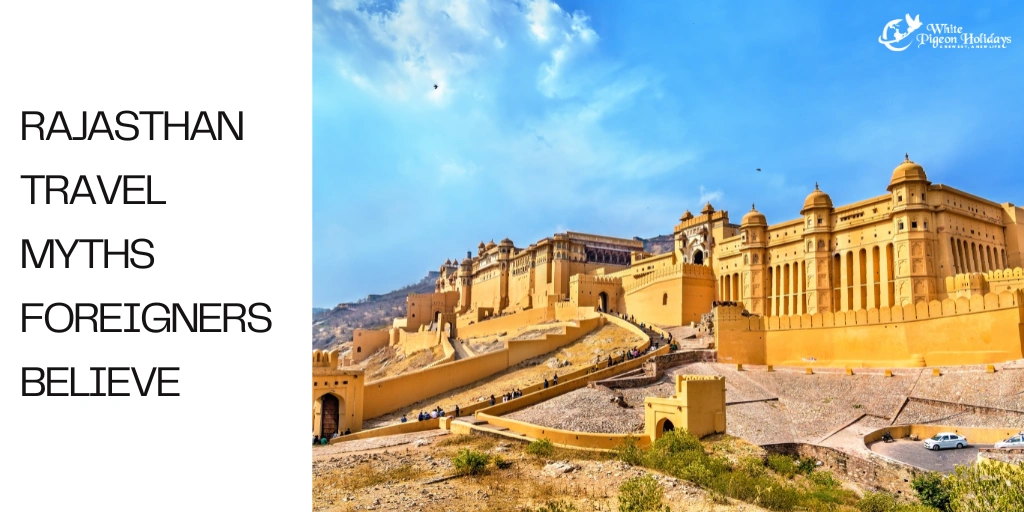
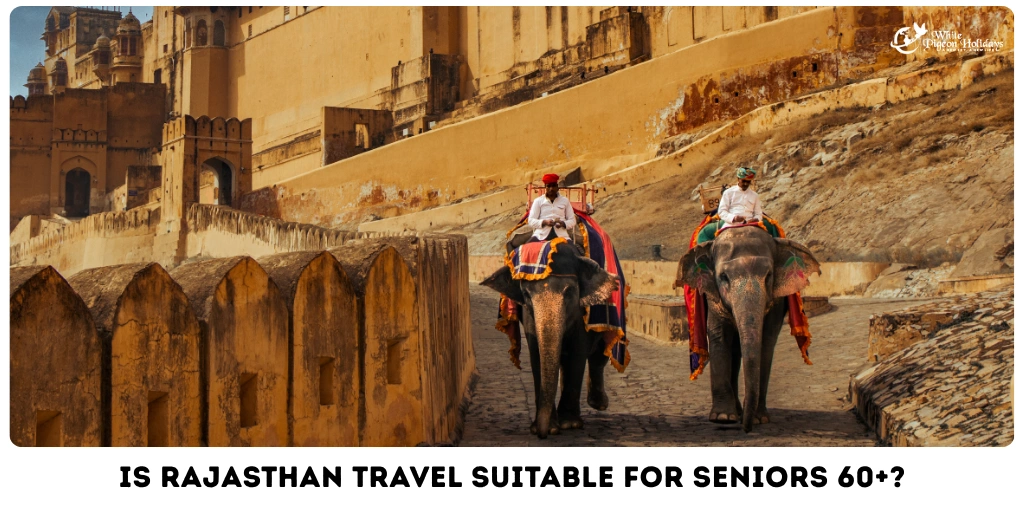
- Amber Fort: Jeep rides to the upper courtyard reduce walking, but bathrooms require steps at most access points
- City Palace, Jaipur: Some wheelchair-navigable areas; toilet access requires advance inquiry
- Mehrangarh Fort: Significant elevation changes; not all sections are accessible
The honest answer: if mobility is a concern, a knowledgeable guide and pre-planned stops make more difference than the infrastructure alone.
Get a Personalized Accessibility Assessment
Find out which Rajasthan hotels and attractions best match your mobility, accessibility, and bathroom requirements before you book your trip.
Long Drives Between Cities: Managing Comfort on the Road
Rajasthan involves real distances. These are the typical drives senior travelers encounter:
| Route | Approximate Drive Time |
|---|---|
| Jaipur → Pushkar | 2.5 – 3 hours |
| Jaipur → Ranthambore | 3 – 3.5 hours |
| Jodhpur → Jaisalmer | 4.5 – 5 hours |
| Udaipur → Jodhpur | 4.5 – 5 hours |
| Jaipur → Agra | 4 – 4.5 hours |
| Delhi → Jaipur | 5 – 6 hours by road |
Jaipur → Pushkar
Jaipur → Ranthambore
Jodhpur → Jaisalmer
Udaipur → Jodhpur
Jaipur → Agra
Delhi → Jaipur
How to manage long drives comfortably:
- Plan scheduled stops every 2 hours — not when urgency strikes Ask your driver to plan stops at specific highway dhabas or restaurants where facilities are clean. Good drivers know these locations. If you’re booking through a tour operator, this is a standard request and any experienced operator will accommodate it.
- Use hotel bathrooms before every departure This sounds obvious but it’s easy to skip when you’re excited to leave. Make it a habit.
- Highway restaurant facilities vs. roadside stops Highway restaurants (dhabas) with attached facilities are common on major Rajasthan routes. Facilities at better-known establishments — particularly along the NH48 and NH62 corridors — have improved significantly. Avoid random roadside spots; stick to establishments your driver knows.
- What to carry in your day bag — always:
- Small pack of toilet paper or tissues (essential)
- Wet wipes
- Hand sanitizer (60%+ alcohol)
- Thin plastic bag for used tissue disposal (many bins are not available)
- A spare light layer for cold-air-conditioned stops
- Hydration vs. urgency — the real balance Many senior travelers reduce water intake to manage urgency on drives. This is counterproductive in Rajasthan’s heat, especially between October and April when temperatures can climb. Dehydration is a more serious risk than a toilet stop. Drink consistently, plan your stops accordingly, and choose clothing that makes quick bathroom use practical.
City-by-City Practical Summary
Jaipur
Most senior-friendly city in Rajasthan for bathroom access. Large number of international-grade hotels. Ticketed tourist sites have managed facilities. City-center areas near major hotels have accessible options.
Udaipur
Good hotel standards across categories. Heritage havelis require careful selection. Some lakeside properties have older infrastructure — ask about step-free access if needed.
Jodhpur
Mehrangarh Fort has facilities, but elevation changes across the fort are significant. Hotel standards in the city are good. The old city bazaar area has limited public facilities.
Jaisalmer
Facilities in the fort area are basic. Hotels in the main tourist area maintain reasonable standards. Desert camp operators manage their own facilities — quality varies widely; always ask.
Pushkar
Small town, more limited hotel infrastructure than larger cities. Pay toilets near the ghats and bazaar. Facilities at mid-range hotels are adequate.
Ranthambore
Safari lodges maintain good bathroom standards for guests. Long safari drives (3–4 hours) have no facilities on route — plan accordingly.
Common Mistakes Senior Travelers Make (and How to Avoid Them)
Assuming all “3-star” ratings mean the same thing Hotel star ratings in India are self-declared in many cases. Always check recent reviews (within 6 months) specifically mentioning bathroom cleanliness and western toilet availability. Google reviews and Booking.com comments are more reliable for this than Tripadvisor for smaller properties.
Not confirming accessible room features at booking A hotel listing “accessible room” may mean a ground-floor room with no accessibility modifications. Always call or email and ask the specific questions listed earlier in this article.
Relying on public facilities at major monuments without backup supplies Even at well-maintained sites, running out of toilet paper is a real possibility. Carry supplies every day.
Scheduling too many sites in one sightseeing day Four monuments in one day means four different toilet situations, long periods between facilities, and fatigue that makes every bathroom challenge worse. Two or three sites per day — with comfortable hotel breaks built in — works far better for senior travelers.
Booking desert camp accommodation without asking about bathroom facilities Desert camps range from basic tents with shared communal facilities to luxury tented camps with en-suite western bathrooms. The difference in price is not always large, but the difference in experience for a senior traveler is significant.
Hygiene Kit: What to Pack
| Item | Why |
|---|---|
| Toilet paper / pocket tissue packs | Not provided at most sites or road stops |
| Wet wipes (biodegradable) | For hands and surfaces when soap is not available |
| Hand sanitizer (60%+ alcohol) | Essential after any public facility use |
| Small zip-lock bags | For disposing of tissue where bins are not available |
| Liquid soap sachet | For sinks with no soap |
| Anti-bacterial surface wipes | For toilet seats when needed |
| Probiotic supplements | Discuss with your doctor, may help maintain gut health |
| Oral rehydration salts (ORS) | In case of stomach upset or dehydration |
Toilet paper / pocket tissue packs
Not provided at most sites or road stops
Wet wipes (biodegradable)
For hands and surfaces when soap is not available
Hand sanitizer (60%+ alcohol)
Essential after any public facility use
Small zip-lock bags
For disposing of tissue where bins are not available
Liquid soap sachet
For sinks with no soap
Anti-bacterial surface wipes
For toilet seats when needed
Probiotic supplements
Discuss with your doctor, may help maintain gut health
Oral rehydration salts (ORS)
In case of stomach upset or dehydration
Free Senior Travel Checklist
Download a printable checklist covering hygiene, accessibility, packing, and hotel essentials for a comfortable Rajasthan trip.
Questions Senior Travelers Actually Ask
Practical answers to common concerns about toilets, accessibility, hygiene, and comfort while traveling across Rajasthan.
Will I find western-style toilets at every hotel in Rajasthan?
Yes, at almost every 3-star hotel and above that welcomes international visitors. Budget guesthouses below ₹2,500 per night may not always provide western-style toilets, so it is best to confirm before booking or travel with an operator that pre-selects suitable hotels.
Are squat toilets unavoidable during a Rajasthan trip?
No. If you stay in established hotels and use hotel facilities before sightseeing, you can avoid most squat toilets. Some public washrooms at monuments offer both western and squat options, while rural highway stops are more likely to have squat facilities.
How clean are the bathrooms at Rajasthan's forts and palaces?
Major attractions such as Amber Fort, Mehrangarh Fort, and City Palace generally maintain clean washrooms, particularly early in the day. Paid facilities are usually cleaner than free public toilets. Standards at smaller attractions can vary.
I have a hip replacement and cannot use squat toilets. What should I do?
Choose 3-star or higher hotels that provide western toilets. If toilet height is a concern, consider carrying a lightweight folding toilet seat raiser. Ask your tour operator to schedule restroom breaks at hotels and reputable restaurants instead of roadside stops.
Can I request grab bars at hotels in Rajasthan?
Yes. Many modern 4-star and 5-star hotels offer accessible rooms with grab bars. Request these during booking because they are limited. Some heritage hotels cannot install grab rails due to their historic structure.
What happens if I need a bathroom urgently during a remote drive?
On routes such as Jodhpur to Jaisalmer or Udaipur to Jodhpur, restroom facilities can be far apart. An experienced private driver will know dependable stops. Planning breaks every 90 to 120 minutes and wearing easy-to-manage clothing makes long drives much more comfortable.
Is it safe to use Indian public bathrooms hygienically?
Yes, when you follow basic hygiene practices. Carry tissues, use hand sanitizer, avoid unnecessary contact with surfaces, and choose paid facilities whenever possible. Well-maintained public toilets present a low risk when used carefully.
Are desert camps in Jaisalmer suitable for seniors?
Mid-range and luxury desert camps usually provide private western-style bathrooms inside each tent. Budget camps may have shared or squat-style facilities. Always ask whether the toilets are western-style and located inside the tent before booking.
Should I worry about stomach upset during my trip?
Traveler's diarrhea can affect some visitors, but the risk is manageable. Eat at reputable restaurants, avoid raw salads and cut fruit from street vendors, drink bottled or filtered water, and discuss suitable medications with your doctor before departure.
How can I quickly find a clean bathroom while sightseeing?
Large hotel lobbies are usually the best choice. International hotel brands such as ITC, Marriott, Taj, and Oberoi maintain excellent washrooms. Your driver or guide can also recommend reliable restroom stops in each city.
Is it embarrassing to ask my tour guide about bathroom stops?
Not at all. Experienced Rajasthan guides plan regular comfort breaks as part of senior-friendly tours. A professional guide understands these needs and will help without making you feel uncomfortable.
Choose the Right Hotel, Not Just the Beautiful One
I recommend senior-friendly hotels based on your mobility, comfort, food preferences, travel style, and budget, so every stay across Rajasthan is comfortable, practical, and stress free.