Can You Tour Rajasthan with Joint Pain or Limited Mobility? Here’s the Honest Answer
Rajasthan is one of India’s most visually stunning destinations — but it was built centuries ago, long before anyone thought about elevators or smooth walking paths.
If you’re managing arthritis, knee pain, or limited mobility, the question isn’t whether Rajasthan is beautiful.
The question is: can you experience it without making your condition worse?
The answer is yes — but only if you stop treating this like a standard sightseeing trip and start treating it like a trip that needs to be engineered around your comfort.
This page gives you everything you need to make that happen.
Not Sure Where to Start?
Book a free private planning call and receive practical advice for your Rajasthan trip. We have helped senior travellers from the US, UK, and Australia plan comfortable itineraries that consider mobility, accessibility, and recovery needs, with no obligation and no generic recommendations.
Personal Itinerary
Recommendations based on your travel style and comfort level.
Accessibility Advice
Planning for mobility aids, arthritis, and post-surgery travel.
Hotel Guidance
Choose senior-friendly hotels and sightseeing routes with confidence.
Written by
Nitin Batra
Founder & Travel Expert · White Pigeon Holidays
With 25+ years in the tourism industry — from Airport Concierge to Vice President — Nitin founded White Pigeon Holidays in 2021 to help international travellers explore India with confidence. His hands-on experience across Asia, Europe, the Middle East, and the West shapes every journey he crafts.
What Makes Rajasthan Challenging for Mobility-Limited Travellers
Before we talk about what’s possible, let’s be clear about what you’re dealing with.
Rajasthan’s historic sites — forts, temples, havelis — were not built for accessibility.
They were built for defence, ceremony, and grandeur.
That means:
- Cobblestone and sandstone surfaces that shift underfoot
- Steep ramps and stairways inside major forts
- Uneven bazaar lanes in old city areas
- Long walking distances between attractions in some locations
- Heat that accelerates joint fatigue — temperatures in summer routinely cross 40°C (104°F)
- Limited seating along walking routes inside heritage properties
None of this means the trip is off the table.
It means you need to know which sites genuinely work for your condition, which ones require modification, and which ones are best skipped entirely.
City-by-City Accessibility Breakdown
Jaipur — The Most Accessible Starting Point
Jaipur is where most Rajasthan tours begin, and for good reason.
It offers the widest range of accessible options among all Rajasthan cities.
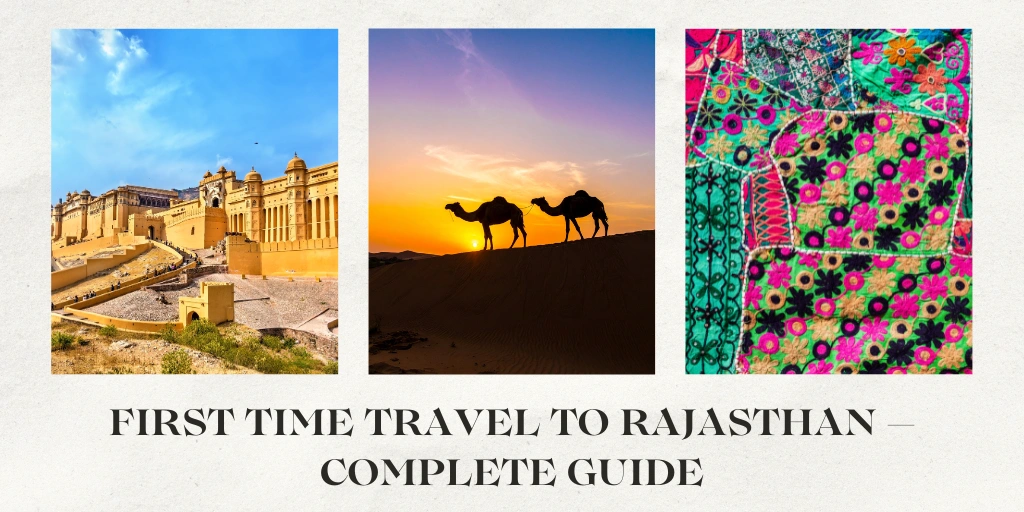
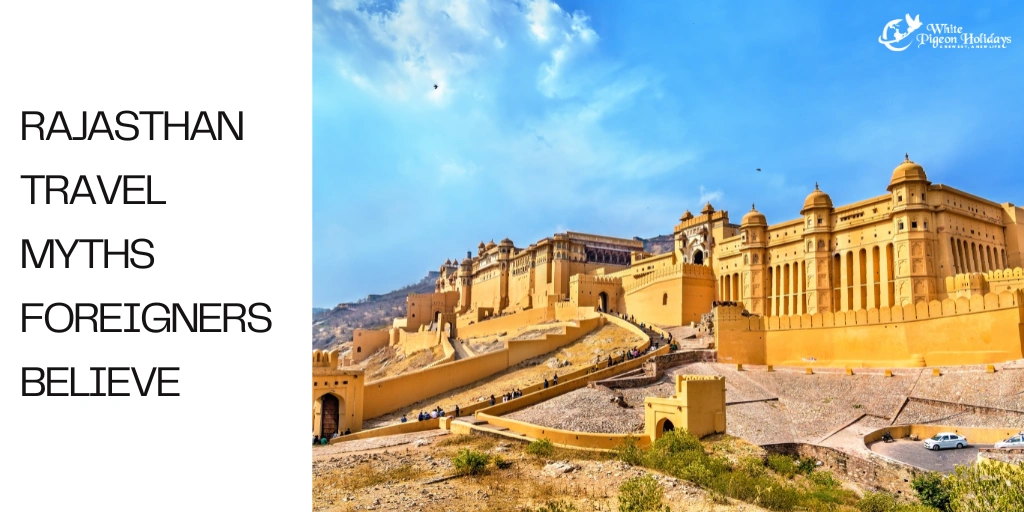
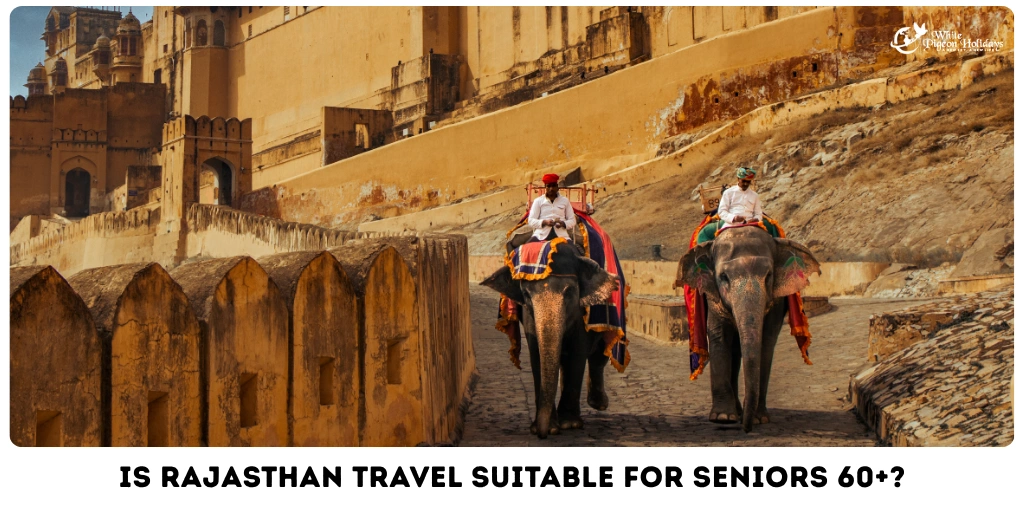
Amber Fort The fort runs a jeep service from the base to the main gate area, significantly reducing the uphill walk. Inside, sections of the fort have been made more accessible with smoother pathways, though stairs are unavoidable in certain inner chambers. If a visitor is in a wheelchair, car access to a higher drop-off point can typically be arranged through the guide — confirm this in advance when booking tickets.
City Palace Ground-level courtyards are relatively flat and walkable. The museum sections inside require some stair access, but the open courtyards and main sections are manageable.
Jantar Mantar Mostly flat terrain with gravel paths. The observatory instruments themselves involve steps, but the visual impact can be appreciated from ground level.
What to skip in Jaipur if mobility is a concern: Nahargarh Fort (steep uphill, limited vehicle access to top), Hawa Mahal interior stairs (exterior view is fully accessible).
Udaipur — Slow Pace, Water Views, Partial Accessibility
Udaipur is one of the most visually rewarding cities in Rajasthan for lower-mobility travellers because many of its best experiences don’t require walking at all.
Lake Pichola boat rides are among the most accessible experiences in all of Rajasthan. You board from the ghat, sit for the duration, and see the Lake Palace and City Palace from the water.
City Palace, Udaipur The main entrance involves a steep climb — jeep/golf cart access is sometimes available for mobility-challenged visitors but is not guaranteed. The museum sections require advance coordination with the palace management. Partial access is realistic; full access is not always possible.
Bagore Ki Haveli Ground floor is accessible. Upper levels involve narrow stairs.
What works well in Udaipur for limited mobility: Evening cultural shows at ground-level venues, hotel terraces with lake views, lakeside cafés, garden walks in Saheliyon Ki Bari (mostly flat paths).
Jodhpur — Better Than Most People Expect
Mehrangarh Fort This is one of the most pleasant surprises for mobility-limited travellers in Rajasthan. The fort has a dedicated elevator that bypasses the steep main entrance ramp and brings visitors directly to the upper fort level. According to visitor accounts on TripAdvisor, the elevator is operational and accessible, with staff available to assist. Once at the top, the museum galleries involve some steps but are largely manageable with slow movement.
Jaswant Thada Flat approach path, minimal stairs. One of the most underrated and peaceful stops in Jodhpur — excellent for mobility-limited visitors.
Old City (Blue City) lanes These are narrow, uneven, and steep in places. Walking through the old lanes is charming but physically demanding. The best approach: drive to a viewpoint for the blue city overview rather than walking through the lanes.
Jaisalmer — Proceed with Extra Planning
Jaisalmer’s iconic golden fort is a UNESCO World Heritage Site and a living city — people actually live inside it.
The lanes inside Jaisalmer Fort are narrow, uneven, and steep in sections.
This is the most physically demanding of the major Rajasthan cities for mobility-limited travellers.
What still works: Exterior views of the fort from Sam Sand Dunes road, camel safaris (mounting and dismounting require some assistance), sunset viewing from hotel rooftops.
What doesn’t work easily: Extensive fort interior exploration on foot, long bazaar walks.
If Jaisalmer is on your list, be honest with yourself about your current mobility level.
A visit where you see the fort from the outside, enjoy the desert landscape, and spend a night at a heritage hotel in the golden glow is still a profoundly memorable experience.
The Real Difference: Pacing, Not Location
Here’s what most travel articles won’t tell you.
The biggest cause of joint flare-ups during Rajasthan travel is not any specific staircase or uneven path.
It’s over-scheduling.
Trying to cover two forts, a market, a cultural show, and a long drive in a single day is the fastest way to end your trip early.
The structure that works:
| Time | Activity |
|---|---|
| 7:00 – 9:00 AM | First sightseeing stop (cooler, less crowded) |
| 9:00 – 11:30 AM | Second stop or leisure exploration |
| 12:00 – 3:00 PM | Mandatory rest at hotel (AC room) |
| 3:30 – 5:30 PM | Optional light activity or drive-by sightseeing |
| 6:00 – 8:00 PM | Sunset viewing, cultural show, or lakeside sitting |
7:00 – 9:00 AM
First sightseeing stop (cooler, less crowded)
9:00 – 11:30 AM
Second stop or leisure exploration
12:00 – 3:00 PM
Mandatory rest at hotel (AC room)
3:30 – 5:30 PM
Optional light activity or drive-by sightseeing
6:00 – 8:00 PM
Sunset viewing, cultural show, or lakeside sitting
This pacing works.
The Arthritis Foundation recommends building rest periods into every travel day, particularly in warmer climates where heat-induced fatigue accelerates joint stress.
Rajasthan’s dry heat (unlike humid heat) is actually gentler on joints than coastal destinations — but it still drains energy faster than temperate climates.
Mobility-Friendly Rajasthan Itinerary Planner
Share your travel dates, preferred cities, and mobility level, and receive a personalized day-by-day Rajasthan itinerary designed around your pace within 24 hours.
Custom Schedule
A day-by-day itinerary built around your travel plans.
Your Travel Pace
Designed for your comfort, mobility, and sightseeing preferences.
Expert Planning
Recommendations for cities, routes, and daily travel time.
Choosing the Right Vehicle and Driver
Your private car is not just transport in Rajasthan — it is your recovery zone between sites.
What to insist on:
- Full-size SUV (Toyota Innova or equivalent) — easier to get in and out of versus a sedan, more space to stretch legs
- Rear AC vents — critical for back-seat temperature regulation
- Experienced driver who understands slow movement and is willing to wait without rushing
- Knee-level entry height — avoid vehicles where you have to climb or step down steeply
What your driver can do for you: Arrange vehicle access to higher drop-off points at many forts (with guide coordination), carry portable folding stools for rest stops, manage luggage so you never have to carry bags through airports or hotels.
Never book a shared van or group coach for a mobility-limited trip.
The lack of schedule flexibility alone will make the trip more stressful.
Managing Your Condition During the Trip
Heat and Dehydration
Rajasthan’s dry climate can accelerate joint stiffness.
The Hospital for Special Surgery recommends staying hydrated consistently — not just when you feel thirsty — as dehydration directly worsens joint pain and fatigue.
Carry a 1-litre water bottle from your hotel every morning.
Drink it before noon.
Refill it.
Footwear
This is non-negotiable.
Worn-in, cushioned walking shoes with a non-slip sole are essential.
Sandals that look suitable will fail you on cobblestone surfaces.
Never introduce new footwear for the first time on this trip.
Medications
Keep all medications — including topical pain relief, anti-inflammatories, and any prescribed biologics — in your hand luggage.
Carry a physician’s letter listing your medications in generic names (not just brand names).
If you’re on immunosuppressants for rheumatoid arthritis, speak to your doctor before travel about India-specific vaccination or infection risk considerations.
Mobility Aids
If you use a walking stick at home, bring it.
If you’re on the borderline of needing one, bring it anyway.
A collapsible trekking pole adds stability on uneven surfaces and reduces lateral knee stress significantly.
Portable lightweight foldable stools are worth carrying for markets and extended stops.
Which Hotel Category to Book
For mobility-limited travellers, hotel selection is as important as site selection.
| Hotel Category | What to Expect | Verdict |
|---|---|---|
| 5-star heritage hotels | Elevators, ramps, in-room accessibility, spa with physiotherapy options | Best choice |
| 4-star city hotels | Usually elevator access, may not have accessibility-specific rooms | Good option |
| Heritage havelis (boutique) | Often multi-storey with steep stairs, no elevators, charming but challenging | Avoid unless ground floor confirmed |
| Budget and mid-range guesthouses | Variable, stairs likely, no accessibility guarantee | Not recommended |
5-star heritage hotels
4-star city hotels
Heritage havelis (boutique)
Budget and mid-range guesthouses
Senior Comfort Travel Cost Estimator
Receive a realistic daily budget estimate for a private, mobility-friendly Rajasthan tour based on your group size, travel dates, and comfort preferences.
Daily Budget
Know what to expect before planning your trip.
Group-Based Pricing
Estimates tailored to your group size and travel style.
Comfort-First Planning
Budget recommendations for senior-friendly hotels and transport.
Best Time to Visit Rajasthan with Mobility Issues
Season directly affects how your body responds to the trip.
| Season | Temperature | Suitability for Mobility-Limited Travellers |
|---|---|---|
| October – February | 10°C – 28°C | ✅ Best window. Cool mornings, mild afternoons. |
| March – April | 25°C – 38°C | ⚠️ Manageable with early starts and afternoon rest. |
| May – June | 38°C – 48°C | ❌ Avoid. Extreme heat dramatically increases fatigue and joint stress. |
| July – September (Monsoon) | 28°C – 38°C | ⚠️ Humidity rises. Some roads and paths may be wet and slippery. |
October – February
March – April
May – June
July – September (Monsoon)
The sweet spot for mobility-challenged travellers: November through January.
Days are cool, mornings are pleasant, and evenings are comfortable enough for open-air dining.
The only trade-off is that this is peak tourist season — book hotels and transport at least 3–4 months in advance.
Rajasthan Experiences That Require Almost No Walking
Not everything in Rajasthan demands physical effort.
These experiences are accessible even with significant mobility limitations:
- Sundowner at Sam Sand Dunes, Jaisalmer — drive to the dunes, watch sunset from a chair
- Cultural folk music and dance performances — seated, indoor venues
- Heritage hotel dining — many 5-star heritage properties have restaurants in spectacular settings reachable by elevator or ramp
- Lake Pichola boat ride, Udaipur — board and sit
- Elephant Village visit near Jaipur — seated observation at ethical sanctuaries
- Cooking classes — seated, hands-on, low physical demand
- Drive-through of old cities — the colour and architecture of Jaipur’s Pink City and Jodhpur’s Blue City can be experienced largely from a vehicle window
FAQ: Rajasthan with Joint Pain or Mobility Issues
Helpful answers for travelers planning a comfortable Rajasthan trip with mobility considerations.
Is Rajasthan suitable for someone who uses a wheelchair full-time?
Full-time wheelchair users will find Rajasthan challenging because many heritage sites are not fully accessible. A carefully planned itinerary focused on flat areas, vehicle access, and accessible experiences can still make the trip enjoyable.
Can I do a Rajasthan tour after knee replacement surgery?
Yes, if you are at least six months post-surgery and have your orthopaedic surgeon's approval. Choose itineraries with minimal stairs and good vehicle access.
How many hours of walking should I plan each day?
Plan for around 60 to 90 minutes of walking spread across the day in short segments.
Are airport transfers and hotel check-ins difficult?
Major Rajasthan airports are relatively easy to navigate. Wheelchair assistance can be arranged through your airline, while hotels usually provide porter service.
Will Rajasthan's heat make arthritis worse?
Many people find Rajasthan's dry climate easier than humid destinations. Hydration and regular breaks are important.
What if I cannot go sightseeing one day?
A private tour lets you rest at the hotel without disrupting your trip.
Can I rent a wheelchair or mobility scooter?
Rental equipment is limited. Bringing your own lightweight wheelchair or walker is recommended.
Are Indian trains suitable for mobility-limited travellers?
Private car travel is generally much easier and more comfortable than trains.
What travel insurance should I buy?
Choose a policy that covers pre-existing conditions, medical evacuation, and trip cancellation.
What is the single best way to make the trip comfortable?
Book a private customised tour with a dedicated driver for maximum flexibility.
Choose the Right Hotel, Not Just the Beautiful One
I recommend senior-friendly hotels based on your mobility, comfort, food preferences, travel style, and budget, so every stay across Rajasthan is comfortable, practical, and stress free.