

A Rajasthan tour is not automatically too physically demanding for travelers in their 60s, 70s or beyond.
The greatest challenges are usually the stairs and uneven surfaces at historic attractions, extended standing, long drives, vehicle boarding, and outdoor sightseeing in hot weather.
A shorter visiting route, well-chosen hotels and flexible transfer days can make many experiences more manageable, but a completely step-free tour should never be promised without checking every venue and transfer.
For travelers arriving from the United States, physical effort starts before the first palace visit.
Long flights, airport connections and a change in time zones may affect how energetic you feel on your first day in India.
That is why the useful question isn't simply, “Is Rajasthan easy for seniors?”
It is, “What will I actually need to walk, climb, stand through or sit through on the trip I'm considering?”
This guide breaks down those demands, shows where to ask for changes and explains what to confirm before you pay for a tour.
What Makes a Rajasthan Tour Physically Demanding?
A sightseeing day can feel tiring even if you haven't walked very far.
Standing through a guided explanation, climbing a short stretch of irregular steps, walking over cobblestones and getting into a vehicle several times can add up.
| Part of the trip | Where the physical effort comes from | A more comfortable approach |
|---|---|---|
| Forts and palaces | Steps, slopes, uneven stone, standing in galleries and long internal routes | Choose priority rooms, ask about lifts and keep an alternative viewpoint available |
| Old-city markets | Crowds, uneven paving, limited seating and stretches where vehicles cannot enter | Visit a small section with a guide or arrange a quieter shopping or craft experience |
| Intercity transfers | Hours seated, traffic, restroom stops and repeated vehicle entry and exit | Schedule breaks and treat hotel arrival as the main objective |
| Heritage hotels | Stairs, distant rooms, steep entryways and bathrooms without suitable features | Confirm the actual booked room and the route from car to room |
| Lake boats and safaris | Jetty access, boarding steps, balance demands and sometimes rough vehicle movement | Check the exact vehicle or boat and boarding procedure before committing |
| Desert experiences | Loose sand, uneven ground, heat, cold after sunset and remote restroom access | Choose an accessible viewpoint or hotel-based experience instead of a camp when necessary |
| Sightseeing in hot weather | Sun exposure, exertion and fewer comfortable places to recover | Favor cooler conditions, shorter visits and indoor alternatives |
These are possible challenges, not ratings that apply to everyone.
The same monument can feel very different depending on which entrance you use, how many rooms you visit and whether you can take breaks.
How Much Walking and Standing Should You Expect?
There is no trustworthy single daily walking-distance figure for a Rajasthan tour.
An hour in a museum may involve more standing than walking, while a short visit to a hilltop fort may include steps that feel more demanding than a longer walk on level ground.
Before putting an attraction into your itinerary, ask your tour operator for four separate details: the approach from the vehicle, the inside route, the places to rest and the way back out.
A statement such as “only a little walking” does not answer those questions.
| What to check | A specific question to ask |
|---|---|
| Vehicle drop-off | How far is the permitted drop-off point from the ticket office and first attraction? |
| Walking surface | Is the route paved, sloped, sandy, cobbled or uneven? |
| Steps | Are there unavoidable steps, and are handrails available where needed? |
| Standing time | How long might we stand at entrances, in lines or while listening to the guide? |
| Rest areas | Where can we sit, use a restroom or shorten the visit? |
| Exit route | If we stop halfway, can we leave without retracing a long or difficult route? |
Ask for the route that matches your needs, not the route described as suitable for “most seniors.”
Age alone cannot tell an operator whether you can manage a staircase or stand comfortably for a guided tour.
Different Walking Abilities Need Different Trip Plans
Two people of the same age may have completely different comfort levels.
It is more useful to plan around the activities a person wants to do and the access they need.
| Traveler profile | A sensible starting plan | Details that still require confirmation |
|---|---|---|
| 01 Comfortable with longer walks | Historic sites with selected longer visits and flexible breaks | Heat, steps, waiting time and how demanding consecutive days will be |
| 02 Prefers shorter walks or has knee discomfort | One main attraction at a time, shorter circuits and more hotel time | Unavoidable stairs, seating, drop-off points and restroom access |
| 03 Uses a cane or walker | Prioritize stable surfaces, manageable thresholds and fewer rushed transitions | Handrails, paving, storage in the vehicle and access inside each venue |
| 04 Uses a wheelchair or requires continuous step-free access | Build the route around individually verified hotels, transportation and visitor paths | Vehicle specifications, door widths, ramps, lifts, toilets and the entire entrance-to-exit route |
These are planning examples, not medical assessments.
Someone recovering from surgery or managing a health condition should discuss the intended travel demands with their clinician rather than relying on a general age-based recommendation.
Free Rajasthan Physical-Effort Checklist
Before committing to a tour, give each proposed attraction a quick check against your own requirements.
Our printable worksheet helps you record walking and standing demands, stairs, seating, restroom access, vehicle boarding and acceptable alternatives.
- 01 Can I manage the proposed route?
- 02 Do I know where I can rest?
- 03 Can I get into the planned vehicle comfortably?
- 04 Does the hotel room meet my access needs?
- 05 Is there an alternative if I skip an attraction?
Rajasthan Physical-Effort Checklist
White Pigeon Holidays | Senior Travel Planning Worksheet
Your Five-Point Self-Check
- Can I manage the proposed route?
- Do I know where I can rest?
- Can I get into the planned vehicle comfortably?
- Does the hotel room meet my access needs?
- Is there an alternative if I skip an attraction?
Attraction Assessment
Attraction / city: ___________________________________
| Walking route and surface | |
|---|---|
| Stairs, slopes and handrails | |
| Expected standing time | |
| Seating and restrooms | |
| Vehicle drop-off and boarding | |
| Shorter route or alternative | |
| Questions still to confirm |
Hotel and Transport
Hotel room access confirmed: □ Yes □ No □ Pending
Vehicle boarding confirmed: □ Yes □ No □ Pending
Backup plan: ______________________________________________
Which Rajasthan Attractions May Require More Physical Effort?
The goal is not to avoid every famous monument.
It is to choose which parts you actually want to see and avoid assuming that an easier entrance makes the whole attraction accessible.
Jaipur: Amber Fort, Hawa Mahal and Markets
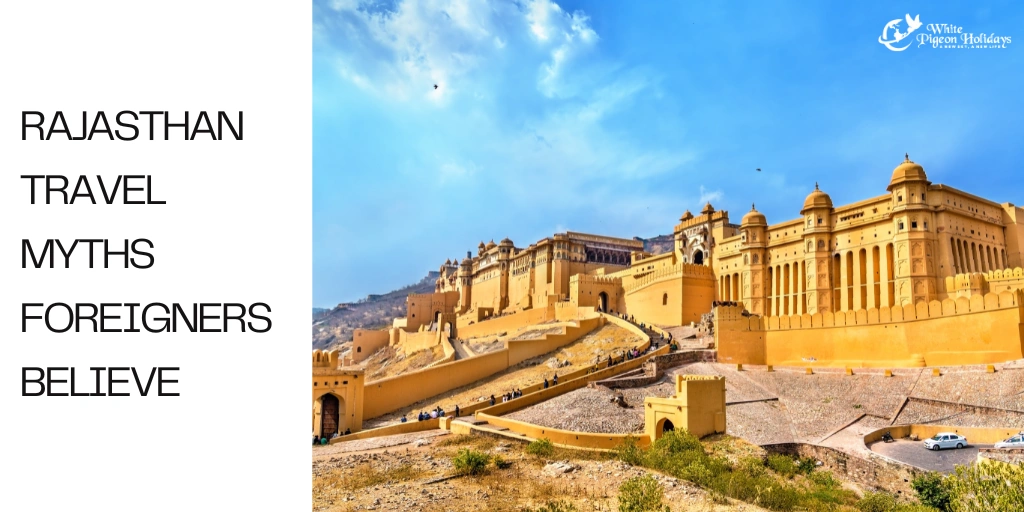
Amber Fort stands on a hill outside Jaipur. Rajasthan Tourism describes it as a hilltop palace, and Rajasthan Tourism Development Corporation lists jeep charges separately for Amber Fort on its city-tour information.
A jeep or vehicle approach, when operating and suitable, can reduce the climb to an entrance.
It does not remove all the steps, uneven stone surfaces and changes in level inside the complex.
If you want to visit, ask your guide which courtyards are most important to you and where a shorter route can end.
If you prefer to avoid the interior climb, a suitable exterior viewpoint may be a more comfortable choice.
Jaipur also offers experiences that can be adjusted without making the day feel empty.
For example, Rajasthan Tourism notes that the famous front of Hawa Mahal can be appreciated from across the road.
Choose a safe, permitted viewing point rather than assuming it is possible to stop anywhere along a busy street.
A selected gallery, craft visit or short shopping appointment may be preferable to a long walk through crowded market lanes.
Official information: Amber Palace and Jaipur visitor attractions.
Jodhpur: Mehrangarh Fort and the Old City
Mehrangarh is a major reason to visit Jodhpur, but the length and layout of the visit matter.
The Mehrangarh Museum Trust's official visitor page lists a one-way elevator.
This is useful to know, but it is not proof that every gallery, viewpoint or palace room is step-free.
Ask which areas the elevator serves, what happens after using it and whether you must negotiate any stairs on the route back.
Also ask how much time you are likely to spend standing in galleries and courtyards.
Jodhpur's old-city experience may include narrow lanes and uneven ground.
If that does not fit your comfort level, consider a shorter approved viewpoint visit, a focused guided stop or time enjoying the fort skyline from your hotel.
Udaipur: City Palace, Lake Views and Boat Boarding
Udaipur can offer a gentler mix of hotel time, lake scenery and shorter cultural experiences.
However, the entire city should not be described as flat or wheelchair-accessible.
The City Palace Museum's official visitor page lists an accessible lift, ramps, wheelchairs and an accessible toilet.
Its published visitor FAQ also explains that narrow stairways and different levels prevent universal access to every area.
You should therefore ask which specific galleries can be reached and whether the required services are available on your visit date.
The museum's visitor FAQ also describes assistance and an electric-car service between palace gates and the museum, subject to the facility's current operation and arrangements.
This is worth asking about if the distance from the entrance is a concern.
Lake Pichola views may be enjoyable without getting on a boat.
If you do want a cruise, check the jetty approach, boarding steps, handholds, seating and assistance rather than assuming that a lakeside outing involves little physical effort.
Jaisalmer: Fort Lanes, Sand and Desert Excursions
Jaisalmer offers striking sandstone architecture and desert scenery, but it adds different physical considerations.
The historic fort has narrow lanes and mixed surfaces, while a desert outing can involve loose sand, vehicle steps, limited restroom facilities and temperature changes after sunset.
An overnight desert camp is a choice, not a required Rajasthan experience.
For a traveler who wants established bathroom and hotel facilities, a shorter sunset visit followed by a return to the hotel may be more practical, provided the route and vehicle are appropriate.
For detailed comparisons of fort routes and stairs, see our Rajasthan forts walking guide.
What Can You Do Instead of a Demanding Attraction?
A lower-effort alternative should still feel like part of your Rajasthan trip, not an afterthought.
Agree on backup experiences before the day begins so that changing plans doesn't create extra travel or waiting.
| If this feels too demanding | Consider instead | Confirm first |
|---|---|---|
| Full Amber Fort interior | Consider instead An approved exterior viewpoint and a shorter cultural stop in Jaipur | Confirm first Safe stopping access, seating and the actual vehicle approach |
| Long walk through Jaipur's markets | Consider instead A brief guided craft or textile appointment | Confirm first Steps at the workshop and nearby drop-off access |
| Full Mehrangarh museum circuit | Consider instead A shorter accessible section or scenic fort viewpoint | Confirm first Elevator route, remaining stairs and return path |
| Full Udaipur City Palace circuit | Consider instead Selected accessible galleries or a lake-view experience | Confirm first Which museum rooms are reachable and whether seating is available |
| Lake Pichola cruise | Consider instead Lakeside views and a relaxed meal | Confirm first Restaurant and shoreline entrance arrangements |
| Long Jaisalmer desert outing | Consider instead A shorter sunset stop or hotel-based cultural evening | Confirm first Sand, vehicle boarding, toilets and return after dark |
| Long old-city walk | Consider instead A guided visit to one priority location | Confirm first Vehicle restrictions, crowds and where the visit can end |
A shorter version of an attraction is not always possible.
Where a safe route cannot be confirmed, switching activities is better than relying on improvised assistance on steep stairs or uneven ground.
Are Long Drives Physically Tiring Even Without Much Walking?
Sitting for several hours, leaving and reentering the vehicle, coping with traffic and checking into a new hotel can make a transfer day tiring even when no monument is included.
Private Vehicle and Driver
A private vehicle and driver can make stops and luggage handling more flexible, but comfort depends on the vehicle itself and the route.
Train or Domestic Flight
A train or domestic flight may make sense for some journeys, although station access, boarding, baggage and airport procedures can create different demands.
Plan the Entire Transfer Day
Before agreeing to a road transfer, ask for the door-to-door plan, not just an estimated highway driving time.
The plan should account for pickup, luggage loading, restroom and meal stops, the final approach to the hotel and check-in.
If your itinerary includes Jaipur, Jodhpur and Udaipur, treat the drives between those cities as substantial transfers rather than trying to fit a major fort visit into every arrival evening.
For route lengths and recommended hotel nights, read our Rajasthan trip-duration guide for seniors.
What Does a Comfortable Sightseeing Day Look Like?
There is no compulsory rest period or sightseeing cutoff time for everyone over 60.
A good schedule leaves room to change plans after you see how the walking, weather and travel feel that day.
| Type of day | Light sample plan | What can remain optional |
|---|---|---|
| 01 Cultural sightseeing | One priority palace or fort section, lunch and a relaxed afternoon | A second gallery, shopping or evening outing |
| 02 Low-walking day | A suitable viewpoint or brief museum visit followed by a meal | Extra walking and a second attraction |
| 03 Intercity transfer | Travel with planned breaks, hotel check-in and time to settle in | All additional sightseeing |
| 04 Arrival after a long flight | Airport transfer, hotel check-in and recovery | Dinner outside the hotel or any sightseeing |
On a sightseeing day, tell your guide which part of the attraction matters most to you.
Ask where you can take a seated break and how to shorten the route if necessary.
For an active traveler, the afternoon may include another activity if conditions are comfortable.
For someone who prefers less walking, the morning attraction may be enough.
For a traveler needing step-free access, the schedule must be built around confirmed routes, not simply shorter hours.
A flexible plan should work even if you decide to skip the last stop.
What If Two Travelers Have Different Walking Abilities?
A couple or family can enjoy Rajasthan together without following identical routes all day.
Traveler 01: Longer Visits
One person might want to see every available gallery
Extended sightseeingTraveler 02: Shorter Visits
while another prefers a short visit and a place to sit.
Less walking and seated breaksAsk whether a guide can offer a shorter approved route, an agreed meeting place or a separate optional activity.
Make sure no traveler is left unsupported, particularly at a crowded attraction or unfamiliar entrance.
If someone requires personal care or mobility assistance beyond normal guiding, arrange that service explicitly.
A sightseeing guide or driver is not automatically a trained caregiver.
Have an Itinerary but Unsure About the Walking?
White Pigeon Holidays can review your proposed cities, activities, hotel changes and travel dates to identify practical access questions and potential lower-effort options.
You can share only the mobility preferences you are comfortable sharing.
The review may identify visits to shorten, transfers to rethink, room-access requirements to confirm and alternative viewpoints worth considering.
Actual accessibility must still be verified with each hotel, venue and transport provider.
Can You Tour Rajasthan With Very Little Walking?
Very Little Walking
It may be possible to reduce walking considerably by choosing hotel-based experiences, scenic viewpoints, selected galleries and direct vehicle transfers.
Continuous Step-Free Access
Even when a museum lists a ramp or elevator, there can be an inaccessible gallery, a threshold near the entrance or a difficult path to a restroom.
A wheelchair-accessible vehicle also needs to be suitable for the traveler's particular wheelchair and boarding needs.
But “very little walking” and “continuous step-free access” are not the same thing.
If step-free access is essential, verify the entire journey from vehicle to attraction to restroom and back, not just whether a site advertises an accessibility facility.
- 01 Vehicle
- 02 Attraction
- 03 Restroom
- 04 Return Route
Request written confirmation of any non-negotiable requirement.
If a venue cannot confirm a usable route, choose a different experience rather than assuming assistance will solve every obstacle.
Which Hotel and Vehicle Details Matter Most?
Heritage hotels are part of Rajasthan's appeal, but an attractive property photograph cannot tell you how easily you can reach your room.
Some properties have several wings or room categories with very different access arrangements.
Before Reserving a Hotel
- 01 The exact room category, its floor and whether the required lift or step-free route reaches it.
- 02 The route from the vehicle drop-off point through reception to the bedroom.
- 03 Bathroom features such as shower entry, grab bars and doorway width where those are essential.
- 04 Whether the restaurant and other facilities you want to use can be reached comfortably.
- 05 Whether luggage assistance and any requested equipment can be confirmed in writing.
Before Confirming a Vehicle
- 01 How high the entry step is and whether the traveler can board without difficulty.
- 02 Whether seat belts are fitted and usable in the seats being booked.
- 03 Whether there is adequate legroom and space for luggage, a folded walker or other mobility equipment.
- 04 How rest stops, airport pickup and help with bags are handled.
- 05 If wheelchair-accessible transport is required, what exact boarding system, space and restraints the operator can confirm.
Do not assume a larger or more expensive vehicle is automatically more suitable.
The best choice depends on actual boarding requirements, seating and equipment.
Does Rajasthan's Season Change the Physical Effort?
It can change the experience considerably.
Rajasthan Tourism describes the summer as hot and winter as generally more pleasant for sightseeing, while the monsoon brings different conditions across the state.
Winter
Generally more pleasant conditions for sightseeing, according to Rajasthan Tourism.
Summer
Hot weather can make outdoor exertion more demanding. Consider shorter visits and cooling opportunities.
Monsoon
Rain brings different conditions across Rajasthan. Pay particular attention to walking surfaces.
A walk that feels manageable on a mild morning may be much less comfortable in strong afternoon heat.
Wet stone can also require extra care in rainy weather.
The CDC's guidance for adults aged 65 and older explains that older adults are more prone to heat-related health problems, partly because of differences in temperature adjustment, underlying conditions and some medications.
If you travel in warmer weather, reduce unnecessary outdoor exertion, prioritize cooling opportunities and discuss personal fluid or medication considerations with your healthcare professional.
There is no evidence-based sightseeing rule that every senior must stop walking at a particular hour.
Look at the forecast, the individual activity and your own comfort instead.
For seasonal details, see our best time to visit Rajasthan from the USA and Rajasthan Tourism's official guidance.
Does Flying From the USA Make the First Days Harder?
The journey to India may involve long periods of sitting, airport walking, time-zone changes and a connection through a gateway such as Delhi or Mumbai.
Even experienced travelers sometimes prefer a lighter day after arriving.
Count Your Complete Travel Days
If you're booking a 10-day Rajasthan ground itinerary, remember that it is not the same as taking 10 vacation days from home.
International travel and onward flights may take additional calendar days.
Choose your first night's hotel and domestic connection only after checking your actual flight schedule.
Plan Airport Assistance
If you need assistance at airports, request it with the airline before travel and confirm how connections are handled.
The U.S. Department of State's guidance for travelers aged 65+ recommends planning for health, insurance and accessibility needs.
The CDC also explains the considerations of prolonged sitting during travel; travelers with additional risk factors should discuss precautions with a healthcare professional.
For medications, international medical coverage and emergency planning, see our separate Rajasthan safety guide for seniors.
Before You Book: A Physical-Difficulty Checklist
Ask for clear written answers about the physical effort of your proposed tour before paying a deposit.
This is especially useful when an operator describes an itinerary as “easy,” “relaxed” or “senior-friendly” without explaining what the days involve.
| What to confirm | Information to request |
|---|---|
| 01 Sightseeing | Information to request Every stop with unavoidable stairs, slopes, uneven ground or extended standing |
| 02 Access | Information to request Permitted vehicle drop-off points, usable lifts and the exact accessible sections |
| 03 Breaks | Information to request Seating, restrooms and a way to shorten or leave a visit |
| 04 Hotels | Information to request Written confirmation of the booked room, entrance, bathroom and restaurant access |
| 05 Transport | Information to request Actual vehicle entry, seat belts, luggage and mobility-equipment arrangements |
| 06 Transfers | Information to request Full door-to-door travel days with planned comfort stops |
| 07 Alternative activities | Information to request Which visits can be skipped and what can replace them without extra strain |
| 08 Local assistance | Information to request Who to contact if an access arrangement changes or a visit becomes unsuitable |
For a ready-to-follow route, see our best Rajasthan itinerary for seniors.
If you're still deciding whether the destination suits you, start with Is Rajasthan Good for Seniors?
Request a Private Rajasthan Plan With a USD Estimate
If you'd rather compare a route built around your flight dates, walking preferences and hotel requirements, White Pigeon Holidays can prepare a proposed private ground-tour plan.
The proposal can show city nights, transfer days, optional sightseeing, hotel and vehicle categories, access details that still need confirmation, and an indicative price in U.S. dollars.
A useful written estimate should also explain what is included and excluded, including whether international flights, entry tickets, guides, meals, insurance and optional activities are covered.
It is a proposal, not a confirmed reservation or a guarantee that every attraction is accessible.
Frequently Asked Questions
01
Is Rajasthan too physically demanding
for someone in their 70s?
Not necessarily.
Age alone cannot tell you how someone will handle uneven pathways, standing or long drives.
Look at the planned route, the person's preferences and any necessary access arrangements.
02
How much walking should seniors expect
in Rajasthan each day?
There is no reliable universal mileage figure.
The amount depends on the attraction, the galleries visited, queues, the vehicle drop-off point and how many breaks are possible.
Ask for walking and standing expectations for each main stop.
03
Can someone with knee problems
enjoy Rajasthan?
Possibly, with shorter attraction routes, fewer stairs, stable surfaces and suitable transport.
A person's medical restrictions and comfort should guide the plan, so discuss relevant limitations with their clinician.
04
Is Rajasthan practical for travelers
using a cane or walker?
It may be, but historic steps and uneven streets can be difficult.
Check the actual surfaces, handrails, rest areas and vehicle storage arrangements for the planned visits.
05
Can a Rajasthan itinerary be
completely wheelchair accessible?
Some hotels, attractions and vehicles offer accessible facilities, but a fully step-free route cannot be assumed.
Confirm every entrance, internal path, restroom, transfer and hotel room before booking.
06
Can I visit Amber Fort without
walking up the hill?
A suitable vehicle or jeep approach may reduce the uphill portion when that service is available.
It does not remove the interior stairs and changes in level, so ask which areas remain realistic for your needs.
07
Does Mehrangarh Fort's elevator
eliminate the stairs?
No.
The official museum lists a one-way elevator, but that does not mean every gallery or route is step-free.
Ask which sections the elevator serves and what walking remains.
08
Is a Jaisalmer desert sunset easier
than an overnight camp?
It can be for travelers who prefer to return to a conventional hotel rather than use remote camp facilities.
However, the sunset route may still involve sand, vehicle boarding and limited restroom access, so confirm the exact arrangements.
09
Is a private driver more comfortable
than taking trains?
A private driver can make luggage handling and rest stops more flexible.
Trains or flights may suit other routes better, so compare station access, boarding, total travel time and the person's mobility needs.
10
Can someone with limited mobility
take a Lake Pichola boat ride?
Possibly, depending on the boat and jetty.
Ask about steps, ramps, handholds, assistance and seating rather than relying on general descriptions of the lakefront.
11
What if my travel partner can walk
farther than I can?
Choose activities with shorter and longer optional sections, then agree on guide support and a clear meeting point.
If either traveler needs personal care, arrange that assistance separately.
12
What should I ask my tour operator
before paying a deposit?
Request written details of unavoidable stairs, likely walking and standing, vehicle drop-off points, room access, transfer days and alternative activities.
Ask who will reconfirm essential facilities with the individual providers before travel.
Final Thoughts: Judge the Actual Trip, Not the Traveler's Age
Rajasthan does not have one physical-difficulty score that applies to every older visitor. A visit can be enjoyable or exhausting depending on the routes, surfaces, heat, driving days and hotel arrangements involved.
You don't need to climb every fort staircase or complete every market walk to appreciate the region's architecture, history and culture. But a lower-effort itinerary should be based on specific, confirmed arrangements rather than promises that everything will be easy.
Start by choosing the experiences that matter most to you. Then check what each one physically requires, identify a workable alternative and decide how many cities you want to include.